
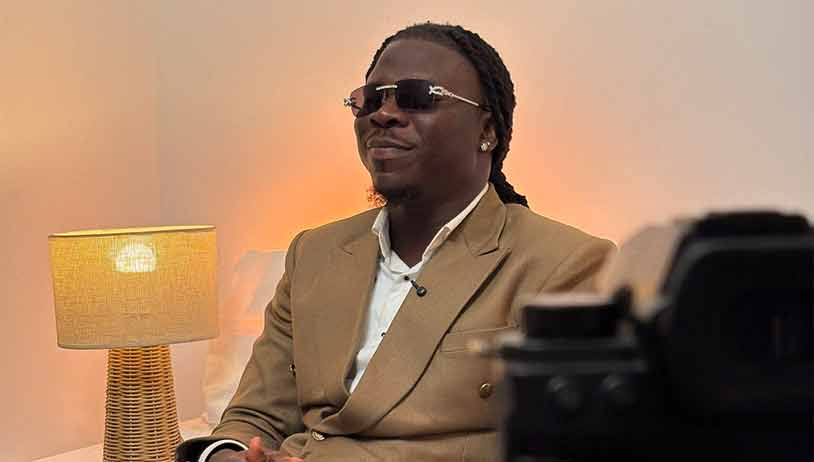
Ghanaian reggae and afro-dancehall star Livingstone Etse Satekla a.k.a. Stonebwoy says music will remain the anchor of his life and career, even as he broadens his focus to education, philanthropy and social advocacy through initiatives shaped by his own life experiences.
Speaking in an interview following the launch of the Livingstone Legacy Education Fund, the award-winning artiste rejected suggestions he might abandon music for another career path. Instead, he said music would continue to serve as the foundation and catalyst for every other venture he undertakes.
“Music is never going to leave me,” Stonebwoy said, explaining that while new opportunities may emerge, they will grow from the platform his artistry has created. “I’m not leaving music to venture into any other career path solely. I’m expanding with music as the basis.”
The interview coincided with the formal launch of the Livingstone Legacy Education Fund, an initiative under the Livingstone Foundation, which Stonebwoy described as deeply personal. He said the foundation, established about a decade ago, was born out of hardship and a strong sense of responsibility to represent more than himself as a public figure.
Stonebwoy recounted growing up with persistent financial and health challenges, including periods of attending school without food and struggling to raise school fees. He revealed that insurance compensation from a serious accident helped pay for much of his senior high school education, a fact he said he had not previously shared publicly.
“If not for that accident, you would ask yourself what would have paid for my fees,” he said, adding that the experience gave him a lasting understanding of how fragile access to education can be for many young people.
He said the foundation’s work in education, charity and social activism reflects a belief that individuals carry the weight of many others, particularly when they occupy visible positions in society. Quoting remarks by playwright Ebo Whyte at a graduation ceremony, Stonebwoy said public figures must recognise that their actions shape narratives about entire communities.
Over the years, he said, the foundation has quietly supported students at his alma mater, Methodist Day Secondary School, often paying examination fees for final-year students unable to afford them. He estimated that between 10 and 15 students benefited annually before the introduction of the Free Senior High School policy, which reduced the burden of tuition fees nationwide.
With school fees no longer the primary barrier for many students, Stonebwoy said the foundation shifted its focus towards supporting medical needs and other welfare cases, all funded from his earnings as an artiste. He stressed that the work was not driven by excess wealth but by empathy and lived experience.
Following the completion of his postgraduate studies, Stonebwoy said he resolved to be more intentional about creating long-term impact. That decision led to the establishment of the Livingstone Legacy Education Fund, designed to mobilise resources from corporate bodies and individuals to support deserving students through transparent institutional processes.
University authorities, he said, welcomed the initiative, and several companies have already pledged support. “Impact is important,” Stonebwoy said. “If you touch one person, you’re touching a whole lot.”