
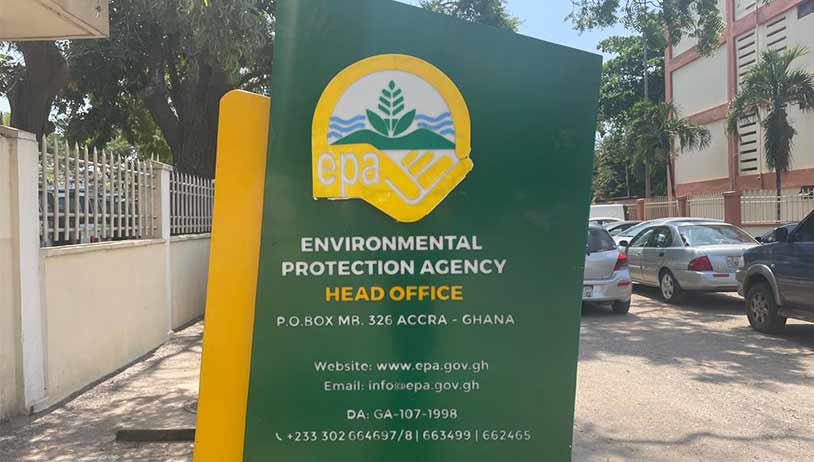
The Environmental Protection Authority (EPA) has announced a nationwide special compliance and enforcement exercise, warning that businesses operating without valid environmental permits or in breach of licensing conditions will face sanctions under Ghanaian law.
The announcement, issued on Monday by EPA Chief Executive Officer Professor Nana Ama Browne Klutse, emphasised that operating without a valid environmental permit, using an expired permit, or failing to comply with conditions attached to a permit constitutes an offence under the Environmental Protection Act, 2025 (Act 1124) and the Environmental Protection (Environmental Assessment) Regulations, 2025 (L.I. 2504).
“Failure to comply with this directive shall lead to the imposition of the necessary sanctions under the laws,” the statement read, adding that the EPA would intensify routine enforcement, monitoring, and inspections across the country.
Businesses and other regulated entities are directed to visit the nearest EPA office to commence or complete the permitting and compliance process immediately. Any statutory fees or fines must be paid directly into designated EPA bank accounts or via the EPA mobile money wallets, as cash payments will not be accepted.
The exercise will cover a broad range of sectors. Manufacturing businesses, including food processing, pharmaceuticals, wood processing, roofing sheets, herbal products, and aluminium production, fall under the enforcement scope. Energy operations such as fuel and gas service stations, fuel depots, and solar power plants exceeding 2 megawatts are also included.
Tourism and hospitality establishments — including hotels, guest houses, lodges, restaurants, bars, and recreational centres — are required to ensure full compliance. Other sectors subject to inspection include construction, health facilities, agriculture operations over 40 hectares, chemical and pesticide activities, telecommunications masts, and mining activities, including small- and large-scale operations.
Professor Klutse noted that “regulated undertakings are urged to regularise their environmental compliance without delay. This exercise is intended to ensure that all businesses operate in accordance with environmental laws, safeguarding public health and promoting sustainable development.”
The EPA advised that failure to comply may attract administrative penalties, fines, closure, or prosecution. For clarification or further information, businesses and operators are encouraged to contact their nearest EPA office.
The agency’s directive reflects a broader national commitment to environmental stewardship and sustainable industrial and commercial operations. By intensifying enforcement and monitoring, the EPA aims to protect Ghana’s natural resources, reduce pollution, and ensure that economic activities contribute positively to environmental sustainability.
Professor Klutse concluded: “This special compliance exercise is not merely regulatory but a necessary step to secure Ghana’s environmental future and uphold the rule of law in industrial and commercial practices.”