
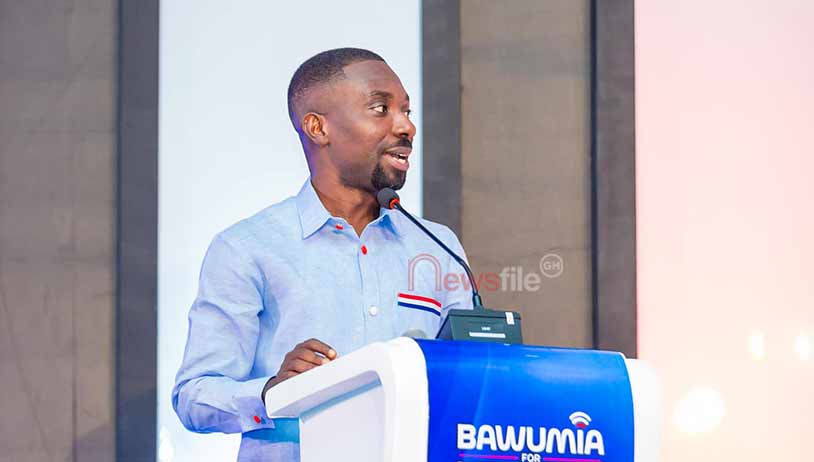
The New Patriotic Party (NPP) has accused the governing National Democratic Congress (NDC) of presiding over a growing disconnect between improving macroeconomic indicators and the everyday cost of living, as the opposition steps up its messaging ahead of the party’s presidential primary scheduled for Jan. 31, 2026.
Dennise Miracles Aboagye, spokesperson for H.E Mahamudu Bawumia’s campaign team in the NPP flagbearership race, said 12 months of NDC rule had been marked more by “optics and managing goodwill” than by substantive improvements in the lives of ordinary Ghanaians.
“The disconnect between improved macroeconomic indicators and the cost of living is real and worsening the lives of the people,” Aboagye said. He added that while the government has pointed to easing inflation and currency stability, many households continue to struggle with prices, transport costs and basic expenses.
Aboagye said the NPP’s assessment was often dismissed by the government as partisan, prompting the party to take its case directly to the public. As part of that effort, the NPP on Saturday launched what it calls “The People’s Forum” in Koforidua, a listening exercise aimed at gathering views from market women, traders, commercial drivers, teachers, nurses and students.
According to the campaign team, the forum is intended to move the conversation beyond headline indicators such as the cedi-dollar exchange rate and inflation, and instead focus on how economic conditions are being felt at household level. “Twelve months on, what is the real state of the cost of living for the Ghanaian people?” Aboagye asked.
In a broader political comparison, Dennis argued that since the start of Ghana’s Fourth Republic in 1992, his party has been responsible for what he described as the country’s most far-reaching and inclusive development initiatives. He contended that while all governments build schools, roads and markets, true legacy projects are those that deliver nationwide social benefits regardless of location.
“Government does not have enough money to construct every road in Ghana,” Aboagye said. “But when you introduce social intervention policies, every Ghanaian benefits, whether you live in the Upper East, Upper West, Oti or elsewhere.”
He cited a number of programmes he said were initiated under NPP administrations, including the National Health Insurance Scheme, free maternal healthcare, free senior high school education, the Livelihood Empowerment Against Poverty (LEAP) programme, the Ghana School Feeding Programme, the Capitation Grant, the Youth Employment Agency and the One Constituency, One Ambulance initiative. He also pointed to the introduction of Metro Mass Transit as a response to the collapse of earlier public transport systems.
Aboagye acknowledged that the NDC has rolled out policies of its own, including free sanitary pads for schoolgirls and fee relief for first-year university students. However, he argued that these measures did not match the scale or impact of what he described as the NPP’s “monumental” interventions.
Framing the debate as a contest of records, Aboagye said the NPP and NDC should be judged on what their respective terms in office have delivered. He noted that the NPP has won four national elections since 1992, while the NDC has won five, and called for a side-by-side comparison of outcomes.
“Let us show what the four elections of the NPP have given to Ghana and what the five elections of the NDC have given,” he said. “This is the verdict.”
The NDC has consistently defended its first year in office by citing stabilising economic indicators and reforms it says are laying the groundwork for sustainable growth, while cautioning that deeper structural challenges will take time to resolve. With the NPP’s internal contest approaching and national political temperatures rising, both parties appear set to intensify efforts to shape public perception of the country’s economic direction and development legacy.
Watch video