
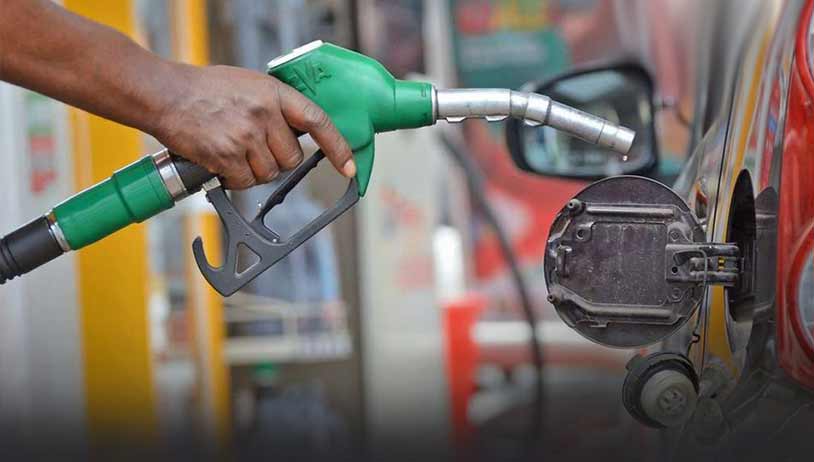
The government has provided clarity on the implementation of the one‑cedi levy on petroleum prices and the status of energy sector debt payments, as well as addressed concerns over assaults on journalists, during the latest Government Accountability Series hosted by Hon. Felix Kwakye Ofosu, Minister in charge of Government Communication.
Speaking before journalists, Kwakye Ofosu emphasised that the one‑cedi levy, introduced through parliamentary legislation, was aimed at bridging the financing gap for liquid fuels used to power Ghana’s thermal plants. “The idea was to ensure that expensive liquid fuels, whose costs were not factored into tariff structures, were accounted for to avoid challenges in the power sector,” he said. The minister explained that the sector requires approximately US$1.2 billion annually to import fuels, and without measures like the levy, electricity stability could have been compromised.
While exact revenue figures from the levy were not immediately available, Kwakye Ofosu assured that the Finance Ministry’s upcoming reports would provide precise data. He added that the funds collected have contributed to stabilising electricity supply across the country, noting that outages feared at the time of the government’s assumption of office have largely been avoided.
On the issue of energy sector debt, Kwakye Ofosu clarified that a recent Finance Ministry statement, which indicated that US$1.4 billion of debt had been cleared, did not imply the totality of outstanding obligations had been settled. Rather, the payment represented a significant portion of dues owed to Independent Power Producers (IPPs) and other stakeholders. The minister highlighted that adherence to the sector’s cash waterfall mechanism has improved under the current administration, ensuring that payments now reach all players in the energy value chain.
Hon. Kwakye Ofosu underscored that government remains committed to fully clearing energy sector debts while simultaneously pursuing additional financing arrangements to strengthen the sector. “More will be paid going forward so that ultimately the entire debt is removed from our books,” he said.