
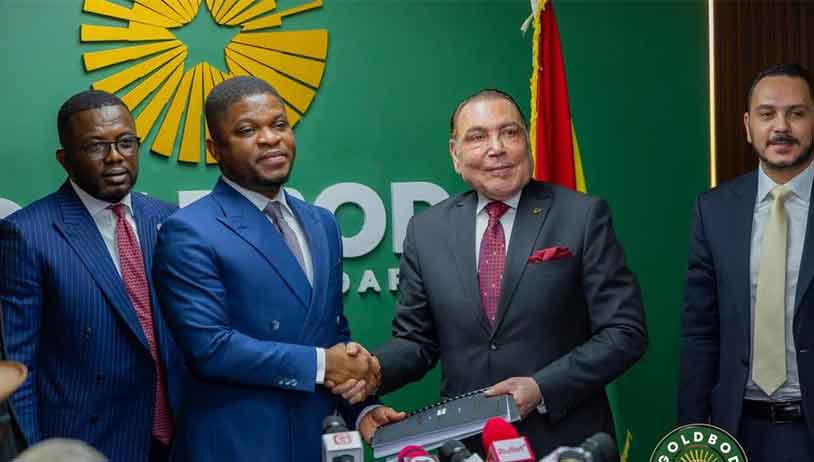
The Ghana Gold Board has officially signed a Gold Refining Agreement with Gold Coast Refinery Company Limited, marking a significant milestone in Ghana’s efforts to enhance local value addition and strengthen its gold value chain.
At the signing, Ghana Gold Board Chief Executive Officer Sammy Gyamfi described the deal as the first-ever local gold refining arrangement between the Government of Ghana and a Ghana-based refinery. He emphasised the agreement’s potential to retain millions of dollars in refining charges that would otherwise leave the country, and to create both direct and indirect employment through 24-hour operations under the Government’s 24-Hour Economy policy.
“The agreement will also increase tax revenue, reduce gold undervaluation and purity losses, and ensure an adequate supply of refined gold and silver for local jewellers,” Gyamfi said. He added that the deal positions Ghana for London Bullion Market Association (LBMA) certification, enhances the integrity of gold exports, and strengthens formalisation and full traceability of artisanal and small-scale mining (ASM) operations.
The agreement revives a refinery that had been dormant for nine years, with the capacity to refine up to one metric tonne of gold per week. It is expected to eliminate historical losses associated with raw gold exports and enable accurate determination of silver content, benefiting local jewellery and fabrication industries.
Ghana Gold Board also holds a 15% free carried interest in Gold Coast Refinery on behalf of the nation, ensuring long-term dividends for the country. The arrangement enhances the reputation and integrity of Ghanaian gold by eliminating foreign and deleterious substances often present in raw exports, while fast-tracking the country’s path toward a fully LBMA-certified refinery.
Industry analysts describe the agreement as a decisive step toward local value addition, higher returns from gold exports, job creation, and improved governance of the sector. The initiative reflects Ghana’s broader strategy to maximise economic gains from its mineral resources while creating opportunities for domestic enterprises and bolstering industrial capacity.
Ghana’s gold sector, long a key driver of the economy, now stands poised for strengthened competitiveness on the international stage through enhanced refining capabilities, increased traceability, and sustained local investment.