
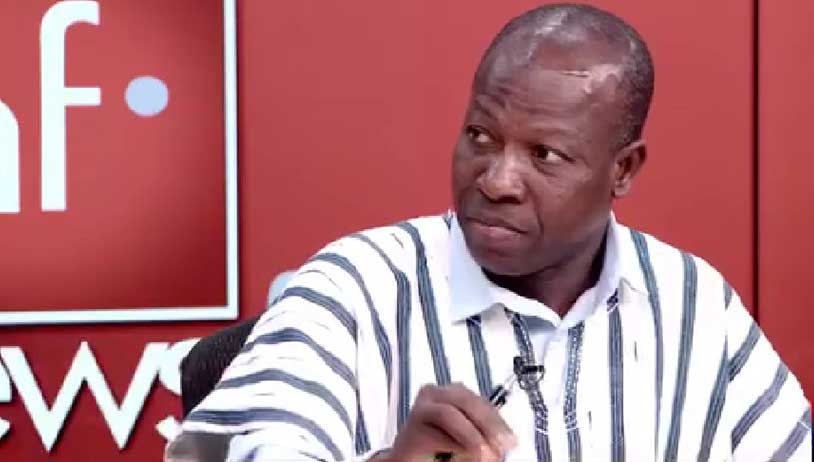
Political analyst Dr Kwabena Bomfeh has called for restraint and strict adherence to due process in Ghana’s accountability debates, warning that public discourse risks conflating constitutional rights with avoidance of justice.
Speaking on Newsfile, Bomfeh said successful prosecution depends on careful observance of legal procedures, patience and fidelity to the law, not public pressure or narratives driven by emotion. He argued that parties succeed or fail in court based on how they conduct themselves within the rules of engagement, with avenues for appeal available when outcomes are disputed.
Bomfeh questioned the tendency to frame suspects as “running away from accountability” simply for exercising their rights. “It’s not about what the people should think; it’s about the narrative we put out there,” he said, adding that commentators with national platforms bear responsibility for accuracy and balance.
The analyst was particularly critical of the controversy surrounding former finance minister Ken Ofori-Atta, saying public focus should be on the substance of allegations and legal responses rather than what he described as “hullabaloo” over personal appearances. He said the key questions should be whether allegations have been properly investigated and addressed, rather than implying justice is impossible without public spectacle.
Bomfeh also took aim at the now-defunct Operation Recover All Loot (ORAL), questioning its constitutional basis. He argued that President-elect John Dramani Mahama lacked authority to appoint such a body and said the initiative was not sufficiently scrutinised because it aligned with campaign messaging. While acknowledging that elements of ORAL’s work appear to have been absorbed by the Attorney General’s office, Bomfeh asked what practical end the original initiative served.
“To get successful prosecution requires due diligence, patience and sobriety,” he said, adding that diligence should not be confused with political noise.
Host Samson Lardy challenged some of Bomfeh’s assertions, clarifying points of criminal procedure. Lardy noted that in criminal cases, there is no legal requirement for lawyers to file responses to charge sheets at the outset and stressed that an accused person is generally required to appear in court in person. Legal representation, he said, cannot substitute for a defendant’s presence unless the law permits it.
Bomfeh acknowledged the procedural clarification but maintained that exercising constitutional rights should not be portrayed as evasion. He said debates about accountability should be grounded in law and process, not assumptions about intent.
The exchange highlighted ongoing tensions in Ghana’s public discourse over accountability, prosecution and political communication, with Bomfeh urging a shift from rhetoric to rigorous, lawful processes.