
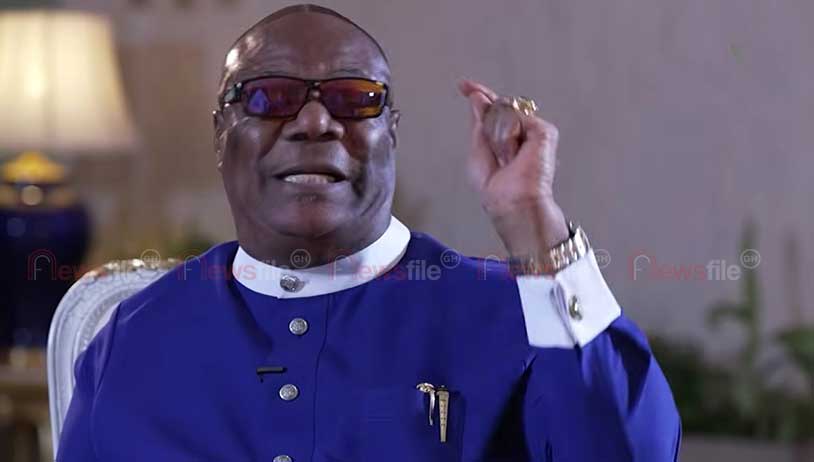
Archbishop Nicholas Duncan-Williams has urged Christians to critically assess prophecies and reject any that contradict Scripture, warning against the growing influence of what he described as false and manipulative spiritual claims, particularly during politically sensitive periods.
Speaking in an interview with Cookie Tee, amid a surge in end-of-year and election-related prophecies, the founder of Action Chapel International said believers have both the right and responsibility to judge prophetic declarations rather than accept them unquestioningly.
“If you receive a prophecy that contradicts Scripture, you can annul it and reject it,” Archbishop Duncan-Williams said. “The fact that someone says, ‘Thus saith the Lord,’ does not mean it is final.”
His remarks come after a flood of prophecies surrounding Ghana’s political landscape, including predictions linked to the New Patriotic Party’s presidential primaries and the change of government. The volume of such pronouncements has sparked public debate over their credibility and impact.
Archbishop Duncan-Williams said the Bible provides clear standards for discerning truth, noting that Jesus taught believers to judge prophets by their “fruit” rather than their proclamations. He added that prophecy is conditional and must be evaluated against Scripture and the inner witness of one’s spirit.
“The Bible gives us the right to judge prophecy,” he said. “If what is being said creates agitation, conflict or vexation in your spirit, that is a sign it may not be from the Holy Spirit.”
The Archbishop said he routinely hears prophecies , “good, bad and ugly” and rejects those he believes stem from manipulation or what he described as “familiar or strange spirits.” In such cases, he said, he openly renounces them.
Addressing ordinary believers confronted with conflicting political prophecies, Archbishop Duncan-Williams said discrepancies arise because not all spiritual sources are the same. “God is not the author of confusion,” he said, adding that some claims may reflect human projection rather than divine guidance.
He stressed that Christians must take personal responsibility for their spiritual growth instead of outsourcing discernment to religious leaders. “You must grow in the Word yourself and develop your own relationship with God,” he said. “A true shepherd points the sheep to the Great Shepherd, who is Jesus.”
Archbishop Duncan-Williams also cautioned against making personal or political decisions solely on prophetic declarations, saying he relies instead on prayer and spiritual discernment.
“I will not take decisions based on what any prophet says about who will come to power,” he said. “I depend on the witness of my spirit.”
His comments add to ongoing calls for restraint and accountability within Ghana’s prophetic space as the country navigates an intense political season.