
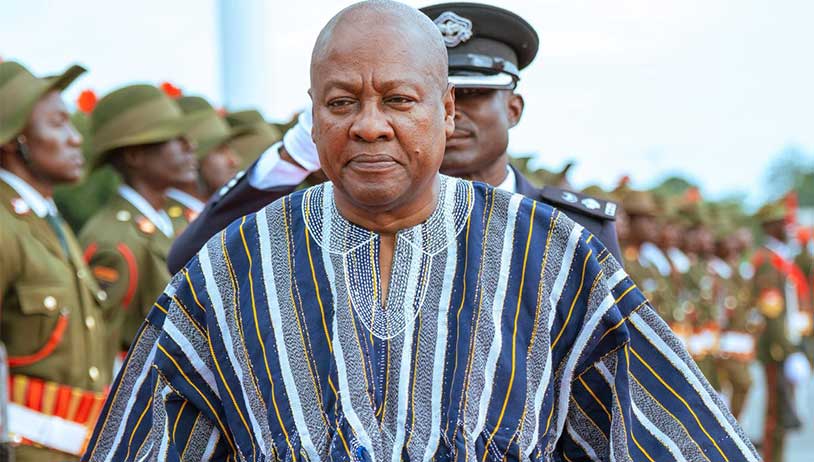
President John Mahama has used a recent social media debate to highlight the cultural and historical significance of the Ghanaian smock, following comments that mistakenly described the traditional attire as a blouse during his state visit to Zambia.
Speaking after the visit, Mahama clarified that the garment, known in English as a Smock and locally as Fugu or Batakari, is a deeply rooted symbol of Ghana’s heritage. He explained that the attire is produced by local weavers and forms part of the country’s indigenous textile industry.
“This is a traditional dress made by a local industry. It’s part of our culture,” Mahama said, noting that the smock was historically worn by kings, royalty and warriors. According to him, there was a long-held belief that smocks worn into battle were spiritually fortified and could protect warriors from harm.
Mahama also pointed to the garment’s place in Ghana’s political history, recalling that the country’s first president, Kwame Nkrumah, wore a smock during the declaration of independence in 1957. “All the freedom fighters were wearing smocks,” he said, adding that the attire has since become an integral part of Ghana’s national identity.
The president said he has consistently worn the smock on major international platforms, including at the United Nations, expressing surprise that it only attracted widespread attention during his visit to Zambia. He described the online reaction as an “innocuous statement” that escalated into a social media firestorm after one observer questioned what blouse he was wearing.
Mahama welcomed the attention, saying it had inadvertently provided global exposure for Ghanaian smock weavers. He predicted a surge in online searches for “fugu”, “Batakari” and “Smock”, calling it unexpected branding for the local garment industry.
During the Zambia visit, Mahama said he exchanged gifts with President Hakainde Hichilema, receiving a traditional Zambian carving while presenting his host with a smock. He said Hichilema expressed interest in ordering more to share with fellow Zambians.
Mahama added that all his clothing is made in Ghana by local designers, arguing that African leaders should promote indigenous industries while dressing appropriately for their climates.