
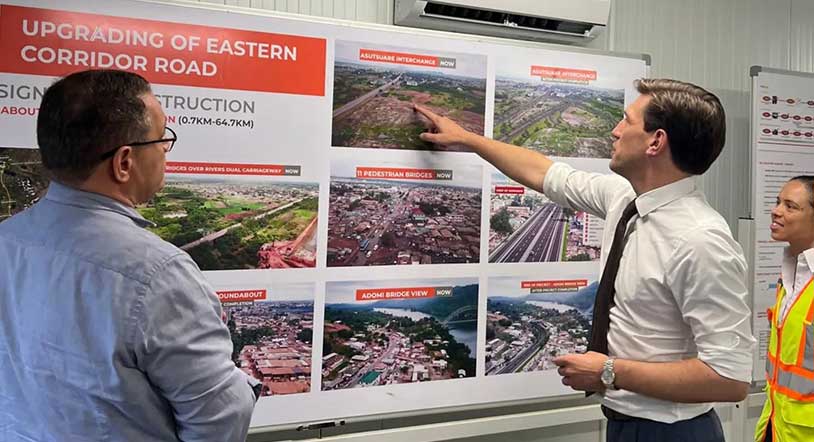
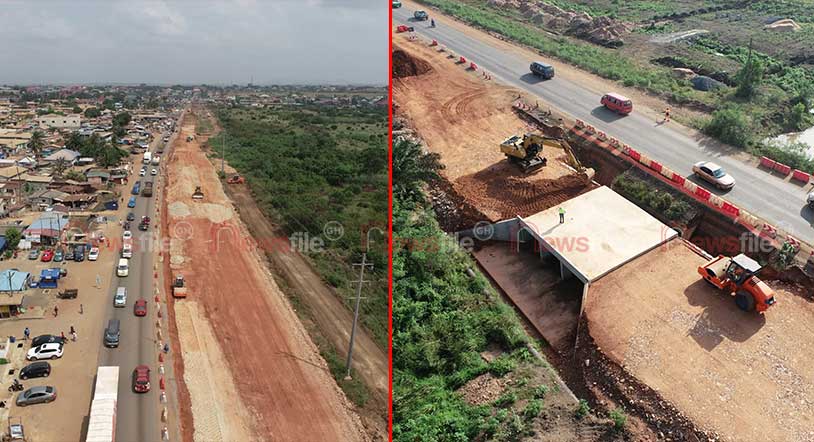
Ghana’s Eastern Corridor Road (Lot 1: Tema–Akosombo) is poised for full and swift resumption, marking a major milestone in the country’s infrastructure-led economic recovery. The project, which links the Port of Tema to northern Ghana, is designed to cut travel time, strengthen trade, and unlock long-term growth opportunities.
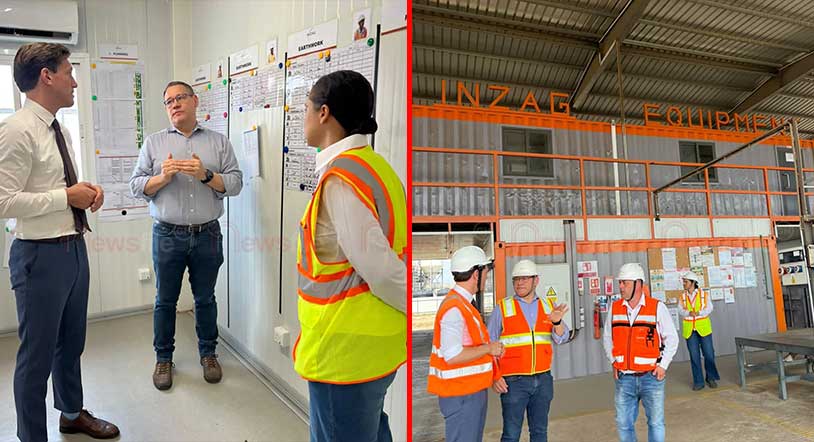
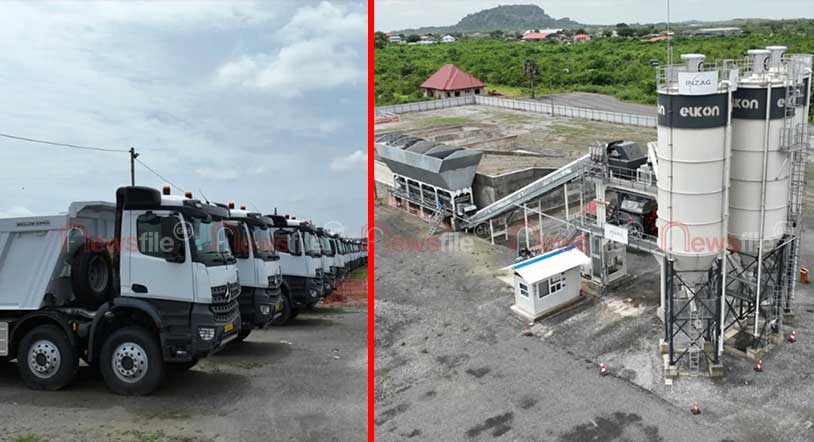
German Ambassador to Ghana, H.E. Frederik Landshöft, visited the site and INZAG’s main camp near Afienya on 13 February, witnessing progress and readiness for accelerated construction. Implemented by German company INZAG and backed by Germany’s Export Credit Guarantee Euler Hermes, the project represents an investment exceeding EUR 250 million, signalling strong international confidence in Ghana’s future.
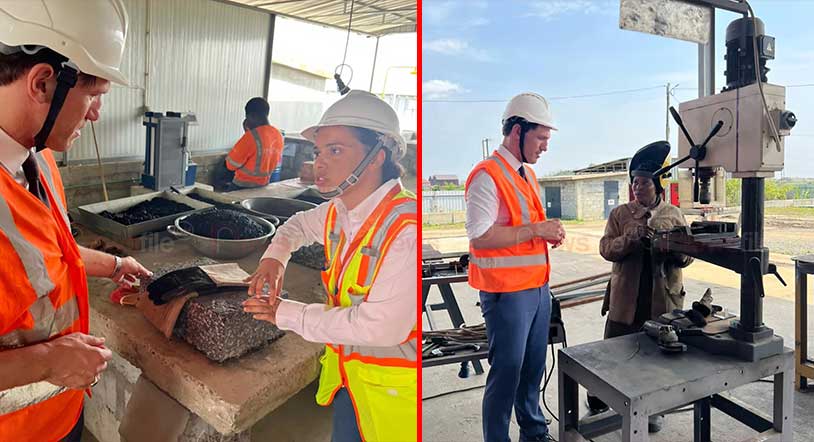
Full resumption of works is expected to engage up to 900 workers on site, potentially tripling construction progress. The project adheres to international road standards, promising decades of service to Ghanaian commuters and businesses. Around one-third of the workforce comprises women, including welders, heavy machinery operators, and project leaders, reflecting a commitment to inclusive employment.
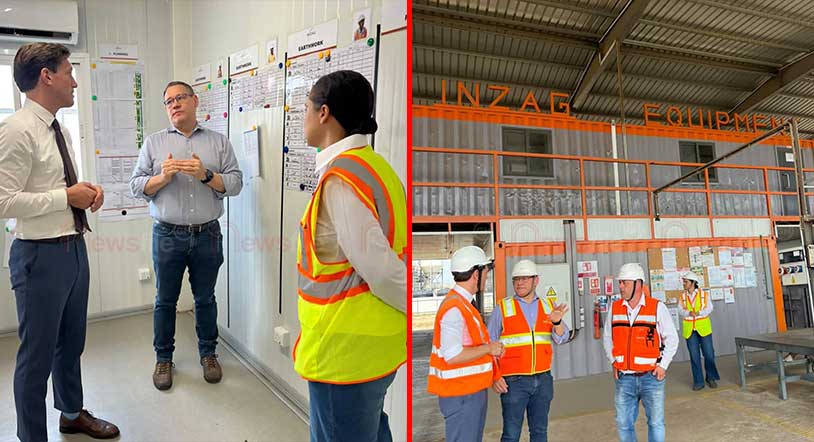
Ambassador Landshöft emphasised the project’s broader significance: “This project stands for what German-Ghanaian partnership can achieve. World-class infrastructure. Real opportunities for people. Renewed momentum for Ghana’s economic future. Germany and INZAG are ready for the next steps together with Ghana.”
Ghanaian officials have highlighted the Eastern Corridor Road as a cornerstone of the country’s post-IMF programme economic strategy, linking international trade hubs with domestic markets. The upgraded corridor is expected to facilitate smoother transport of goods, enhance regional connectivity, and support long-term socio-economic transformation.
The project demonstrates how international collaboration can transform infrastructure into opportunity benefiting ports, corridors, and communities alike. With construction poised to move at full speed, the Eastern Corridor Road is set to become a symbol of modern, reliable infrastructure as the foundation of Ghana’s inclusive growth and economic resilience.