

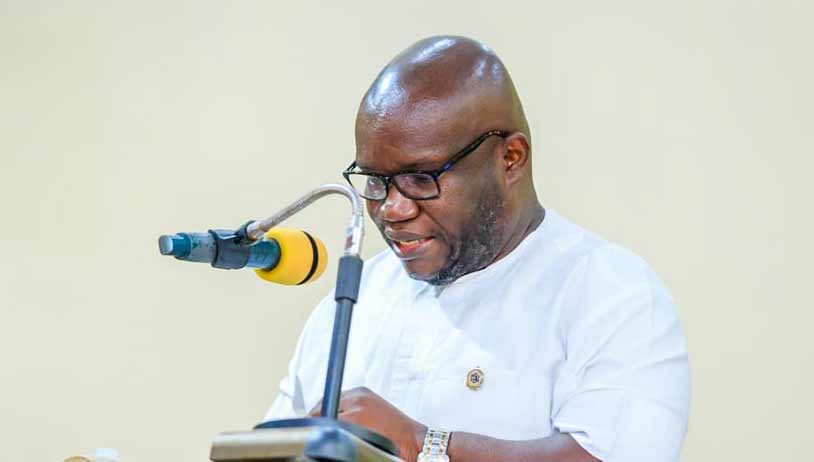
Improvements in the condition of the Ayensu River highlight what targeted enforcement can achieve in Ghana’s fight against illegal mining, according to Ing Dr Kenneth Ashigbey, chief executive officer of the Ghana Chamber of Mines and convenor of the Media Coalition Against Illegal Mining.
Ashigbey said recent gains in the river’s water quality were largely due to sustained interventions by the National Anti-Illegal Mining Operations Secretariat (NAIMOS). He noted that the Ayensu was the water body referenced by the President in recent comments on environmental recovery.
“The reason why you find out that Ayensu has improved is because NAIMOS has done some extensive work in that particular area,” Ashigbey said. He added that the outcome demonstrates the potential impact of consistent, on-the-ground enforcement. “If we were able to do what NAIMOS has to do, it would have been better,” he said.
Despite earlier commitments, Ashigbey expressed concern that plans to establish permanent NAIMOS bases in key illegal mining hotspots have yet to materialise. He recalled that civil society organisations raised the proposal during a meeting with the President, seeing it as a way to sustain pressure on illegal operators.
“Unfortunately, that has not happened,” Ashigbey said, adding that he had heard assurances that the bases may be set up in the second quarter. He described the delay as one of the major challenges confronting the broader anti-galamsey campaign.
The coalition, he said, is also pushing for a more scientific approach to assessing progress. One of its key requests to the President was the regular monitoring of water bodies, particularly measuring turbidity levels, to provide objective data on environmental conditions.
Ashigbey said systematic monitoring would allow authorities to track changes over time and determine whether interventions are delivering real, lasting impact. Without such data, he warned, gains could prove temporary and difficult to verify.