

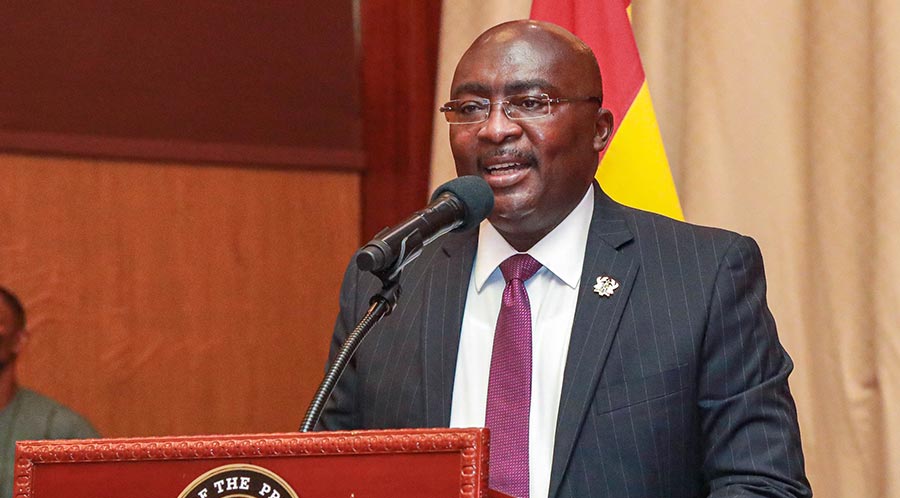
Parliament has on today, Thursday, February 26, approved the Ghana Accelerated National Reserve Accumulation Policy (GANRAP), a strategic framework aligned with elements of the G4R policy championed by the former Vice President of Ghana, Mahamudu Bawumia, now being operationalised under the NDC government.
The approval followed the presentation of the policy to the House by the Minister for Finance, Cassiel Ato Forson, who described GANRAP as a decisive shift away from what he termed the “unsustainable” practice of borrowing to build foreign reserves.
He explained that the government would instead leverage Ghana’s gold resources to strengthen gross international reserves and build more resilient external buffers.
Dr Forson told Parliament that the government is targeting a 15-month import cover by the end of 2028.
To achieve this, the policy projects the addition of an average of US$9.5 billion annually to gross international reserves through the purchase of approximately 3.02 tonnes of gold per week.
Under the framework, the Ghana Gold Board (GOLDBOD) will procure gold from the small-scale mining sector, while a state pre-emptive right will enable the acquisition of 20 per cent of output from large-scale mining firms.
In approving the policy, some members of Parliament’s Finance and Economy Committees took turns to commend Dr Bawumia for what they described as laying the conceptual groundwork for a gold-backed reserve accumulation strategy.
They argued that the emphasis on domestic resource mobilisation and results-based economic management reflected ideas previously advanced under the G4R framework.
The current Deputy Minister for Finance, Thomas Ampem Nyarko, acknowledged on the floor of the House that the concept was not entirely new.
He admitted that aspects of the strategy had been discussed in previous administrations, underscoring what several lawmakers described as the need for continuity in national economic policy in the interest of macroeconomic stability and investor confidence.