

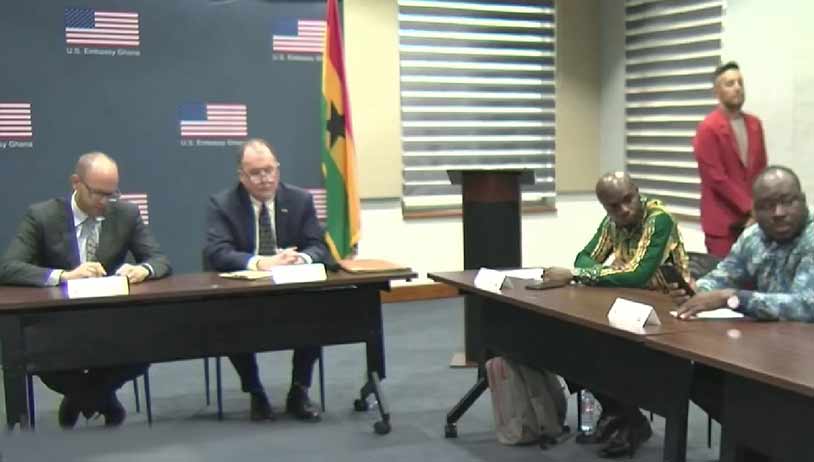
U.S. immigration policy and bilateral cooperation dominated discussions in Accra as William B. Stevens, the newly appointed Deputy Assistant Secretary for West Africa, paid his first official visit to Ghana and joined a media roundtable hosted by the U.S. Embassy.
Addressing questions on President Donald Trump’s immigration approach, Stevens said deportations largely involve foreign nationals, including Ghanaians, who no longer have legal status in the United States. He explained that such cases typically concern individuals who overstayed visas, violated immigration laws or committed crimes and have completed their sentences.
“Broadly, deportations are about people being returned home because they no longer have valid status in the United States,” Stevens said, stressing that the policy applies universally, not to Ghana alone.
He also outlined categories of migrants who abuse the U.S. migration system but cannot immediately return home, as well as asylum seekers seeking refugee protection. Stevens noted that Washington has entered “safe third country” agreements with some nations to temporarily receive migrants when the U.S. lacks capacity, though he said such arrangements do not directly apply to Ghana.
President Trump, he added, has prioritised border protection and enforcement after years of what U.S. officials describe as systemic abuse that has left millions living in the country illegally. Stevens thanked partner countries for cooperating with U.S. enforcement efforts.
The discussion comes amid renewed public interest following confirmation by U.S. authorities that Ghana’s former Finance Minister, Ken Ofori-Atta, has been detained in the United States. Ofori-Atta is currently being tried in absentia by Ghana’s Office of the Special Prosecutor, prompting questions over why he has not been extradited.
A U.S. government official said Washington remains open to extradition requests, describing them as a core element of strong bilateral relations. However, the official cautioned that the process is legally complex and often lengthy, involving judicial review that cannot be prejudged.
Meanwhile, uncertainty surrounds the fate of the former finance minister as attention turns to an existing third-state agreement between Ghana and the United States, under which Ghana may receive certain West African deportees.
U.S. officials said cooperation on immigration, extradition and law enforcement remains guided by legal frameworks and mutual respect, even as the issues continue to draw scrutiny in both countries.