

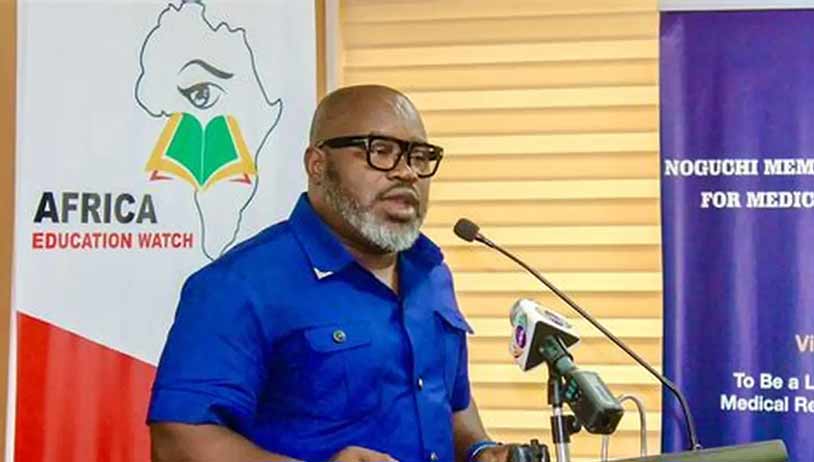
Africa Education Watch (Eduwatch) has called on the Government of Ghana to translate recent education policy commitments into tangible and equitable outcomes as the country enters a critical phase of its education reform journey.
In a New Year message, the civil society organisation commended government and stakeholders for transitioning electoral promises into actionable policies and integrating them into the Education Strategic Plan through the Education Sector Medium Term Development Plan (2026–2029). Eduwatch said the inclusive policy-making approach has strengthened coherence and continuity, positioning the sector to meet equity and quality targets ahead of the 2030 Sustainable Development Goal 4 deadline.
Eduwatch welcomed growing civil society participation in education governance, noting that the National Education Forum created a platform for consensus-building among political parties, civil society groups and other stakeholders, helping to stabilise reforms in a sector often affected by abrupt policy shifts.
The organisation highlighted the uncapping of GETFund, which unlocked about GHC6 billion for education and raised the sector’s budget from GHC32 billion in 2024 to GHC42 billion in 2025. The GHC3.5 billion allocation to Free Senior High School (Free SHS), alongside amendments to the GETFund law to fully finance the policy, was cited as a key step toward sustainable funding and easing food supply challenges.
Basic education also saw gains, with its share of the education budget rising to 22 per cent, the highest in four years. Eduwatch noted increases in capitation grants, curriculum reviews, the rollout of free sanitary pads for schoolgirls, and higher school feeding allocations, with beneficiaries increasing to 4.2 million learners. Decentralised financing enabled the start of 261 new basic school projects nationwide, complemented by over GHC700 million from the District Assemblies Common Fund to address furniture deficits.
Reforms to the public scholarships system, including the passage of the Scholarships Authority Bill, were praised for improving transparency and accountability. At the tertiary level, initiatives such as No-Fee-Stress, Free Tertiary Education for Persons with Disability, and Student Loan Plus were described as important steps toward inclusion.
Despite progress, Eduwatch warned that severe fiscal constraints are limiting impact. The absence of teacher recruitment in 2025 has worsened staffing shortages, especially in rural areas, while delayed fund releases and procurement challenges threaten implementation efficiency. The group also raised concern over the lack of a public response to the National Education Forum report six months after its submission.
Eduwatch urged government to prioritise equity-based financing, remove expenditure caps on donor-funded education projects, deploy teachers urgently to underserved schools, and improve budget credibility through timely releases. The organisation pledged continued technical and advocacy support as Ghana works toward its 2030 education goals.