

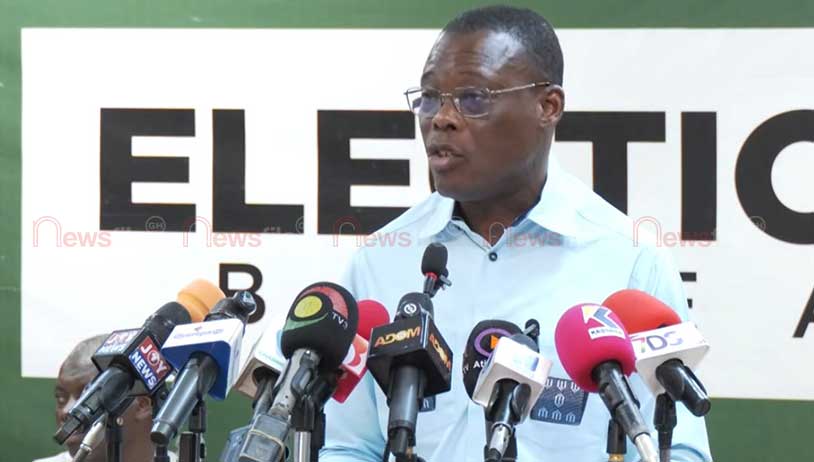
Fifi Fiavi Kwetey, General Secretary of the National Democratic Congress, has defended his party’s decision to bar officials from simultaneously holding government and party positions, describing the practice as “greed” and insisting the policy reflects long-standing internal reforms.
Speaking in an exclusive interview on TV3’s Hot Issues with Keminni Amanor, Kwetey said the directive was not a personal stance but a collective resolution adopted by the party’s National Executive Committee to improve efficiency and accountability within government and party structures.
“We have always been against holding both government and party positions,” he said. “I don’t think one can have time to do both. Holding positions in both government and party is greed.”
Kwetey stressed that the policy marks the formal institutionalisation of a principle that has evolved within the party for years. He cited historical precedents, including the late E.T. Mensah, who once served simultaneously as a minister and a party youth organiser, noting that such arrangements were later reconsidered after the party lost power in 2000. Since then, he said, internal consensus has grown that dual roles can dilute effectiveness and restrict opportunities for others.
He also recalled an internal contest involving Haruna Iddrisu, during which some members opposed his attempt to hold a party post while serving as a Member of Parliament, arguing that leadership responsibilities should be separated.
Under the current directive, any officeholder serving as a minister, deputy minister, chief executive, or district or municipal chief executive must resign from that government role at least six months before contesting for a party position. According to Kwetey, such posts are demanding and require full-time attention, leaving little room for effective party work.
Drawing from personal experience, he said that when he served as a deputy finance minister after the party’s 2009 electoral victory, his official duties prevented him from attending party meetings, forcing colleagues to assume those responsibilities.
He dismissed criticism from some party actors who claim they can serve both the nation and the party simultaneously, arguing that recent constitutional reform debates have similarly questioned whether legislators should also serve as ministers.
Kwetey added that resistance to the directive contradicts what he described as the party’s broader “reset” agenda, which he said prioritises national transformation, institutional focus and leadership renewal. With millions of supporters, he argued, no individual is indispensable.
“For individuals to believe that without them the job cannot be done and therefore they must hold multiple positions,” he said, “that is nothing but greed.”