

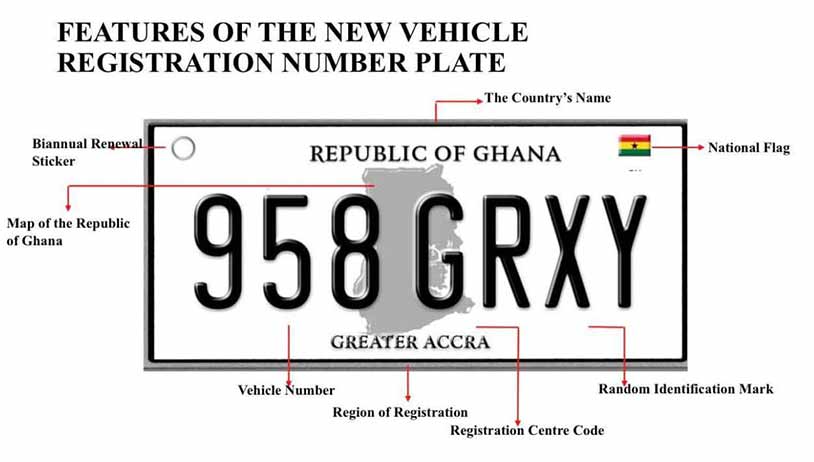
The Vehicle Embossment Association of Ghana (VEMAG) has filed an injunction at the High Court in Accra seeking to restrain the Driver and Vehicle Licensing Authority (DVLA) from rolling out a new digital or alternative vehicle number plate registration system from January 2026.
The application, filed on Monday, December 22, 2025, was brought by BEMENCO Embossment Ltd and 26 other plaintiffs, all members of VEMAG. The plaintiffs are asking the court to halt the implementation of any new vehicle number plate system until the substantive case is determined.
They are also seeking an order preventing the DVLA from introducing any alternative arrangement for the embossment and supply of vehicle number plates outside the existing framework involving licensed embossers.
VEMAG argues that the DVLA has departed from long-standing practice by awarding both the manufacturing and embossment of vehicle number plates to a single entity, a move it describes as unprecedented and unlawful. According to the association, the DVLA Chief Executive informed members at a meeting on October 27, 2025, that the contract had been awarded to Dr Nyarko Esumadu Appiah of Original Manufacturing and Embossment, also known as Daasebre.
The plaintiffs contend that approvals granted by the DVLA, together with consistent conduct over more than three decades, amount to an enforceable contract for the embossment of vehicle number plates. They allege that the DVLA has neither revoked nor withdrawn those approvals, yet has refused to allocate blank registration plates for the 2026 production cycle.
VEMAG further alleges that the DVLA failed to advertise for tenders or obtain approval from the Public Procurement Authority to sole-source the contract, contrary to the Public Procurement Act, 2003 (Act 663).
The association is seeking an order compelling the DVLA to continue engaging licensed embossers beyond 2026, declarations that the refusal to allocate blank plates is unlawful, payment of outstanding arrears owed to members, and costs.
The plaintiffs warned that the decision could have severe socio-economic consequences, noting that association members collectively employ more than 3,000 workers nationwide. They also cautioned that public inconvenience could arise at the start of 2026 if vehicle registrations are disrupted pending the court’s determination.