

Policy think tank IMANI Africa has renewed its push for a more balanced and transparent lithium mining agreement between Ghana and private investors, following the withdrawal of a controversial lithium deal from Parliament.
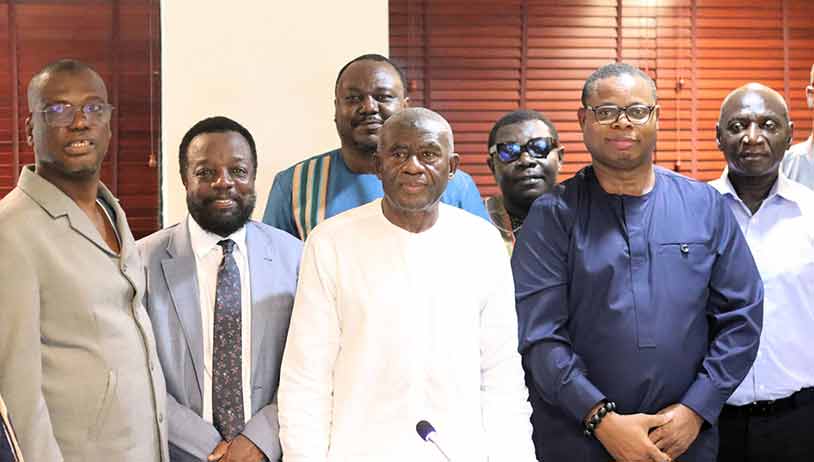
IMANI made its case during the first meeting with Parliament’s Committee on Lands and Minerals after the withdrawal, arguing that Ghana must secure fair value from its critical mineral resources. Members of the IMANI delegation, including Selorm Branttie Asare Dennis, said the group forcefully reiterated positions already submitted to President John Dramani Mahama and Parliament in a detailed policy memorandum.
The engagement followed earlier high-level discussions with the President and consultations with the Speaker of Parliament, Rt. Hon. Alban Bagbin, whose views IMANI said were largely aligned with its concerns. IMANI’s lead researcher and honorary vice president for research, Bright Simons, anchored the group’s technical arguments.
In presenting its analysis, IMANI cited pricing and cost figures linked to Atlantic Lithium, questioning the justification for additional concessions. According to the think tank, company cost estimates were placed at about $610 per tonne, while lithium prices have recently hovered around $1,200 per tonne, implying margins of roughly 45 percent before profit deductions.
IMANI noted that at the time negotiations began, lithium prices were closer to $800 per tonne, translating into lower margins of about 20 percent. The think tank argued that the significant price increase undermines claims that investors require further incentives to remain viable.
IMANI stressed that while profit-making is central to business, granting excessive concessions to already high-margin operations could undermine national interests. The group called for a lithium agreement that reflects market realities, protects Ghana’s long-term revenues and sets a responsible benchmark for future resource contracts.