

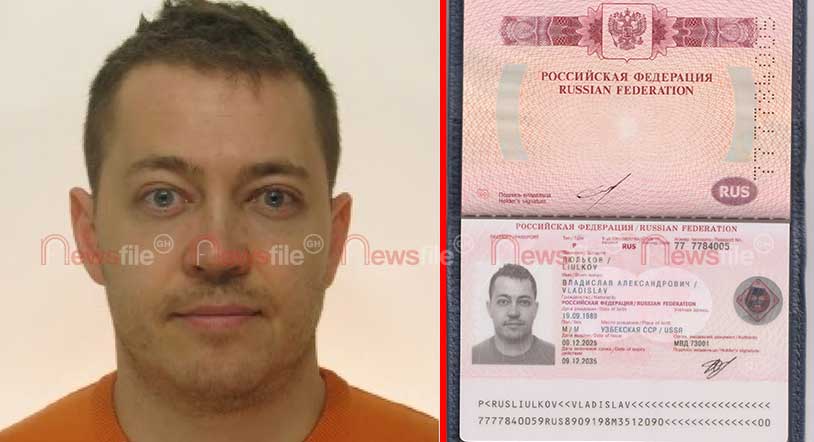
Ghanaian authorities have stepped up international cooperation in an ongoing cybercrime investigation involving an alleged foreign suspect accused of secretly recording and distributing intimate footage of Ghanaian women without their consent, officials said after a high-level diplomatic meeting on Tuesday.
The talks brought together Communications Minister Samuel Nartey George, Gender Minister Agnes Naa Momo Lartey, and Russian Ambassador Sergei Berdnikov as part of what the government described as a coordinated effort to protect victims and advance investigations spanning multiple jurisdictions.
In a statement, the Ministry of Communication, Digital Technology and Innovations said preliminary findings from national cybersecurity and law-enforcement agencies suggest the suspect allegedly recorded private encounters without consent, published the material online and monetised it through digital platforms. Authorities are now tracing electronic and financial trails linked to the case.
Officials stressed that the matter is being treated strictly as a criminal offence rather than a moral issue. They cited provisions in Ghana’s cybercrime legislation that outlaw the non-consensual recording or circulation of intimate images, warning that anyone found redistributing such content whether locally or abroad could face prosecution.
Because of the cross-border elements, Ghana has initiated international cooperation mechanisms, including engagement with INTERPOL and other partner agencies, to help identify and locate the suspect and any accomplices. Investigators are also assessing whether individuals in other jurisdictions may have facilitated distribution or profited from the material.
Government representatives told the ambassador that protecting citizens’ privacy and dignity remained a constitutional obligation and that authorities would pursue all lawful avenues to ensure accountability. They added that while Ghana respects the legal sovereignty of the Russian Federation, it expects cooperation consistent with international legal norms.
Berdnikov acknowledged receipt of the formal briefing and said he would transmit the information to authorities in Moscow for further action. He noted that although no extradition treaty exists between the two countries, the alleged conduct would also be considered criminal under Russian law, signalling willingness to assist Ghana’s investigation within diplomatic and legal frameworks.
Analysts say such cooperation could prove decisive, particularly in cases involving digital evidence stored on overseas servers or routed through foreign financial systems. Cybercrime investigators often rely on multinational coordination to secure data, verify identities and track transactions across borders.
The government also issued a public advisory urging citizens not to share or repost the explicit material, warning that doing so could itself constitute a criminal offence. Officials said the spread of such content compounds harm to victims and complicates investigations by multiplying digital copies across platforms.
The Ministry of Gender, Children and Social Protection announced that it has established a dedicated victim-support desk staffed with clinical professionals to provide confidential psychological and emotional assistance to affected individuals. The ministry said the service aims to ensure survivors receive care without fear of stigma or exposure.
The administration of John Dramani Mahama reiterated its commitment to safeguarding citizens’ rights online and offline, describing the case as a test of Ghana’s resolve to confront digital-age crimes that transcend national boundaries. Officials pledged regular updates as inquiries progress.
Cybersecurity experts note that incidents involving covert recordings and online distribution have risen globally alongside the growth of monetised content platforms, prompting governments to strengthen legislation and international partnerships.
Authorities did not disclose the suspect’s identity or current whereabouts, citing the sensitivity of ongoing investigations. They said further information would be released when it would not compromise operational efforts.
For now, officials emphasised that cooperation between governments, law-enforcement agencies and the public remains essential to securing justice and deterring similar offences in the future.