

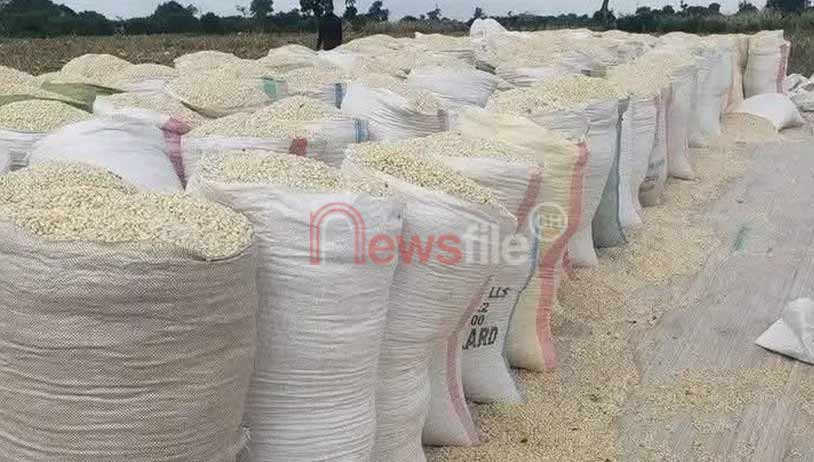
Farmers in Ghana’s Upper West Region say a sharp fall in maize prices has left them facing heavy losses, threatening the future of commercial farming in the area.
Across the municipality, from the capital to remote farming communities, bags of maize remain unsold, with growers unable to find buyers despite months of effort. At Intumo, piles of maize sit idle as farmers describe mounting financial pressure and dwindling hope.
Commercial farmers, including the 2025 Upper West Best Woman Farmer, Damata Yusif, say the season has been one of the most difficult in recent years. Yusif said a 100-kilogramme bag of maize that sold for about 500 Ghana cedis last year now struggles to fetch even 300 cedis. She added that the cost of inputs has surged, with fertiliser selling for around 420 cedis during the planting season.
Several farmers said the low prices mean they are selling at a loss, making it difficult to recover investments or even cover basic household needs. Some fear many growers will abandon maize farming altogether next season.
The challenges extend beyond pricing. Farmers say harvesting has been disrupted as labourers who usually assist during peak periods have migrated to other regions in search of better opportunities. According to farmers, the unattractive maize prices have discouraged workers from staying, leaving crops in fields longer than planned.
Government efforts to address the glut have so far failed to reassure farmers. Authorities previously allocated 100 million cedis to the National Buffer Stock Company, followed by an additional 200 million cedis in the 2023 budget, to stabilise prices and purchase surplus produce. Farmers, however, say they have not seen buffer stock officials or private aggregators in their communities this year.
Calls are growing for government intervention, including a ban on maize imports. Farmers argue that continued importation is flooding the market and undermining local producers who rely on maize as their primary livelihood.
Some officials have expressed optimism, citing ongoing road construction under the government’s Big Push initiative to improve access to markets. They say better transport infrastructure could ease the movement of farm produce in coming years.
For now, farmers say urgent action is needed. With maize farming becoming increasingly unattractive, they warn that without swift policy measures, the region risks losing a vital source of income and food security.