

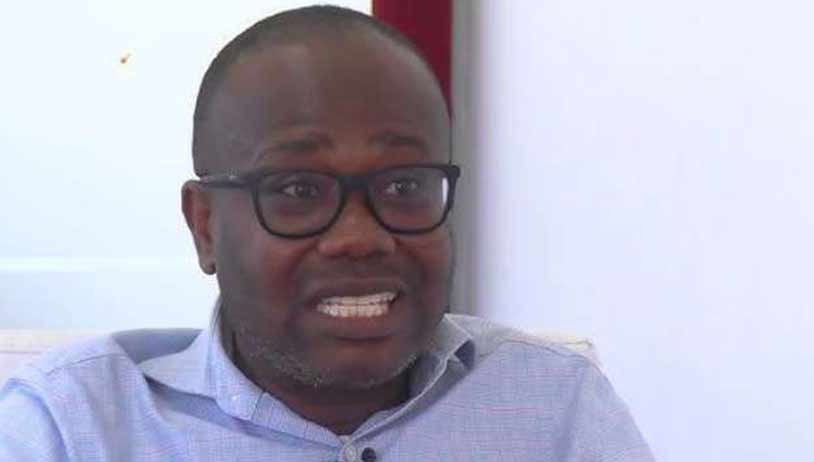
Former Ghana Football Association president Kwesi Nyantakyi has publicly thrown his weight behind outspoken lawmaker Kennedy Agyapong, describing him as the most electable and least risky contender in the New Patriotic Party’s (NPP) flagbearership race ahead of the party’s crucial internal vote.
In an exclusive interview on Joy AM, Nyantakyi now a member of Agyapong’s legal and campaign team said this was the first time he was speaking at length about the Assin Central MP on a major platform. He portrayed Agyapong as a rare political figure whose appeal cuts across party lines and resonates with ordinary Ghanaians frustrated by economic hardship, unemployment and corruption.
“Kennedy Agyapong is one particular politician in Ghana whose popularity blows no bounds,” Nyantakyi said. “There are people in the NDC, CPP and other parties who admire him and wish he will be presented so they can support him.”
Nyantakyi argued that Agyapong’s image as a fearless, unconventional politician has distinguished him from traditional party figures, making him a focal point of public conversation in markets, churches, lorry stations and universities. He described the lawmaker as a candidate whose blunt style and populist messaging align with voter concerns over cost of living pressures, job creation and accountability.
At the heart of Agyapong’s campaign, Nyantakyi said, is unemployment which he framed as Ghana’s most pressing national challenge and a potential security threat. Citing youth joblessness figures, Nyantakyi said more than one million young Ghanaians remain unemployed, with universities producing over 100,000 graduates annually, most of whom struggle to secure work within a year of graduation.
“This is not a youth problem. This is a national security crisis,” he said, warning that prolonged unemployment fuels social vices and instability.
Nyantakyi said Agyapong’s strength lies not only in rhetoric but in experience, pointing to his background as a businessman with investments in media, manufacturing, fisheries and steel. According to him, Agyapong’s private enterprises have created more than 7,000 jobs, giving credibility to his pledge to drive job creation through private-sector-led industrialisation.
He cited examples from Agyapong’s campaign tours, including proposals for rice milling factories in rice-growing areas such as Saboba and agro-processing opportunities in parts of northern Ghana. Nyantakyi said these ideas demonstrate a practical, locality-based approach to economic development.
While acknowledging the prominence of opinion polls showing former vice-president Dr Mahamudu Bawumia as the leading contender among party delegates, Nyantakyi questioned the methodology and sample sizes of some surveys. He contrasted them with other polls he said used larger samples and produced different results.
More significantly, Nyantakyi said his confidence was rooted in direct engagement with delegates rather than polling data. As a campaign coordinator in the five northern regions, he said he had interacted with at least 3,000 delegates directly and several thousand more indirectly.
“The impression I get is that Kennedy is loved by the delegates,” he said, adding that ground-level sentiment suggested rising support for Agyapong and a gradual decline in backing for his rivals.
Nyantakyi dismissed suggestions that past survey accuracy should intimidate Agyapong’s camp, arguing that polls should be seen as diagnostic tools rather than definitive forecasts. “When you see those surveys, it means there’s more work to do,” he said.
He also positioned Agyapong as a “less risky” candidate for the NPP going into the 2028 general election, arguing that some of the other contenders were closely associated with the previous administration and could be blamed for its electoral defeat. By contrast, Nyantakyi said Agyapong was not part of cabinet decision-making and therefore carried less political baggage.
“His link to the failures or inadequacies of the previous regime is minimal,” he said. “He comes as his own man, with a clean slate.”
Nyantakyi further argued that Ghanaian voting patterns suggest an appetite for change in leadership style and background. He said the country had tried lawyers, economists, communication experts and soldiers as presidents, and it might now be time to give a businessman a chance.
“We haven’t tried a businessman before,” he said. “We want this country to be run like a business — managing risk, capital and efficiency.”
The former GFA boss also weighed in on the debate over early concession of election results, suggesting that while early concessions can reduce tension, they may also have unintended consequences for parliamentary races. He stressed that under Ghana’s constitution, only the Electoral Commission has the authority to declare results within the stipulated time frame.
Despite acknowledging the competitiveness of the race, including strong showings by other aspirants such as Bryan Acheampong, Nyantakyi remained emphatic about Agyapong’s prospects.
“I don’t have any doubt about Kennedy winning,” he said. “If he doesn’t win, that will be the will of God.”
Nyantakyi described Agyapong’s campaign as more than a political bid, calling it a movement driven by grassroots enthusiasm rather than elite endorsement. He urged party delegates to see themselves as representatives of ordinary supporters and to choose the candidate they believe resonates most with the wider electorate.
“Look at who Ghanaians are yearning for,” he said. “That person is Kennedy Agyapong.”
As the NPP prepares for its internal vote, Nyantakyi’s remarks underscore the sharp contrasts in strategy, style and messaging shaping the contest — and highlight the stakes for a party seeking renewal after electoral defeat.