

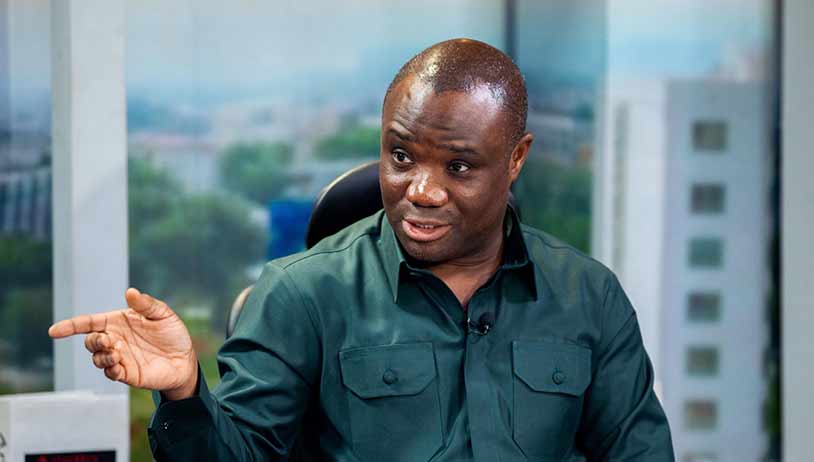
The Minister in Charge of Government Communications, Felix Kwakye Ofosu, has questioned the functional necessity and effectiveness of Ghana’s Office of the Special Prosecutor (OSP), arguing that the anti-corruption body has delivered limited outcomes despite significant public resources, while stressing that his views do not represent the position of President John Dramani Mahama or the government.
Speaking in a broadcast interview, Kwakye Ofosu, who is also the Member of Parliament for Abura-Asebu-Kwamankese, issued a clear disclaimer at the outset, noting that he was expressing personal opinions. He said the President had not discussed the OSP, the issue of pardons or actions relating to former Finance Minister Ken Ofori-Atta with him.
Kwakye Ofosu said his scepticism about the OSP predates its creation, arguing that the office does not perform functions markedly different from those already mandated to existing anti-corruption institutions, particularly the Attorney-General’s Department. He suggested that the conception of the OSP was driven by partisan considerations rather than a coherent institutional need.
According to him, the idea of the OSP emerged under former President Nana Addo Dankwa Akufo-Addo as a political response to public anger over corruption, and was closely tied to the appointment of Martin Amidu, a long-time critic of the National Democratic Congress (NDC). He argued that Mr Amidu’s prior confrontations with the NDC made the office vulnerable to perceptions of political targeting from its inception.
Kwakye Ofosu recalled that the first Special Prosecutor quickly ran into difficulties, including complaints about inadequate resources and alleged interference, before relations between Mr Amidu and the Akufo-Addo administration deteriorated. He cited Mr Amidu’s resignation letter, in which the former Special Prosecutor accused the President of being the “mother serpent of corruption”, as evidence that the office became mired in controversy early on.
He said the appointment of the current Special Prosecutor, Kissi Agyebeng, did little to dispel doubts about the independence of the office, noting public claims that Mr Agyebeng was closely aligned with figures within the previous administration. These perceptions, he argued, have been compounded by what he described as a lack of major convictions over the OSP’s years of operation.
“The OSP has little to show in terms of solid outcomes that justify its continued existence, especially considering the level of funding it receives,” Kwakye Ofosu said, adding that the Attorney-General’s Department has historically secured more convictions under successive governments.
He also raised concerns about the conduct and public posture of the OSP, including criticism of the publication of suspects’ mug shots and complaints about the behaviour of operatives attached to the office. Such issues, he said, have affected public confidence and contributed to the perception that the OSP has become more of an inconvenience than an effective tool in the fight against corruption.
Kwakye Ofosu further pointed to what he described as institutional tension between the OSP and the Attorney-General’s office, particularly over jurisdiction and case selection. He cited public expressions of dissatisfaction by the Attorney-General and Deputy Attorney-General regarding cooperation from the OSP, warning that such conflicts undermine credibility and efficiency.
On the specific matter involving Mr Ofori-Atta, whom he referred to as “Mr Ken”, Kwakye Ofosu said there was a growing perception that the OSP had stalled investigations, with some critics suggesting the office’s involvement could be shielding individuals from scrutiny by other state agencies. He noted that once the OSP assumes jurisdiction over a matter, it can complicate parallel investigations due to concerns about double jeopardy.
Turning to broader questions of political will, Kwakye Ofosu argued that effective anti-corruption action does not necessarily depend on the existence of a special prosecutor. He cited actions taken under President Mahama’s previous administration, including prosecutions arising from the National Service Secretariat scandal and the dismissal of then Deputy Communications Minister Victoria Hammah, as examples of decisive executive action.
He also noted that investigations into alleged illegal mining involving senior figures were ongoing under an NDC administration, underscoring his argument that presidents are capable of acting against members of their own parties when necessary.
Ultimately, Kwakye Ofosu said the key issue was accountability to the Ghanaian public, warning that voters would punish any government perceived to be shielding corruption. Whether the OSP is the appropriate mechanism to ensure that accountability, he said, remains an open question.
“Based on the outcomes we have seen so far,” he added, “I am doubtful that the Office of the Special Prosecutor is the cure.”