

The government has reaffirmed its commitment to expanding access to primary healthcare, assuring Ghanaians that plans to construct about 600 Community-based Health Planning and Services (CHPS) compounds are well advanced and will soon begin to come on stream.
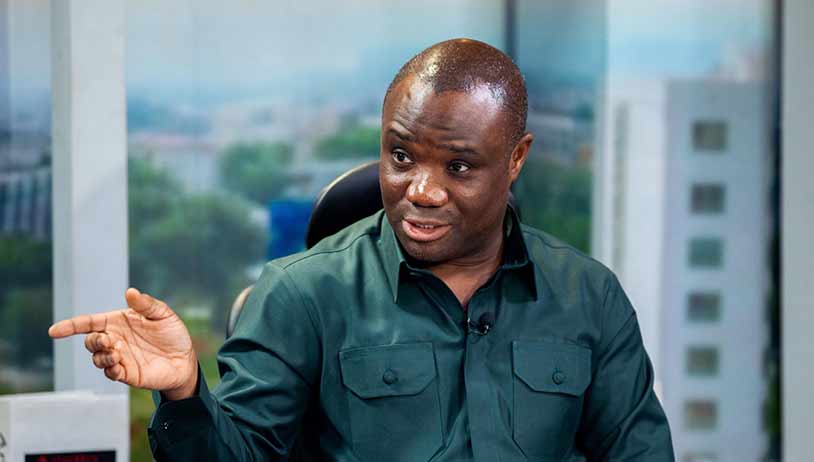
The assurance was given by the Minister in charge of Government Communication, Hon. Felix Kwakye Ofosu, during the latest edition of the Government Accountability Series, a forum that allows journalists to seek clarification on key national policies and promises.
Responding to a question from a journalist about the status of the proposed CHPS compounds, Kwakye Ofosu explained that the initiative is part of a broader government policy aimed at rolling out free primary healthcare, a flagship commitment outlined in the government’s manifesto and reiterated in the 2026 budget.
He stressed that the construction of CHPS compounds is central to decongesting higher-level health facilities and improving healthcare delivery at the community level. According to him, many district, regional and tertiary hospitals are currently overstretched because they handle minor ailments that should ordinarily be treated at lower-level facilities.
“When we talk about primary healthcare, we are referring to basic conditions such as headaches, stomach aches and other non-serious ailments,” the minister said. “These should not be burdening referral hospitals. Ideally, such cases should be handled at CHPS compounds, health centres or, at most, polyclinics.”
Kwakye Ofosu disclosed that government has earmarked about GH¢1.5 billion to support the implementation of the free primary healthcare policy, beginning this year. The funding, he noted, is intended to strengthen lower-level health infrastructure and ensure that basic medical care is accessible within communities.
He explained that the decision to construct hundreds of CHPS compounds was informed by significant gaps in health infrastructure across the country. Using his own district as an example, the minister said there are more than 260 communities but fewer than 30 CHPS compounds, a situation that places immense pressure on existing health centres and referral facilities.
To address this shortfall, government has issued new guidelines for the use of the District Assemblies Common Fund (DACF). Under the revised arrangement, up to 80 per cent of funds accruing to district assemblies are to be retained at the local level, a shift from previous practices where significant portions were managed centrally.
As part of these guidelines, every district assembly has been directed to construct a minimum of two CHPS compounds. With 261 district assemblies nationwide, the directive alone accounts for more than 520 facilities. Additional compounds are expected from the completion of projects initiated under the previous administration but left unfinished.
Kwakye Ofosu said implementation is already at an advanced stage in several districts. He cited ongoing projects in his own area, where two CHPS compounds are nearing completion and procurement processes for medical equipment are underway.
“As I speak to you, we are only a matter of weeks away from commissioning these facilities,” he said, adding that similar progress has been made in many parts of the country.
The minister acknowledged that comprehensive data on the nationwide rollout is still being collated but assured journalists that the Minister for Local Government, under whose supervision the district assemblies fall, would soon provide a detailed breakdown of progress.
He maintained that the CHPS compounds programme is firmly on course and will play a critical role in the rollout of free primary healthcare.
“I can assure you that this programme is far advanced and will be delivered in line with government’s commitment to begin the free primary healthcare initiative this year,” Kwakye Ofosu said.