

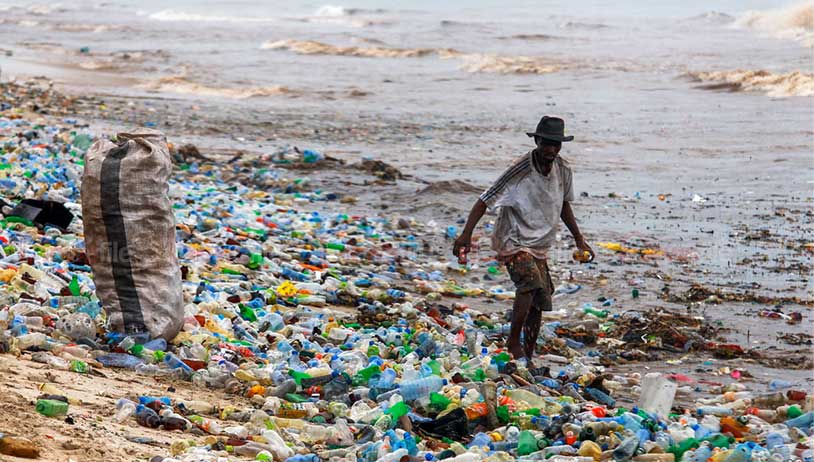
Fisherfolk along Ghana’s coastline are raising alarm over worsening marine pollution, warning that plastic waste choking the shorelines is accelerating declining fish catches and threatening livelihoods and food safety.
At Jamestown’s Shatta Beach in Accra, the Atlantic Ocean presents a striking horizon at sunrise and sunset. Yet closer to shore, the scene is markedly different. Plastic bottles, discarded footwear, foam, glass and textiles litter the beach, with some materials already breaking down into tiny particles.
Globally, more than 400 million tonnes of plastic waste are produced each year, with between 11 million and 23 million tonnes entering the oceans. In Ghana, an estimated 840,000 to 1.1 million tonnes of plastic waste are generated annually, but only a small fraction is recycled. Much of the remainder ends up in drains, open spaces and, eventually, the sea.
Fishermen say the pollution is damaging nets and reducing catches. Some report returning from long hours at sea with little fish but significant amounts of plastic entangled in their gear, increasing costs and undermining incomes.
Environmental advocates describe the situation as both a livelihood and public health concern. Plastics deposited upstream, they say, are broken down by weathering into microplastics that are ingested by fish. These particles then move up the food chain, raising concerns about human consumption and associated health risks.
Pressure on fish stocks has also been linked to illegal fishing practices. In 2021, the European Union issued Ghana a yellow card over illegal, unreported and unregulated fishing. The Fisheries Commission says declining stocks, compounded by pollution, are contributing to risky adaptive practices as fishers struggle to maintain catches.
Experts are calling for stricter enforcement of anti-pollution laws, expanded recycling infrastructure and sustained public education to curb single-use plastics. Some argue that waste audits could trace plastics back to producers, allowing authorities to hold companies accountable.
As debate over marine pollution intensifies, advocates say the focus must now shift from awareness to concrete action to restore Ghana’s oceans and shorelines.