

Introduction
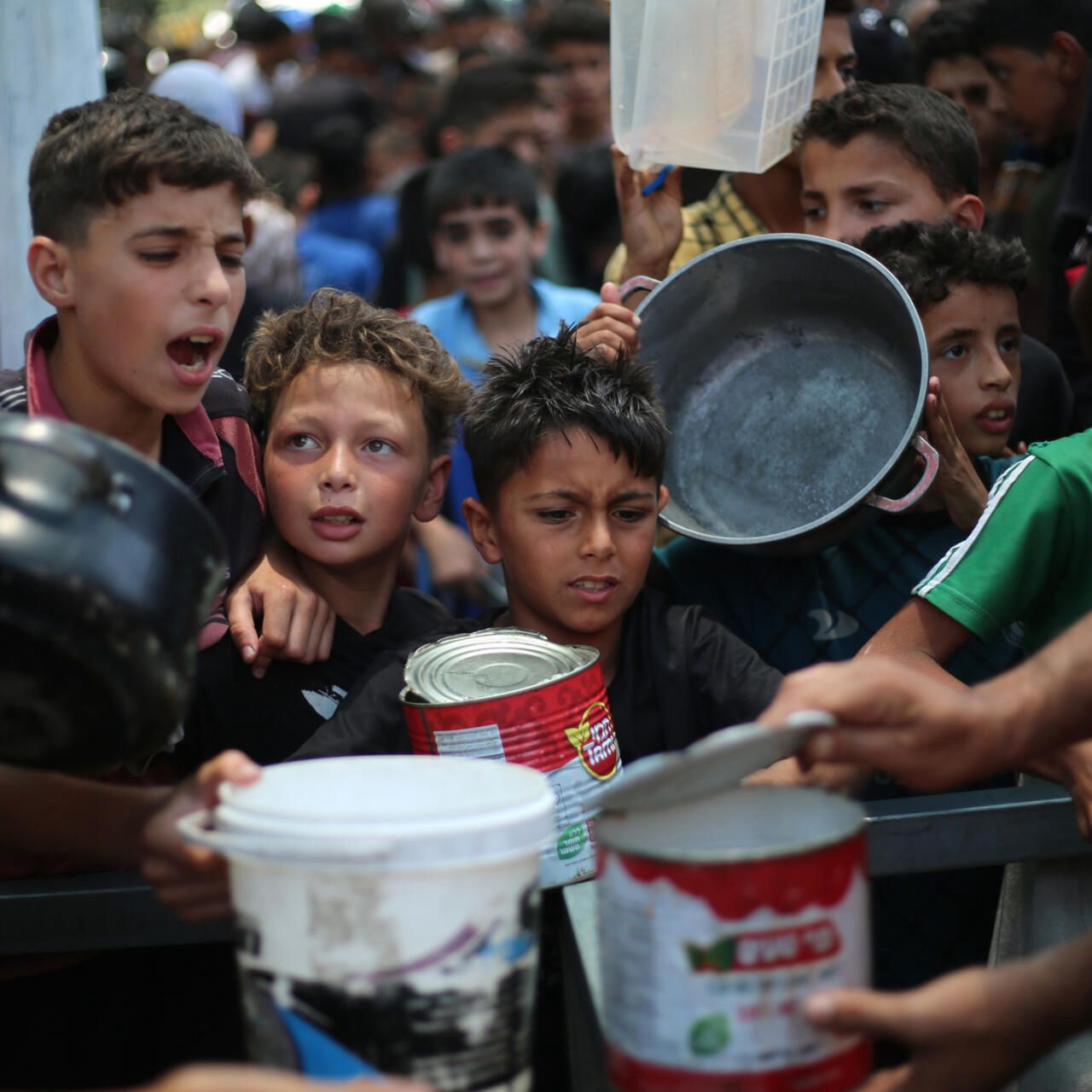
Have you ever tried to hold a serious conversation, focus on a complex task, or stay patient with a chatty coworker while you’re hungry? It’s nearly impossible, proving the adage that “a hungry man is an angry man.” We now have a modern term for this called ″hangry″— a clever blend of hungry and angry which traces back to a psychoanalytical journal in 1956 perfectly describing the irritability that takes over when is pass your mealtime.
Additionally, the internet has since propelled “hangry” into everyday speech, leading to its official induction into the Oxford English Dictionary in 2018. However, there is a much deeper physiological truth behind that familiar sense of frustration.
Right to Food
The right to food is an inherent human right, ensuring that all people have reliable access to the nutrition required for physical and mental energy. This concept is best captured by my human rights professor’s favorite maxim: “Human rights begin with breakfast.”
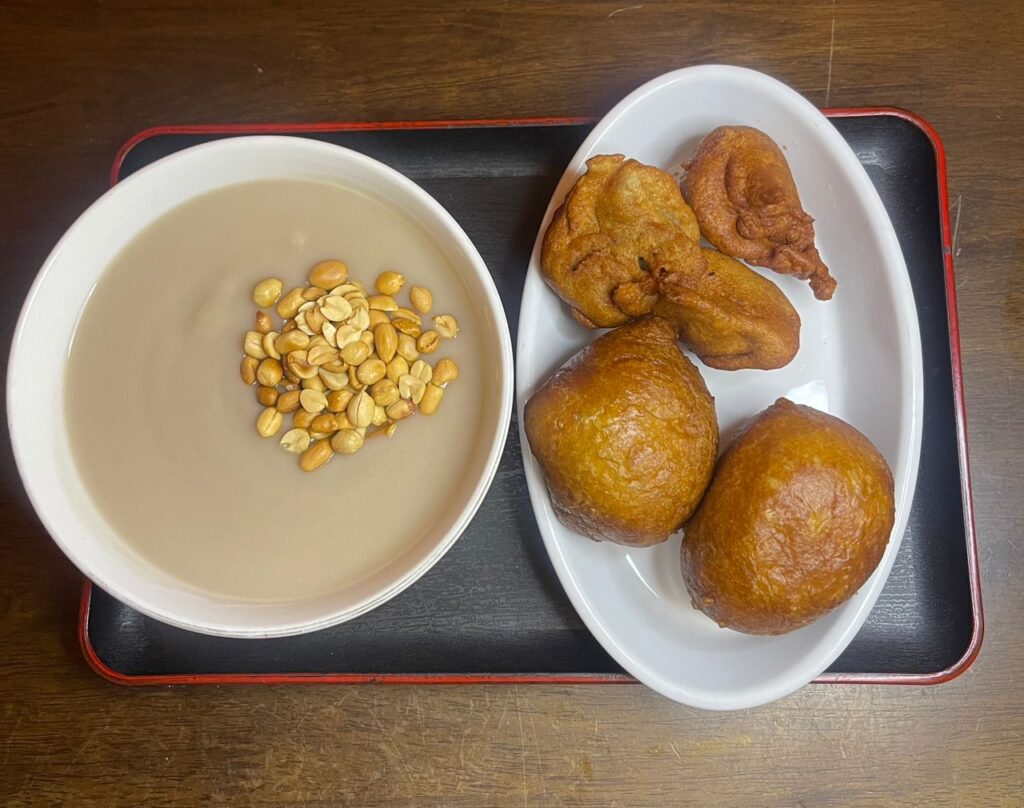
This is a simple reminder that in the Ghanaian context, we cannot meaningfully discuss civil liberties like “Free Speech” or “The Right to Vote” to a citizen whose primary concern is where their koko (breakfast) will come from and/or when their next bowl of kenkey or waakye will be. In plain words, ″True citizenship requires some food first″— a statement that may sound humorous but unfortunately reflects the lived reality of many in Ghana.
Before exploring the right to food, let’s look at the concept of rights. While some are privileges tied to citizenship or specific groups, human rights are innate. They are the freedoms we carry from birth, regardless of skin color, sexual orientation, religion, or even the amount of money in your bank account or mobile money wallet. Put simply: human rights are for everyone, everywhere.
Although rights are inherently interconnected, the right to food is the foundation of all these universal freedoms. However, this right extends beyond mere calories; it dictates that food must be adequate, culturally appropriate, and nutritionally sound. This raises a critical question: how many citizens are aware of this entitlement? Furthermore, how many know that the state is legally obligated to support those who are incapable of securing their own food?
Corresponding Data
In Ghana, the problem is often not that we don’t grow enough food, but that the food doesn’t reach the vulnerable at a price they can afford. In the 2024 and 2025 reports of the World Food Program and the National Food Buffer Stock Company (NAFCO), Ghana loses an estimated $1.9 billion worth of food annually due to post-harvest inefficiencies. Also, about 30% to 50% perishable crops like tomatoes and yams never make it to the table, instead rotting in transit due to poor roads and a lack of modern storage facilities.
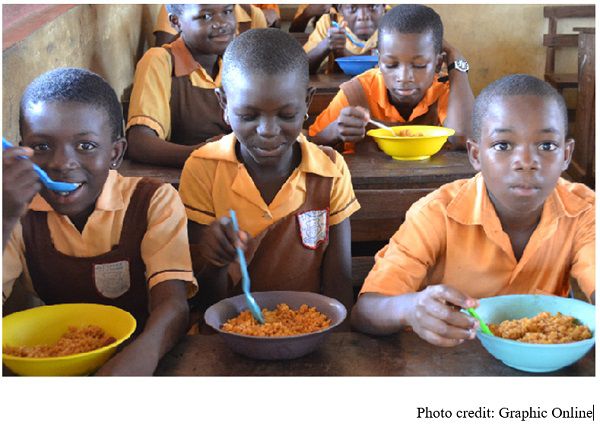
When it comes to sustainable food security, the school feeding program is undoubtedly Ghana’s most successful intervention. While it served 1.69 million children in 2015, recent statistics from the 2025 Budget Statement reveal a massive expansion now reaching an estimated 3.8 to 4.2 million pupils nationwide, providing a vital nutritional safety net in every region of the country.
Regarding food safety, Ghana’s food laws ensure that what we eat is safe, yet they don’t ensure that we can afford to eat it. The Public Health Act of 2012 protects food quality, but unregulated pricing leads to high inflation that puts a balanced diet out of reach for many. As the cost of proteins, vegetables, and bread climbs much faster than staples such as maize or cassava, the “Right to Food” becomes an economic impossibility for the average household.
To truly honor the right to food, the UN’s General Comment 12 outlines three non-negotiable standards. First is Availability: the ability to farm, fish, or buy food. Second is Accessibility: the requirement that food be affordable and physically reachable for everyone, from children to the elderly. Third is Adequacy: the guarantee that food is safe, healthy, and culturally appropriate. Without all three, the fundamental right to food remains unfulfilled.
In this light, understanding the right to food means shifting our view from food as a luxury to food as a fundamental right to dignity. This creates a two-way street: citizens work to feed their families, and the state ensures that food is safe and affordable for all. True food security is a partnership that protects every citizen’s plate.
Also, to realize the goal of leaving no one behind, the state is legally bound to step in during emergencies. Whether facing economic crisis, disability, or disaster, the most vulnerable must have a guaranteed right to the nutrition required for survival and recovery.
While the Constitution of Ghana does not explicitly use the phrase “right to food,” the Directive Principles of State Policy found in chapter six of the 1992 constitution require the government to ensure the availability of necessities which includes food security for all citizens. Additionally, Ghana is a signatory to the Universal Declaration of Human Rights and must uphold its principlessuch as the right to adequate standard of living which identifies food as a component of an “adequate standard of living″ (Article 25).
Furthermore, Ghana has ratified legally binding treaties such as the International Covenant on Economic, Social and Cultural Rights whichspecifically recognize the fundamental right of everyone to be free from hunger (Article 11). This indicates that, the government of Ghana is legally bound to these laws and is required to create policies that ensure food security.
Conclusion
In summary, the right to food is the essential foundation for the exercise of all other universal freedoms. This need transcends social class and geography, serving as a common thread between the urban dweller in Accra and the rural farmer. If we accept that human rights begin with breakfast, our collective mission must be to build a Ghana where food security is a reality for all.
A truly just society is defined not by the merits of the individual, but by its commitment to ensuring every citizen has access to the nutrition they need.
Call to action
Awareness is only the first step; turning the Right to Food from a legal concept into a lived reality for every Ghanaian requires collective action. We can start by using our voices to advocate for the truth that access to nutritious food is a fundamental human right.
Beyond advocacy, we must vote with our wallets. By buying from smallholder farmers and traditional markets, we strengthen the accessibility and availability of local food. This keeps wealth within our communities and ensures our food systems remain resilient. Finally, we must support organizations such as food banks providing immediate relief and the Peasant Farmers Association of Ghana (PFAG), which tirelessly advocates for “Right to Food” legislation and protects the livelihoods of those who feed our nation.
By Hawa Mutawakilu
The writer is a freelance food journalist and a sustainable lifestyle advocate with a Master’s degree in Human Rights, Conflict and Peace Studies.
Website: hawassustainablejournal.com
WhatsApp: 0537 980 740