

In life and in fiction, what outfit we wear to a social gathering can make us feel empowered – or ashamed. Rosalind Jana explores the worst – and best – sartorial mishaps.
Parties are often ripe territory for failure. Amid the dancing and the talking and the new encounters, there can lie within you a great, dark pool of apprehension about all the possible ways in which the evening could go wrong. You could arrive at an incorrect time and not know what to say or where to place yourself. You could drink too much. You could say too little. Perhaps you are the kind of person who falls silent and retreats inwards at such events, watching everyone else laugh and glide around with an ease you desperately envy. You may realise at some point, or try not to realise, that you are at the bottom of the social pecking order, your presence yielding more pity than pleasure. You might even have made everything worse by turning up wearing the wrong kind of dress, all hope for a night of fairytale glamour dashed the minute you entered the room and noted the dissonance between your outfit and everyone else’s.
All of these agonising sensations and half-revelations are ones experienced in quick succession by Aroon St Charles, the deceptively naïve narrator of Molly Keane’s novel Good Behaviour. First published in 1981, and re-released last month by New York Review Books, Keane’s Booker-shortlisted comedy of manners is bleak, brilliant, and often vicious in its humour. Set in the crumbling world of the Anglo-Irish aristocracy in the early 20th Century, it features a cast of characters who are obsessed by – and frequently fail – the demands of taste, restraint, and good behaviour.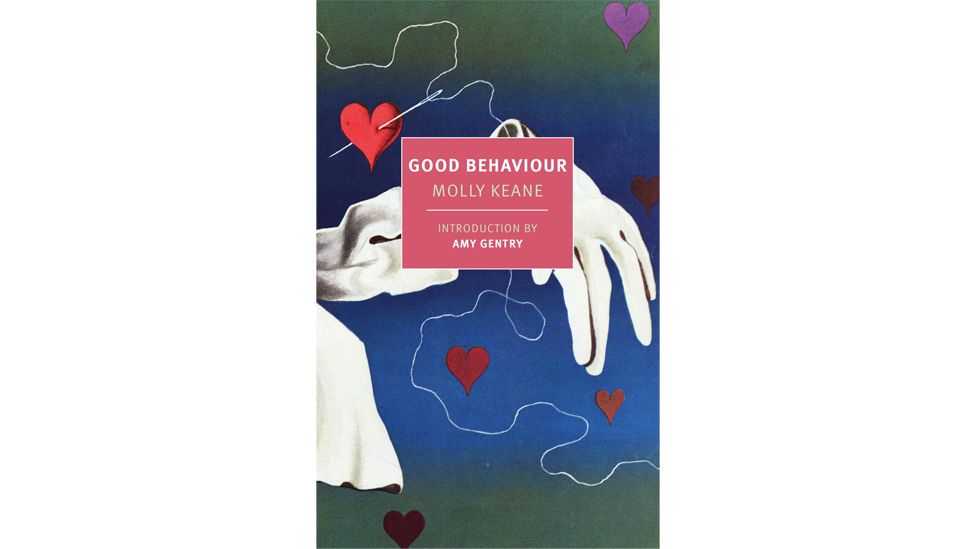
In the novel Good Behaviour, the narrator’s fashion mistake at a party leaves her ashamed and embarrassed (Credit: NYRB)
Aroon, who is much-maligned by her mother and desperate for affection from her father, relays the story of her upper-crust upbringing with an awkward candour. As a young, lonely woman, she is delighted by an invite to a ball held by another local family. Her size and height are the subject of frequent barbs from her mother, and thus dress is already fraught territory. However, she has a gown tailored specially for the event – a confection of pink chiffon and gold lace that makes her feel “unbelievable”, the narrator staring at her reflection in the mirror with a rare “shudder of pleasure”. However, this gown’s magic is short-lived. Her mother ignores it. Her father is painfully polite about it. And when she turns up at the party much too early, with everyone else still dressed in their daytime clothes (the men in tweed jackets and the women in pearls and cardigans), it marks the beginning of a night defined by the reader’s excruciating awareness of Aroon’s failure to fit in.
For every literary scene highlighting the transformative power of fashion, there is another that focuses on an outfit that makes the wearer feel uncomfortable and ashamed
Part of Keane’s cleverness in Good Behaviour comes in the disjunct between what Aroon observes and what the reader understands. Later on when everyone else has finally changed, she deems another party-goer’s white dress “quite horrid” for being “straight as a pinafore”. Given that this scene takes place in the 1920s, we onlookers may recognise the simple stylishness of this dress compared to Aroon’s froth of fabric, but she does not. Her sense of discomfort, however, is clearly articulated: “I stood about, smiling, compressed, submerged in politeness; aching in my isolation; longing to be alone; to be away; to be tomorrow’s person.”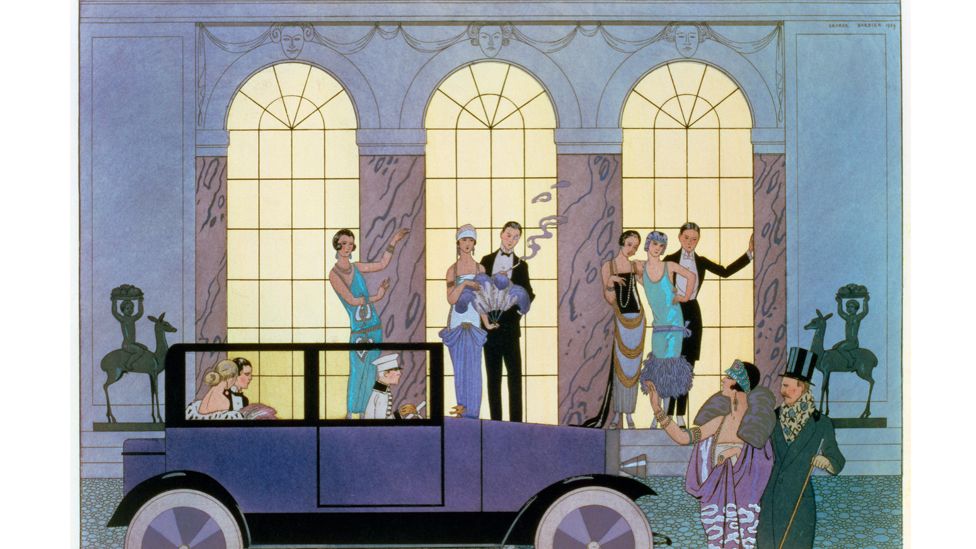
To socialise with others is to potentially feel vulnerable – but we are not alone in experiencing sartorial anxiety (Credit: Getty Images)
The night features a chain of events that ends dramatically in vomiting and a family death, but let us focus for a moment longer on Aroon’s dress. It belongs to a vast, shadowy wardrobe of fictional garments that have betrayed their owners. For every literary scene highlighting the transformative power of fashion – think Cinderella’s dress and glass slippers, or Shakespeare’s many gender swaps and disguises – there is another that focuses on the subtler, more self-conscious trials of an outfit that makes the wearer feel uncomfortable and ashamed. Most of these scenes take place in public settings, and a great number of them at parties.
Party time
Virginia Woolf was another great chronicler of the fashion disaster. Her characters frequently find clothing a source of doubt and distress – and none more so than Mabel Waring, the protagonist of her 1924 short story The New Dress. Like Aroon, Mabel is delighted at the prospect of an upcoming party, commissioning a dress inspired by “an old fashion book of her mother’s” that makes her feel “an extraordinary bliss” when first tried on. Also, as for Aroon, it is the wrong choice of garment. Mabel, however, immediately realises her error: appalled at what she glimpses in the mirror as she enters the party, hardly daring to face “the pale yellow, idiotically old-fashioned silk dress with its long skirt and its high sleeves” that had seemed like such a good idea until the moment she arrived.
These feelings are awful and intimate: speaking to some of the deepest fears we hold about ourselves
For Mabel, this dress triggers a cascade of self-hate and uncertainty: “At once the misery which she always tried to hide, the profound dissatisfaction – the sense she had had, ever since she was a child, of being inferior to other people – set upon her.” She moves through the party imagining herself as a fly crawling around the edge of a saucer, surrounded by “dragonflies” and “beautiful insects” who flit past and wear “lovely, clinging green” as she alone is fixed with the true, mundane horror of her own being. She comes back to her dress again and again, seeing in its colour and silhouette a confirmation of everything she loathes about herself, from her mothering to her age to her class background, and desperately wishing to become “a new person” who throws off the shackles of Mabel Waring’s history and existence, and never thinks about clothes again.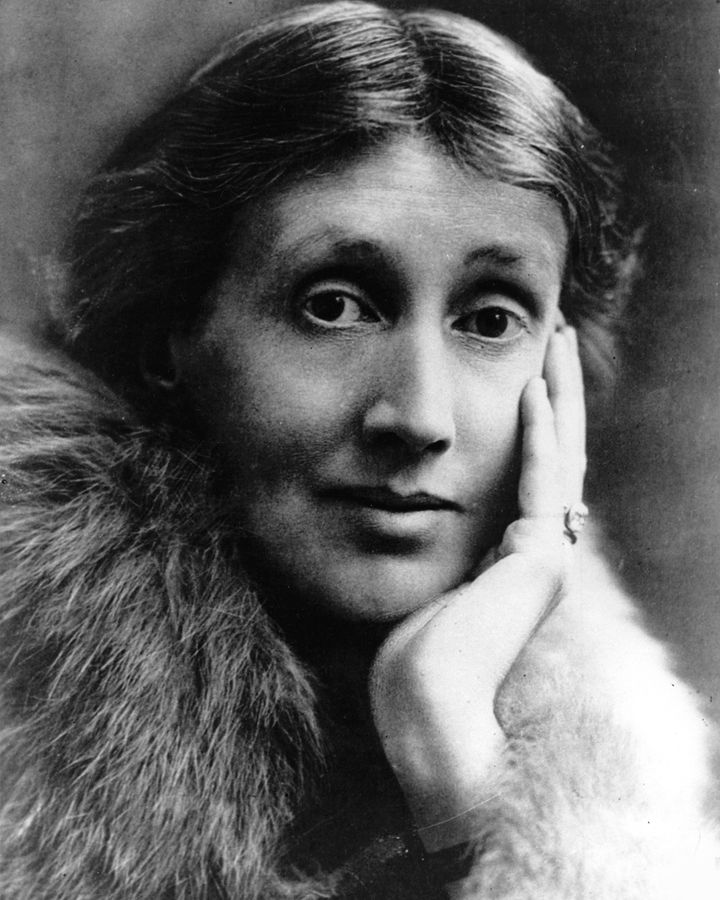
In Virginia Woolf’s 1924 short story The New Dress the protagonist wears a party dress that triggers self-loathing (Credit: Getty Images)
Much of the pain and deflation detailed here by Woolf lies in the gulf between the private pleasure of a garment and its public reception. How many of us have looked at ourselves in the mirror at home and felt delighted by a new outfit, only to have that joy punctured when we realise we are underdressed, overdressed, or somehow out of step with everyone else at an event? The feelings that result from these apparent ‘fashion disasters’ are awful and intimate: at once speaking to some of the deepest fears we hold about ourselves, and a symptom of the changing messages around what (and who) is considered fashionable and beautiful.
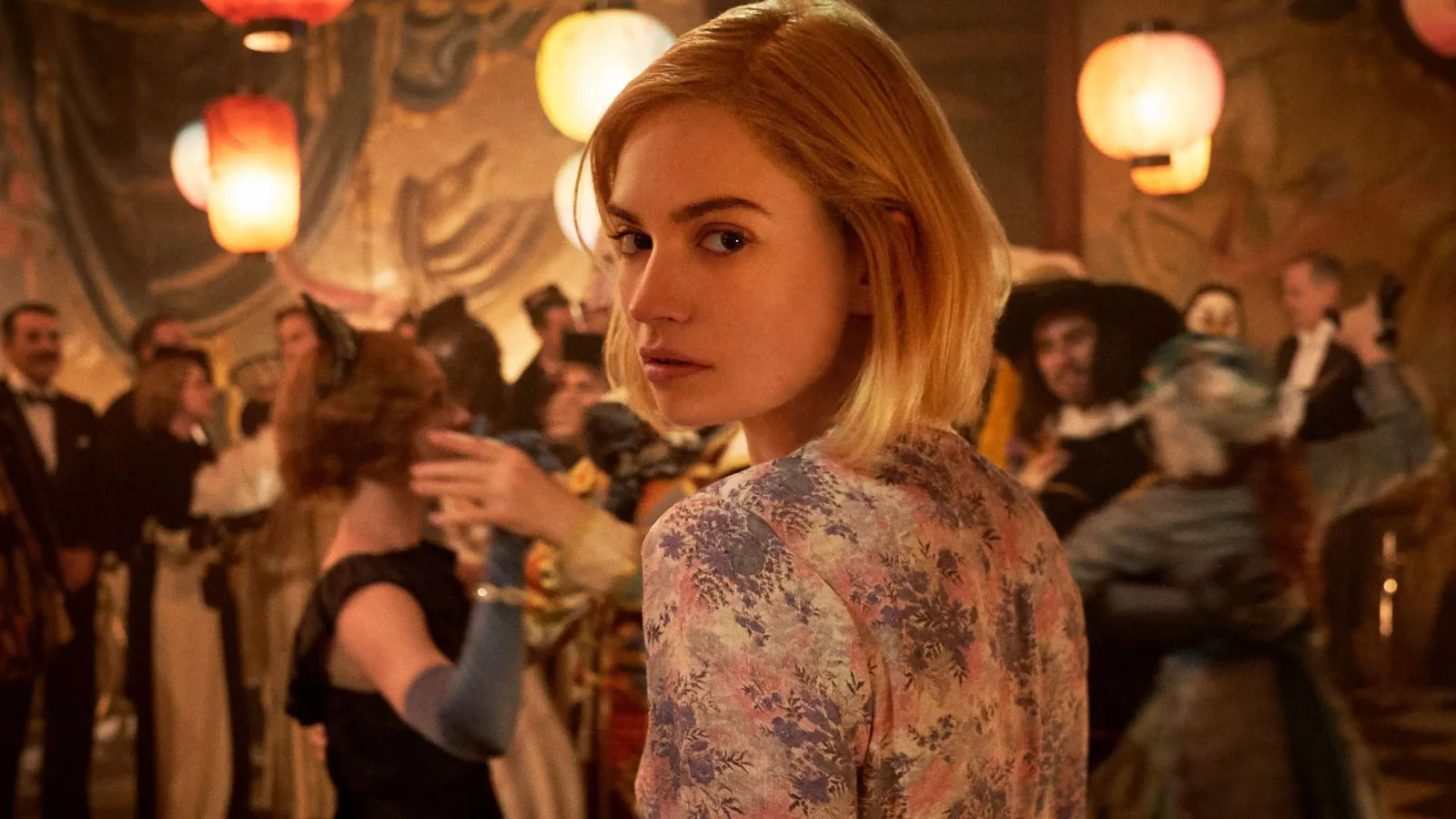
A very particular fashion humiliation is experienced by the unnamed protagonist of Daphne du Maurier’s Rebecca (1938) when she hosts her first costume ball at Manderley: the imposing country home she has become the timid mistress of after marrying Max de Winter. Every room retains traces of her husband’s dead first wife Rebecca, the wardrobes still full of her stylish clothes. This new wife is even tricked into copying one of Rebecca’s outfits, encouraged by conniving housekeeper Mrs Danvers into using a portrait of one of her husband’s relatives as outfit inspiration for the ball.
She mimics it faithfully, commissioning a replica white dress and curly-haired wig. On the day she is giddy with anticipation, enjoying the way this costume submerges her own “dull personality” and presents to her in the mirror a better, brighter image of a “self that was not me”. This joy is short-lived though, curdled by shame and confusion when she makes her grand entrance down the stairs, and is faced by “a long silence” from the gathered guests – and icy fury from her husband who thinks she has mimicked his first wife deliberately and appeared as Rebecca’s ghost.
Aroon and Mabel choose to exit their parties early. The second Mrs de Winter is forced to change, making her way through the evening in a plain blue dress with a “smile screwed” on to her face, and an abject sense of inadequacy throbbing beneath the surface. In Katherine Mansfield’s short story Miss Brill (1920), however, it is only as the main character is just about to return home, following an afternoon out, that she suffers her own moment of sartorial shame. After enjoying her usual weekend ritual of watching people mill around the bandstand in the Jardins Publiques, Miss Brill comes to a realisation. Sitting there in her best fur, worn specially for the occasion, she conceives of the entire, pleasant scene before her as a play – and herself as an actor. “Even she had a part and came every Sunday. No doubt somebody would have noticed if she hadn’t been there; she was part of the performance after all.” This realisation fills her with a wonderful pride.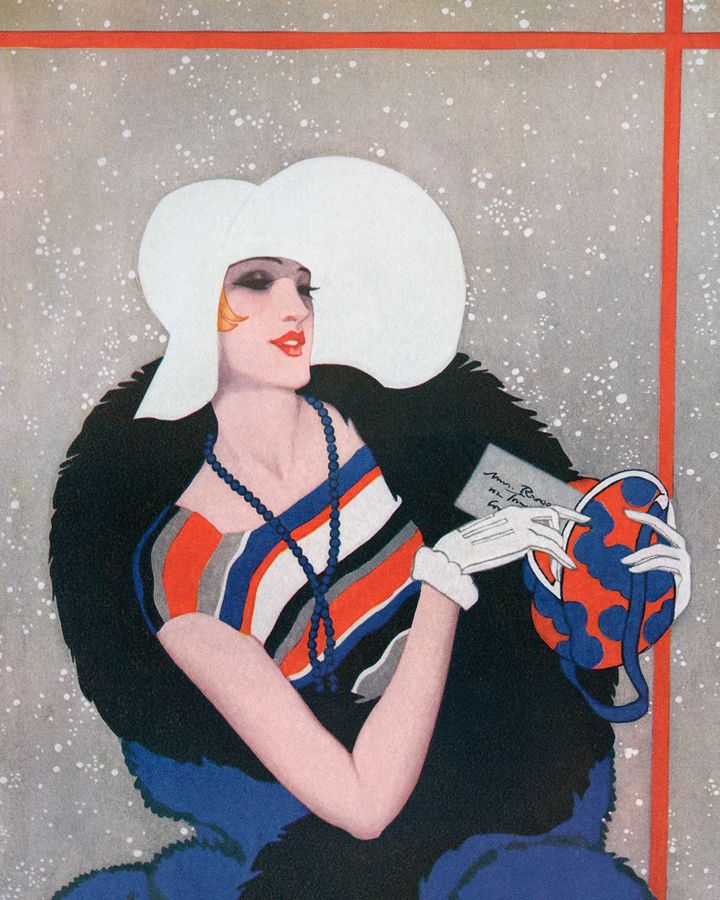
Miss Brill (1920) by Katherine Mansfield tells the story of a character who suffers a moment of sartorial shame in her best fur (Credit: Getty Images)
At just that moment she overhears a young couple nearby. They are giggling about her. “Stupid old thing,” the boy mutters. “Why does she come here at all – who wants her?” The girl responds by laughing about her fur. “It’s exactly like fried whiting.” When Miss Brill gets home, denying herself her usual Sunday treat of a slice of honey-cake from the bakery, she sits in silence. The final three lines of the story are brief: “The box that the fur came out of was on the bed. She unclasped the necklet quickly; quickly, without looking, laid it inside. But when she put the lid on she thought she heard something crying.”
Like those other women in their uncomfortable dresses, Miss Brill is undone by a moment of shattered self-perception. She briefly conceives of herself as something more – something beautiful and worthy of attention – and is humiliated for daring to believe it. She cannot escape the body beneath the fur, suddenly reminded of her age and taste just as others are unpleasantly reminded by their outfits of their size or class or sense of social inadequacy. Her story is both unremarkable and unbearable. The fantasy is destroyed. The fur is forever tarnished.
Refusing to be shamed
These moments of fashion disaster pierce the reader because they capture the cruelty of other people’s judgments – whether real or imagined – and convey the acute anxiety of standing out in all the wrong ways. This is an anxiety that fashion thrives on, both as an industry (what else are trends but designations of “right” and “wrong”?) and a cultural system that frequently relies on dress codes, uniforms, and an unspoken understanding of what is considered appropriate and attractive. No wonder it sometimes all feels a bit crushing.
Not everyone is felled by such demands though. In Alexander Chee’s novel Queen of the Night (2016), fictional 19th-Century opera singer Lilliet Berne enters a Parisian ball in a “creation of pink taffeta and gold silk”. Pausing by a mirror, she is horrified to realise that it looks awfully garish. A consummate performer aware of her own stage presence, she hides in the crowd and eventually finds a set of dukes with an unusual taste for “returning women from an evening in their company with their dresses cut to pieces by sabers – and for supplying those women afterward with more dresses in return”. Seizing the opportunity, she allows them to sneak her off and destroy her taffeta like “an enormous flower torn to petals” in exchange for them procuring a new dress for her immediately. Several hours later she returns to the ball triumphantly “in a beaded black satin gown, the train behind me like the glittering tail of a serpent”. She enters, sings, and the crowd roars with delight.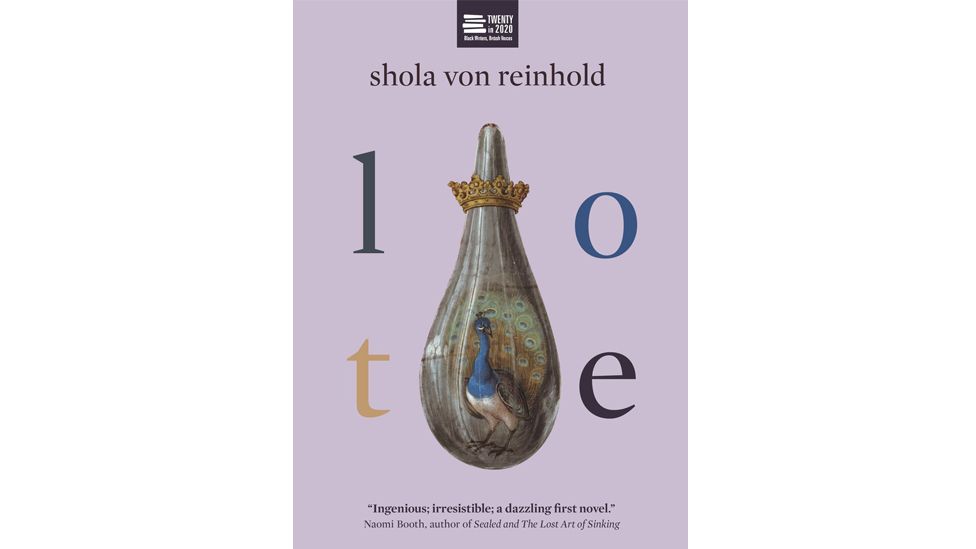
In the 2020 novel, Lote, the narrator Mathilda sees clothes as a source of decadence and transformation (Credit: Jacaranda Books)
An outright refusal to be shamed is also transgressive. Shola von Reinhold’s Lote (2020), which recently won the Republic of Consciousness prize for small presses, begins with the narrator Mathilda being stopped and closely questioned at the entrance to an arts archive. She is dazzling in “eBay lab diamonds” and “silver leatherette” but observes dryly that “people rarely allow for Blackness and caprice (be it in dress and deportment) to coexist without the designation of Madness”.
Von Reinhold’s book is concerned with Mathilda’s quest to uncover the history of a queer, black British Modernist figure named Hermia Druitt, tracking her down through photos, murals, and obscure academic textbooks. Mathilda herself has adopted many names and many guises, and sees clothing as a source of both decadence and transformation. She grapples with her attraction to the white, rarified world of 1920s “Bright Young Things” and Bloomsbury Group members, and tries to embody her own subversive version of their “fantasy… in spite of, to spite” those who act as cultural gatekeepers: whether literally, as with the “blonde twink” on the door at the archive who she admonishes for his assumptions based on her appearance, or structurally in the form of the institutions and social circles that historically excluded people who looked like her.
Lilliet and Mathilda are driven by very different things, but they share a taste for performance and an understanding of clothing as costume. Perhaps this is why they approach the question of wearing the “wrong” thing differently. They are self-made women who are constantly fashioning themselves into who they want to be, meaning that they don’t see dress as something that can betray anything especially intimate or wounding. Instead it becomes a source of limitless potential, offering them a tool to command attention – and an armour to deflect others.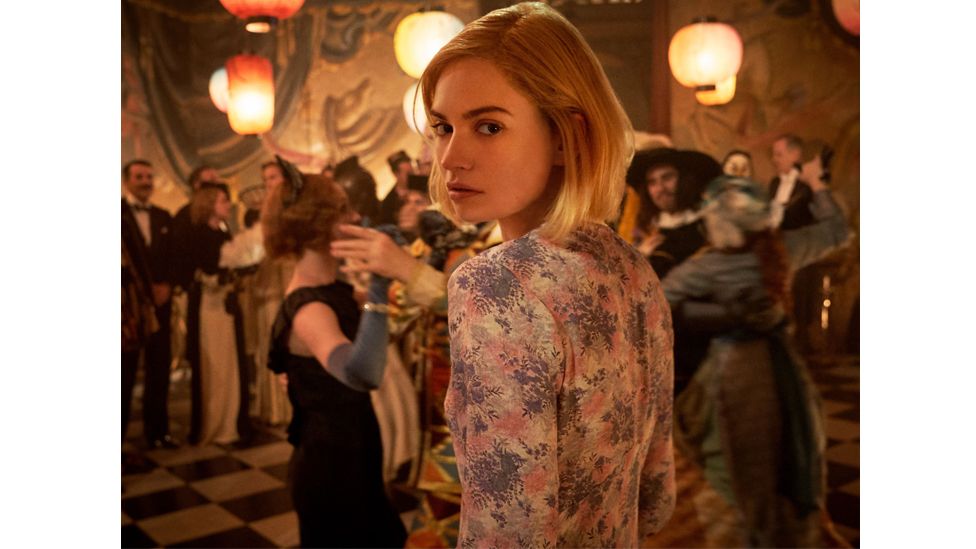
In Daphne du Maurier’s Rebecca, the protagonist wears an ill-advised dress to a party – with disastrous consequences (Credit: Kerry Brown/ Netflix)
Clothes can be many things. They keep us warm. They offer comfort. They differentiate a wedding from a funeral. They can make us feel more like ourselves, or render us someone else entirely. But these scenes of sartorial disaster and distress, as well as, on occasion, defiance, acknowledge that fashion is not always easy or enjoyable.
There is something rather heartening in this admission, though. As uncomfortable as it is to read about such moments of sartorial disaster and distress (as well as a good dose of defiance), they demonstrate that it’s not unusual to endure a moment of rising panic in a suit that leaves us itchily out of place or a skirt that misreads the room. They understand that to exist in public is to potentially feel vulnerable, and that a dress really can make or ruin an evening. As many of us find ourselves navigating new wardrobe choices and the watchful eyes of others once more after a year of minimal socialising, this thought isn’t altogether reassuring. However it does offer solace in reminding us that if our garments suddenly make us feel ill at ease, we’re certainly not alone.