
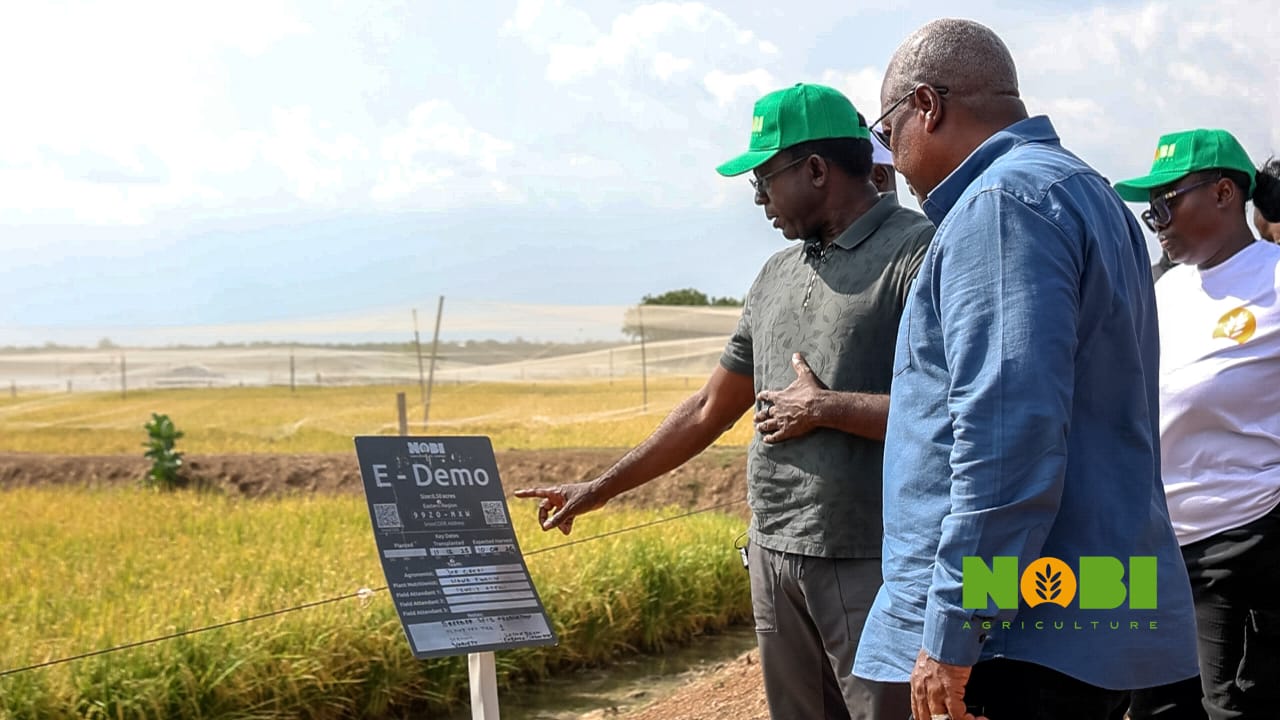
Across the Afram Plains, Nobi Agriculture is steadily emerging as one of Ghana’s most ambitious private farming projects.
Led by Kwame Awuah-Darko, the 21,000-acre development is combining irrigation infrastructure, research, and modern processing to build agriculture at scale.
The project’s growing significance was underscored recently when John Dramani Mahama visited the farm alongside Agriculture Minister, Eric Opoku, reflecting the increasing national attention surrounding the vision taking shape on the land.
Across the plains where Ghana’s agricultural future is steadily taking form, Nobi Agriculture is quietly advancing one of the country’s most ambitious private farming projects.
Spanning a planned 21,000 acres, the development is designed not simply as farmland, but as an integrated agricultural ecosystem where water management, research, processing and storage converge to support modern food production.
The project is the vision of Ghanaian entrepreneur Kwame Awuah-Darko, whose long-standing interest in agriculture has evolved into a large-scale effort to demonstrate what structured, investment-led farming can look like in Ghana.
Under his direction, the project is being developed deliberately and in phases, with 7,000 acres currently under active development in its first stage.
The scale and ambition of the undertaking are increasingly drawing the attention of serious institutional partners and national leadership alike.
Development finance actors such as Development Bank Ghana have taken interest in the project’s model .
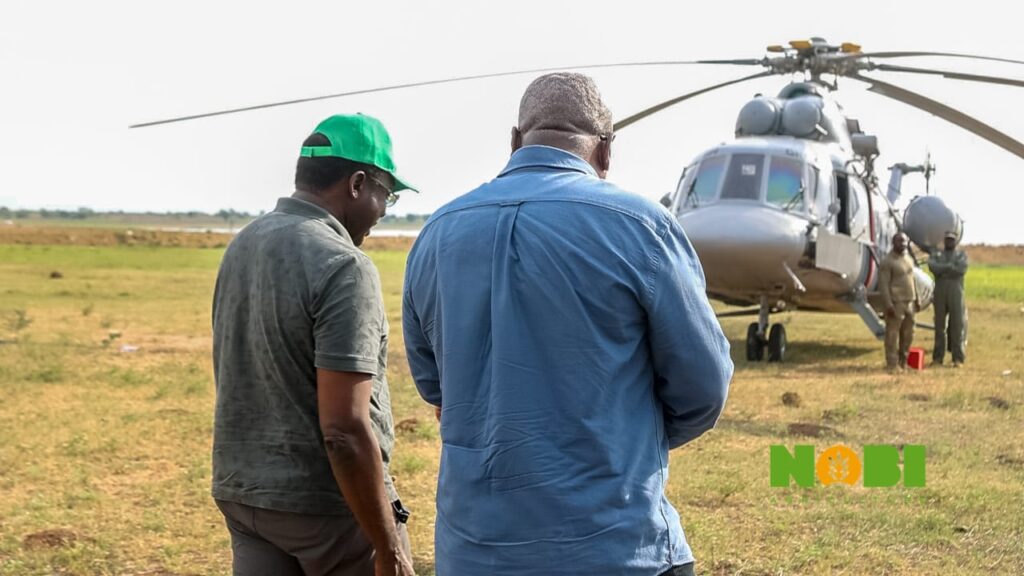
On Saturday, March 21, 2026, President Mahama visited the Sikasu farm in the Afram Plains together with Agriculture Minister, Honorable Eric Opoku to observe firsthand the scale and nature of work done so far.
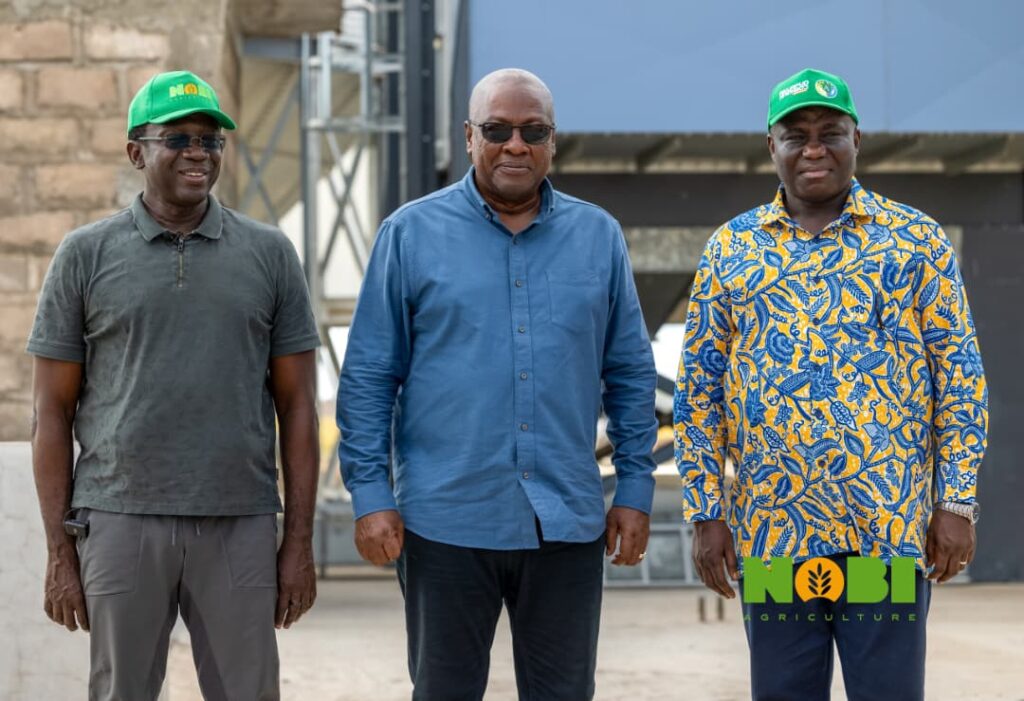
During the visit, the President and the Minister were given a front-row view of the systems underpinning the project’s approach to food production.
The delegation toured the farm’s crop research institute, irrigation infrastructure, rice fields, warehouses, silos and processing facilities, offering a comprehensive look at how the project integrates cultivation, research and value addition within a single agricultural ecosystem.
The engagement also highlighted how projects such as Nobi Agriculture align with broader national development ambitions, including the administration’s Volta Economic Corridor vision and the emerging 24-Hour Economy framework, both of which place strong emphasis on productive sectors such as agriculture.
Beyond the policy alignment, the project reflects a deeper philosophy championed by Awuah-Darko: that agriculture must be approached as a fully integrated industry rather than a collection of isolated farming activities.
To that end, Nobi Agriculture has prioritized foundational infrastructure capable of sustaining productivity over the long term.
At the center of the farm’s irrigation strategy is a 23-acre reservoir with a storage capacity of 1.2 million cubic metres of water, forming the backbone of a water management system designed to stabilize cultivation cycles in a region where rainfall variability can affect traditional farming patterns.
Beyond cultivation, the farm has also invested heavily in post-harvest systems. Its processing complex includes a rice mill with a capacity of three tonnes per hour, supported by a dryer, an ultra-modern warehouse, and silo storage capable of holding 1,300 metric tonnes of paddy rice.
Together, these facilities allow the farm to move beyond primary production into value addition, strengthening the agricultural value chain and reducing post-harvest losses.
The results are already becoming visible in the fields. Current yields are averaging 3.5 tonnes of rice per acre, reflecting the benefits of improved seed selection, irrigation, and modern cultivation methods implemented across the farm.
Research and innovation form another pillar of the project. Within the farm’s operations in the Afram Plains sits a rice research institute dedicated to developing indigenous seed varieties, helping tailor rice production to Ghana’s soil conditions and climate while strengthening local seed development capacity.
The initiative mirrors Awuah-Darko’s broader belief that Ghana’s agricultural transformation will depend not only on land and labor, but also on science, infrastructure and patient capital.
The project is also contributing directly to the rural economy. Nobi Agriculture currently provides over 150 direct jobs to Ghanaian youth, creating opportunities for employment while helping build a workforce trained in modern agricultural practices.
As Ghana continues to explore pathways toward greater food security and agricultural industrialization, projects like Nobi Agriculture illustrate the growing role of private enterprise in shaping the sector’s future.
Across the thousands of acres now under cultivation, the work unfolding under Awuah-Darko’s leadership suggests that the next chapter of Ghanaian agriculture may well be written at scale.