
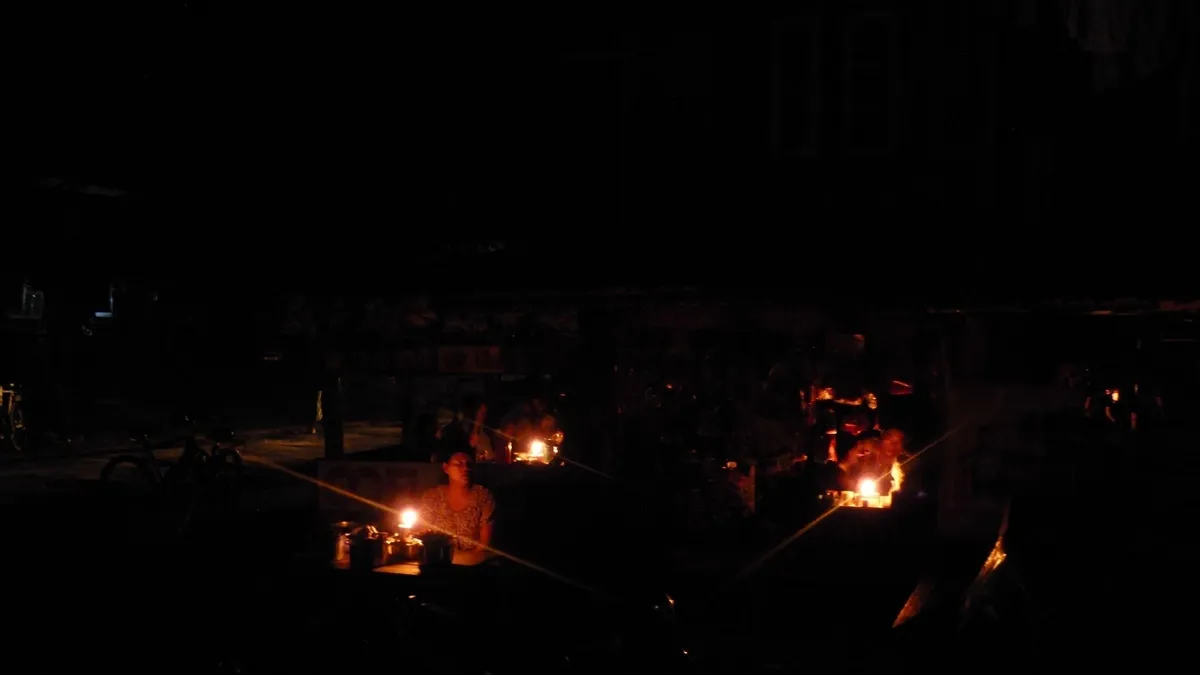
The Africa Sustainable Energy Centre (ASEC) warns that Ghana could lose up to $2 Billion if the current trend of persistent power outages continues unchecked.
These disruptions are already affecting households, businesses, critical services, and overall economic productivity, posing a significant threat to national development and investor confidence.
Recent outages have begun to take a measurable toll on key sectors of the economy, including manufacturing, services, healthcare, and small and medium-sized enterprises (SMEs).
Frequent power interruptions increase operational costs, reduce productivity, damage equipment, and force businesses to rely on expensive backup generation, ultimately weakening Ghana’s economic competitiveness.
“Electricity is the lifeblood of any modern economy,” said Ing. Justice Ohene-Akoto, Executive Director
of ASEC.
“If Ghana continues on this trajectory, the cumulative impact could erode up to $2 Billion annually. This is not just an energy issue—it is a national economic emergency.”
ASEC notes that Ghana’s power challenges are multifaceted, involving generation constraints, fuel supply
inconsistencies, transmission bottlenecks, and distribution inefficiencies.
Recent operational concerns further highlight the vulnerabilities within critical energy infrastructure.
Beyond immediate financial losses, the long-term implications include reduced foreign direct investment, slowed industrialization, job losses, and declining living standards.
Critical sectors such as healthcare and education are also adversely affected, with broader implications for human capital development.
To mitigate these risks and safeguard the economy, ASEC calls for urgent and coordinated action across the energy sector:
- Leveraging Artificial Intelligence for Predictive Maintenance and Grid Resilience
ASEC strongly advocates for the deployment of Artificial Intelligence (AI) and advanced analytics to
enable predictive maintenance across generation plants, gas infrastructure, and grid systems. AI-driven
solutions can detect anomalies, forecast equipment failures—particularly in critical systems. - Strengthening Revenue Mobilization and Metering Systems
ASEC emphasizes the urgent need to improve revenue collection within the power sector, particularly
through strategic privatization efforts within the Electricity Company of Ghana (ECG). Enhancing
operational efficiency, reducing losses, and increasing accountability must be prioritized. Additionally,
large-scale investment in smart metering infrastructure is critical to improving billing accuracy, reducing energy theft, and ensuring cost recovery across the value chain. - Strengthening Generation Capacity and Fuel Security
Diversification of Ghana’s energy mix through accelerated investment in renewable energy sources such as solar, wind, and hydro, alongside improved fuel supply reliability for existing thermal generation assets. - Modernizing Transmission and Distribution Infrastructure
Strategic upgrades to aging infrastructure, creating a more robust system, and deployment of advanced
grid monitoring and automation technologies. - Promoting Energy Efficiency and Demand-Side Management
Strengthening public awareness and policy incentives to encourage energy conservation and reduce peak demand pressures. This will be most useful as an interim measure while we navigate a more sustainable solution. - Strengthening Governance and Regulatory Oversight
Enhancing transparency in procurement processes and improving coordination among sector stakeholders to restore confidence and ensure long-term sustainability.
“The cost of inaction far outweighs the cost of reform,” Ing. Ohene-Akoto emphasized.
“Ghana has the expertise and potential to build a resilient and sustainable energy future. What is needed now is decisive action, strategic investment, and unwavering commitment.”
ASEC urges government, private sector stakeholders, and development partners to treat the current situation with the urgency it demands and to work collaboratively toward sustainable, long-term solutions.