
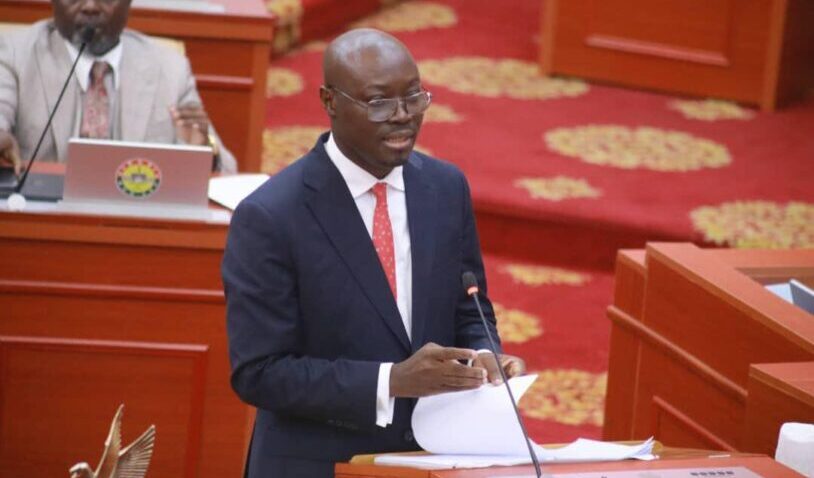
The People’s National Party (PNP) has launched a scathing attack on Finance Minister Dr. Cassiel Ato Forson and the NDC government, accusing them of governing Ghana on “budget projections, political announcements and recycled promises” instead of tangible delivery.
In a press statement signed by its Chairperson and Leader, Janet Asana Nabla, the PNP challenged Dr. Forson to account for the unfulfilled promises of 2025 and 2026 before asking Ghanaians to accept another set of promises for 2027.
“Dr Ato Forson, a budget is not a collection of promises. It is a commitment to deliver,” the statement said.
Women’s Development Bank: 3 years, 3 promises
The centrepiece of the PNP’s criticism is the NDC’s much-touted Women’s Development Bank.
According to the PNP, Dr. Forson promised its establishment and operationalisation in 2025, and in 2026, he repeated the promise, assuring Ghanaians the bank would be fully operational by the end of the year.
The PNP said the Finance Minister has now shifted the t timeline again to 2027.
“How many budgets must be presented before Ghanaian women can access the financial support they were promised?” the PNP asked.
The party accused both the Minister and the NDC government of failing Ghanaian women, describing the women’s development bank as needless having “become a political campaign tool rather than a practical economic empowerment policy.”
The PNP questioned why the government insists on building banks in all 16 regions and 261 districts, purchasing vehicles and establishing elaborate infrastructure before women can access loans.
“Why can’t existing banking infrastructure, including GCB Bank, not be explored, with professional management and proper Bank of Ghana regulatory oversight?” it queried, slamming the proposal as an attempt by the NDC to share free money to its supporters.
Nkoko Nkitinkiti, NEIP and sanitary pads inder fire
The PNP added that the Women’s Development Bank is not an isolated case, but part of a wider pattern of announcements without accountability.
It cited the Nkoko Nkitinkiti programme, where government claims 720,000 birds were distributed to 13,000 farmers across 12 districts.
Pointing out the failure of the initiative, the PNP referenced a statement in Parliament on 9 July 2026 by the Minister for Food and Agriculture, Eric Opoku, who said that some beneficiaries had killed and eaten the birds and sent him videos of it.
The party also raised questions about NEIP, where government claims to have funded 3,212 entrepreneurs, adding that questions remain about actual disbursements and beneficiaries.
On the sanitary pad distribution programme, the PNP said the quantities said to have been distributed by government have also raised concerns about whether the actual needs of schoolgirls are being met.
The PNP hit out at the government for developing what it called “a habit of ”announcing projects, making budgetary allocations and moving on to new promises without demonstrating tangible results.”
“Everything is about announcements, but where is the accountability?”
Inflation figures don’t put food on the table
The PNP said while government touts falling inflation, ordinary Ghanaians are still struggling to make ends meet.
“Businesses are battling to survive, young people are struggling to find employment, access to credit remains difficult, and many households are finding it increasingly difficult to afford three square meals a day,” the statement noted.
The PNP reminded the government that reducing inflation figures does not automatically put money in people’s pockets or guarantee businesses access to credit.
In a direct comparison, the PNP noted that the NPP, within its first two years in office, introduced Free SHS, restored nursing and teacher trainee allowances and implemented many other interventions.
“After nearly two years of NDC administration, Ghanaians have every right to demand comparable evidence of tangible policy delivery,” the party said.
The statement concluded with a demand for accountability.
“The PNP demands accountability, transparency and delivery, not another budget of political promises.”