
My assessments of Ghana’s fiscal dynamics and monetary developments have consistently been grounded in the underlying economic fundamentals.
When the government initially attributed the cedi’s improved performance primarily to fiscal consolidation, I challenged that interpretation and argued that substantial interventions by the Bank of Ghana (BoG) in the foreign-exchange market were a major, if not the principal, factor underpinning the observed stability.
At the time, this position attracted considerable criticism. Subsequently, however, assessments by the World Bank and the IMF lent support to the argument that BoG interventions had played a significant role in sustaining the currency’s stability.
The President eventually acknowledged the importance of such interventions, while the Governor of the BoG publicly identified foreign-exchange interventions as an important contributor to the cedi’s performance, a position that differed from some of his earlier public pronouncements.
More recently, I have faced criticism from KSM and other NDC commentators for characterising the current stability of the cedi as partly artificial. Some senior CSO actors sympathetic to the NDC have also consistently ridiculed this position. However, the fundamental economic argument remains straightforward: exchange-rate stability that is heavily dependent on sustained central-bank intervention cannot, by itself, constitute a durable equilibrium. If the capacity or willingness of the central bank to intervene is constrained, the underlying pressures on the domestic currency are likely to re-emerge.
My central argument has therefore been that a sustainable and resilient cedi requires attention to the structural foundations of the Ghanaian economy rather than excessive reliance on foreign-exchange interventions. Policy should focus particularly on expanding domestic production in agriculture and manufacturing, reducing excessive dependence on imports, and strengthening the country’s export capacity.
A stronger productive base would have several important macroeconomic benefits. Increased domestic production would reduce the demand for foreign exchange associated with imports, while greater export capacity would increase foreign-exchange earnings. This would reduce the pressure on the BoG to continually inject foreign currency into the market to support the cedi. At the same time, expanding agriculture and manufacturing could generate employment, broaden the domestic tax base, and enhance the government’s capacity to mobilise resources internally.
The recent developments in the foreign-exchange market provide an important test of this argument. Over the past two months, the cedi has increasingly shown signs of depreciation following the BoG’s decision to reduce its previous practice of supplying approximately US$1 billion monthly to the foreign-exchange market. Under the emerging arrangement, the GoldBod is expected to play a greater role in foreign-exchange intermediation. Commercial banks provide credit to GoldBod to finance gold purchases, after which GoldBod provides foreign currency to the banks following the sale of the gold.
Conceptually, this arrangement may represent a more sustainable mechanism than continuous direct intervention by the central bank. Nevertheless, its effectiveness will depend significantly on the availability of gold and credit, as well as developments in international gold prices. This raises important questions about the resilience of the arrangement. What happens if the supply of gold declines substantially? What happens if efforts to curb illegal mining significantly reduce gold production? And what happens if international gold prices experience a prolonged decline?
These are not merely theoretical questions. An exchange-rate strategy that relies heavily on a single commodity as the principal source of foreign-exchange liquidity exposes the economy to significant external and domestic risks.Ghana therefore needs to think beyond short-term currency stabilisation mechanisms. No serious long-term economic strategy should depend excessively on commodity-based foreign-exchange inflows to sustain currency stability.
The more fundamental solution lies in transforming the productive structure of the economy: increasing agricultural and industrial output, reducing import dependence, diversifying exports, expanding domestic value addition, and strengthening the country’s capacity to generate foreign exchange through a broad range of productive activities.
Ultimately, the objective should not simply be to defend the cedi. The objective should be to build an economy in which the cedi does not require perpetual defence.
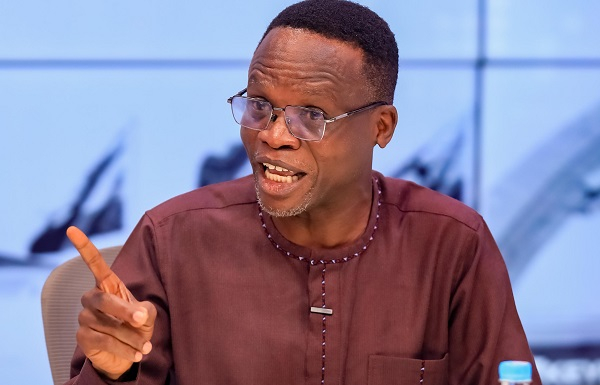
By George Domfe, President of APL