
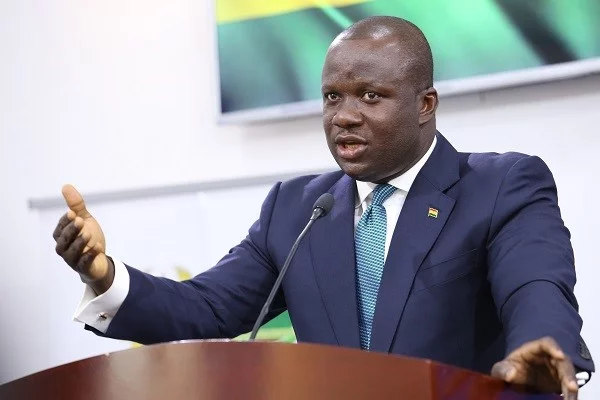
Member of Parliament (MP) for Damongo Samuel Abu Jinapor has challenged the government to account for the 1.7 million jobs it previously promised to create by 2028 under its flagship 24-Hour Economy programme.
Contributing to the debate on the 2027 Budget in Parliament, the Ranking Member on the Foreign Affairs and Regional Integration Committee questioned the programme’s progress, saying the latest budget failed to provide an account of the jobs created under the initiative despite its prominence in the previous budget.
He said the government must demonstrate how its flagship employment policy was addressing the country’s unemployment challenges, particularly among young people.
Mr Jinapor cited Ghana Statistical Service figures indicating that youth unemployment stood at 21.9 per cent, rising to 32.4 per cent among persons aged 15 to 24. He also pointed to close to two million young people who were neither in employment, education nor training.
The MP also questioned the government’s economic recovery narrative, arguing that declining headline inflation did not necessarily reflect the financial pressures confronting households.
Citing October 2026 figures, he drew attention to services inflation of 11.5 per cent and transport inflation of 14.1 per cent, alongside significant increases in the prices of essential food items.
He further highlighted the difficulties confronting farmers, many of whom, he said, were struggling to find buyers for their produce, raising concerns about the impact of economic conditions on livelihoods and agricultural activity.
Mr Jinapor also argued that the government’s performance should be assessed against the everyday experiences of Ghanaians rather than improvements reflected in official economic indicators.
“Ghanaians do not live in the paper economy. They live in the pocket economy,” he stated.
He called on the government to move beyond repeated announcements and demonstrate tangible improvements in job creation, household incomes, completed infrastructure projects and the delivery of promised interventions.
The Damongo MP maintained that the success of the 2027 Budget should ultimately be measured by whether its policies and allocations translate into better living conditions for the population.