
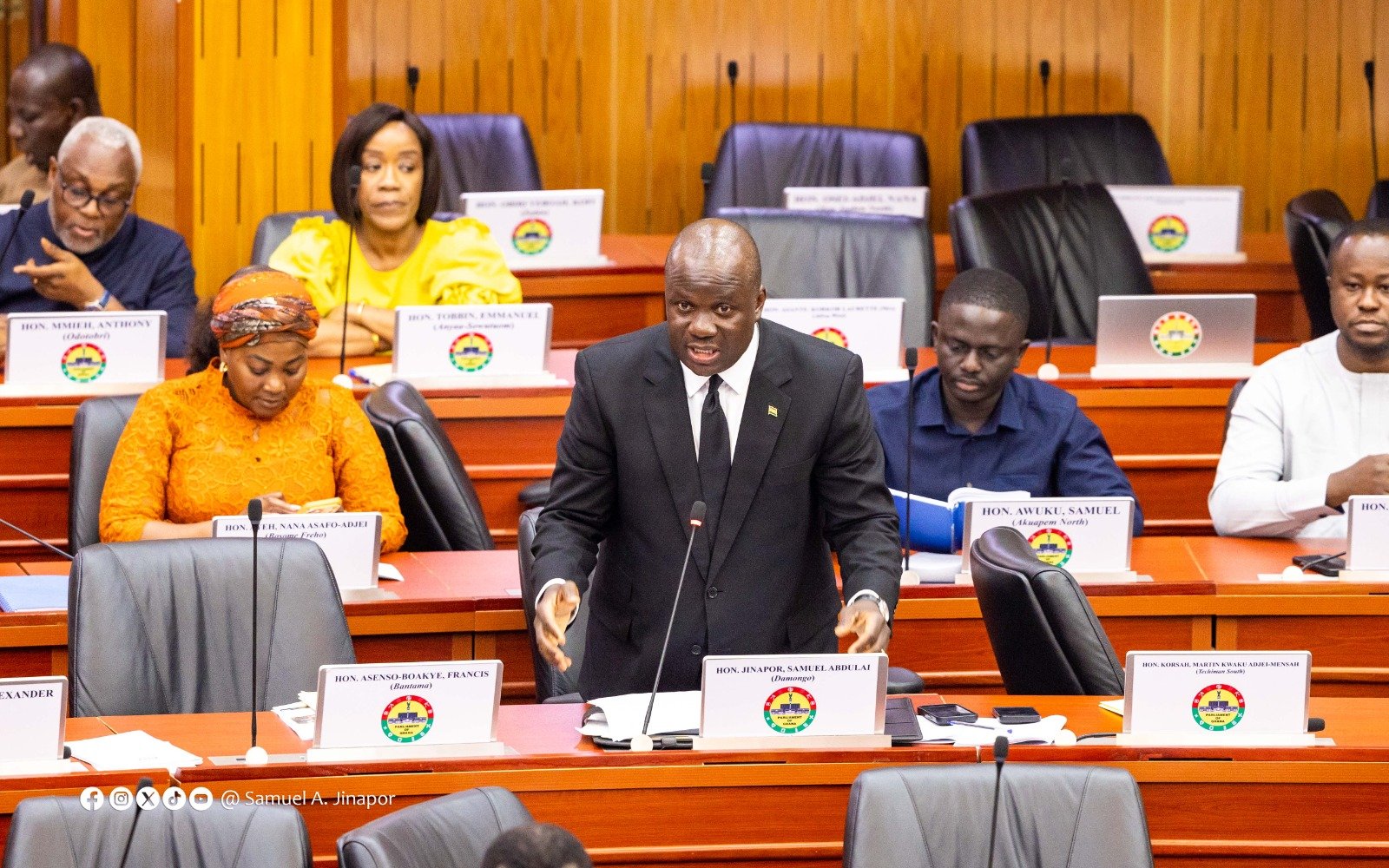
Member of Parliament for Damongo Samuel Abu Jinapor has questioned the fiscal credibility of the government’s budgets, arguing that billions of cedis allocated to key programmes have not been released or translated into tangible outcomes.
Contributing to the debate on the 2027 Budget Statement and Economic Policy in Parliament, the Ranking Member on the Foreign Affairs and Regional Integration Committee said successive NDC budgets had been characterised by ambitious allocations but weak releases and poor implementation.
He challenged the government’s reported fiscal surplus of 1.4 per cent of GDP, arguing that it had been achieved largely through underspending rather than improved expenditure management.
Mr Jinapor cited an expenditure shortfall of approximately GH¢20 billion as of October 2026, which he said increases to GH¢34.6 billion when arrears and debt repayments are taken into account.
He argued that the gap between approved allocations and actual releases had affected critical social interventions, infrastructure projects and public institutions.
The MP specifically cited the School Feeding Programme, Livelihood Empowerment Against Poverty (LEAP) and the Capitation Grant, which had received GH¢1.8 billion out of the GH¢3.1 billion programmed by October.
He also questioned why GH¢50 million allocated annually to support lifeline electricity consumers in both 2025 and 2026 had not been released, despite the same amount appearing in the 2027 Budget.
Mr Jinapor further criticised the government’s spending priorities, contrasting the proposed 9 per cent public-sector base pay increase with a 29 per cent rise in compensation allocations for the Office of Government Machinery.
He said the allocation for the Office of Government Machinery was expected to increase from GH¢540 million in 2026 to GH¢696 million in 2027.
He also raised concerns about the reported acquisition of a Presidential Jet at a cost exceeding GH¢720 million, arguing that government must demonstrate greater sensitivity to competing national priorities, particularly outstanding payments owed to public servants and service providers.
Mr Jinapor maintained that budgetary commitments must be matched by timely releases and effective implementation, insisting that the credibility of the 2027 Budget would depend on what government actually delivers rather than the figures presented in Parliament.