

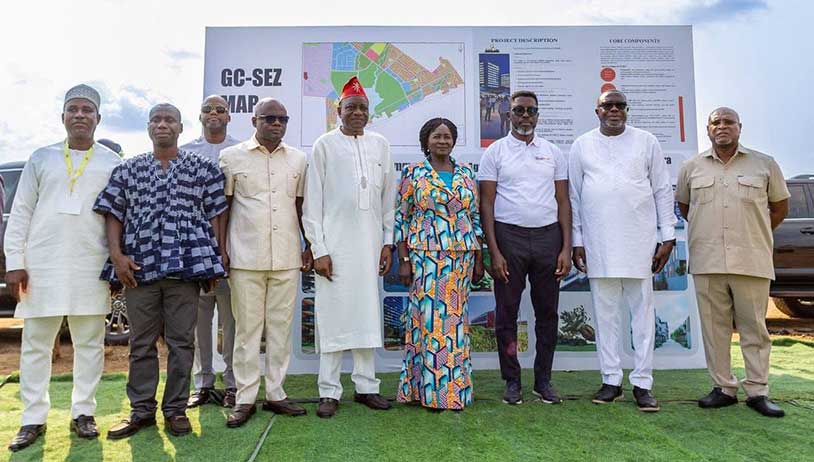
Kwame Asare Obeng, the Member of Parliament for Gomoa Central, has mounted a robust defence of an ambitious Gomoa Central Special Economic Zone (GC-SEZ) development project proposed for his constituency, insisting it is realistic and enjoys unprecedented backing from President John Dramani Mahama and key state institutions.
Speaking in response to questions about the scale and feasibility of the initiative, Kwame Asare Obeng, popularly known as A Plus, said ambition should not be mistaken for impracticality. He likened the project’s scope to feats that people now take for granted, arguing that transformative outcomes often begin as ideas others consider too bold.
“There is nothing more ambitious than having a baby,” he said, using the analogy to stress that difficult undertakings become normalised once achieved. Drawing a global comparison, he cited the development of Dubai, noting that its builders two decades ago lacked today’s technology and resources but nonetheless created what is now the United Arab Emirates.
A Plus said President Mahama has given the project his full political support, describing the level of presidential involvement as exceptional by Ghanaian standards. According to the MP, the President personally convened senior government officials to discuss the initiative and later spent the Christmas holidays in Gomoa Central to gain first-hand understanding of the area’s tourism and industrial potential.
“He spent Christmas in Gomoa Central trying to understand tourism, industry and everything,” Obeng said, adding that the President chose this engagement over travelling abroad with his family. He described the move as evidence of deep personal commitment to the region’s development.
The Vice-President, he said, has also inspected the proposed site and is expected to return for a sod-cutting ceremony. By that time, Obeng said, preparatory works would include the construction of a 10-storey entrance structure, intended to signal the project’s scale and national importance.
“Our entrance is going to be imposing,” he said. “Ten storey high at the zone.”
According to A Plus, the initiative has attracted sustained involvement from multiple government agencies. He singled out Dr Mary Awusi, Chief Executive Officer of the Ghana Free Zones Authority, as a strong advocate, saying she and her team have committed to working closely with his office throughout the process. He added that senior officials of the Authority are in frequent contact, underscoring institutional buy-in.
He also credited the Presidential Adviser on the 24-Hour Economy and Accelerated Export Development, Goosie Tanoh, with playing a pivotal role in shaping and advancing the project. Obeng said the alignment with the government’s 24-hour economy agenda has helped mobilise support across ministries and agencies.
The Ghana Investment Promotion Centre (GIPC), he added, visited the proposed zone independently to assess its potential even before the Vice-President’s inspection, which he said reflected growing confidence within government about the project’s prospects. Discussions are also under way, he said, to agree on a name that reflects both national identity and the Central Region, following a suggestion by the Vice-President.
Obeng said the development would cover about 21,000 acres and has received strong backing from traditional authorities and landowners. Chiefs and elders in the area, he said, have approached him offering additional land, a sign of expanding local support.
“There will definitely be individuals who will try to frustrate the project,” he said, acknowledging that opposition is common with large-scale developments. However, he suggested resistance has diminished as consultations have progressed, noting that some early critics have since come on board.
While Obeng did not disclose detailed financing arrangements or timelines, he maintained that the breadth of political and institutional support makes the project achievable. He framed it as a potential legacy initiative for the Mahama administration and a catalyst for economic transformation in the Central Region.
Analysts note that the project’s success will depend on clear funding structures, environmental safeguards and transparent implementation. For now, however, Obeng insists the momentum is real.
“What it tells us,” he said, “is that the whole country, the whole government, is very excited about this project.”
As preparations continue, attention will focus on whether the strong political endorsement translates into measurable progress on the ground.