
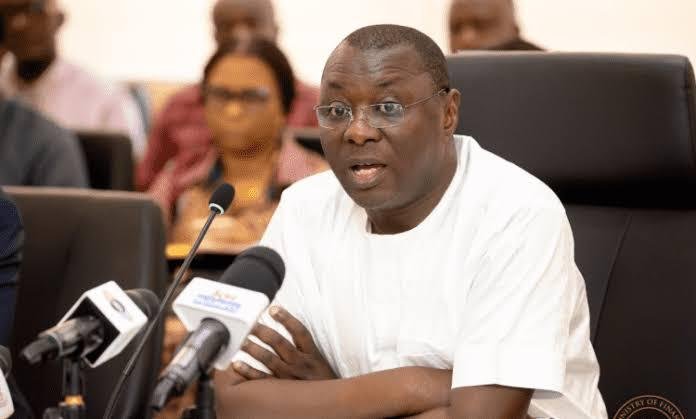
Former Finance Minister Dr. Mohammed Amin Adam has warned that the government’s voluntary buyback of DDEP bonds could leave bondholders worse off, despite the Finance Minister’s call for them to “come for your money.”
In a statement shared on his Facebook page, Dr. Amin Adam questioned how much bondholders stand to lose by selling 82 days before the bonds mature on 16 February 2027.
“The Finance Minister is telling DDEP bondholders, ‘Come for your money,’ through a voluntary bond buyback. We should ask a simple question: how much could bondholders lose by selling early?” he stated.
He recalled the current Minister’s posture while in opposition.
“When he was in opposition, the Minister stood with pensioners and other bondholders. He promised to protect their interests. Now he controls the public purse, so Ghanaians have the right to judge him by the standard he set then,” he pointed out.
Dr. Amin Adam explained that bondholders who wait until February will receive their full principal plus the interest promised.
Those who sell early, he hinted, give up a bond paying 8.35% a year for a 91-day Treasury bill paying only about 4.5%.
“Anyone who waits until February will get their full money back plus the interest they were promised. Anyone who sells early gives up a bond that pays 8.35% a year. If they put the money into a 91-day Treasury bill, they will earn only about 4.5%,” he noted.
He broke down the potential loss for every GH¢100 of bonds.
“For every GH¢100 of bonds: If you sell now and reinvest straight away in treasury bills, you could end up about 86 pesewas worse off by February. If your money sits idle for a few weeks before you reinvest it, you lose more. If you don’t reinvest it at all, you lose all the interest you would have earned by waiting,” he stated.
On the total value of GH¢28.58 billion in bonds, he estimated the collective loss could be significant.
“The total value of these bonds is GH¢28.58 billion. If all of it is sold back early, bondholders together could lose: About GH¢247 million, if they reinvest immediately. About GH¢346 million, if the money sits idle for four weeks first. About GH¢536 million, if the money is never reinvested before February,” he said.
Dr. Amin Adam said the figures are estimates and depend on the price government pays, how it handles interest already earned, and what bondholders can earn afterwards.
“These are estimates. The real figure depends on the price the government pays, how it handles interest already earned, and what people can earn on the money afterwards. That is why the government must give a clear explanation,” he said.
He questioned why government has reportedly capped its price below the bond’s market value.
“Based on what qeasury bills pay today, a GH¢100 bond is worth about GH¢100.90, not counting interest already earned. Yet the government has reportedly capped its price at GH¢100. If the government wants people to give up their February payment, why does it cap its price below what the bond is worth? And why doesn’t the auction notice explain how interest already earned will be paid? Bondholders should not have to find that out on their own,” he said.
The former Minister said bondholders had already borne the cost of the DDEP.
“Bondholders have already paid their share. Under the DDEP, they accepted lower interest and waited longer to get their money back. They helped carry the cost of fixing the economy, and the government now celebrates the fall in the national debt to GDP ratio,” he indicated.
He contrasted that sacrifice with government’s spending priorities.
“The government’s side in Parliament now says the improved economy makes a new GH¢720 million presidential jet affordable. The people who made the recovery possible have every right to ask why they are now being pushed to take a deal that could leave them with less,” he stressed.
“What bondholders need is compensation or relief for the sacrifices they made to help rebuild the economy, not a buyback that leaves them worse off,” he added.
Call for transparency
Dr. Amin Adam called on government to publish a clear comparison for bondholders.
“The test of good faith is simple. For every GH¢100 of bonds, the government should publish two figures side by side: 1. What a bondholder gets by selling today, including interest already earned 2. What the government has promised to pay in February. Then it should explain why the deal is fair to the people who have already sacrificed,” he said.
He acknowledged that buybacks can be a legitimate debt-management tool but insisted they must not disadvantage bondholders.
“I can understand that bond buybacks can be legitimate debt-management tool; and has been used before this government, but they should not be designed at the expense of bondholders who have already suffered. A fair approach would pair liability management with meaningful relief for the investors who bore the cost of the country’s recovery,” he observed.
“The Minister demanded this kind of accountability when he was in opposition. Bondholders are entitled to demand it from him now,” he stated.