
Renowned Development Economist and Senior Research Fellow at the Centre for Social Policy Studies, University of Ghana, and the Founding President of Africa Policy Lens, (APL) Dr. George Domfe has weighed in on the ongoing public discourse surrounding Ghana’s public debt stock and fiscal policy directions.
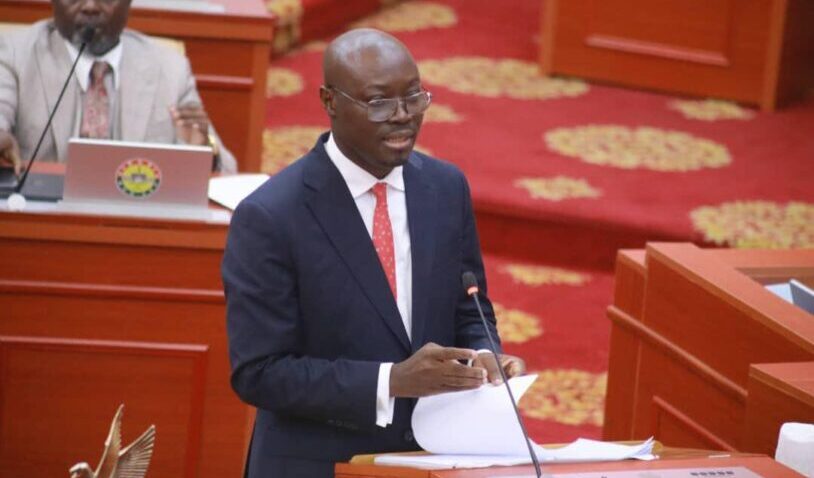
Reacting to comments made by the Minister for Finance, Dr. Cassiel Ato Forson, who suggested that prudent fiscal management has directly led to debt reduction, Dr. Domfe clarified that while fiscal discipline is fundamental to economic stability, confusing the rate of debt accumulation with the reduction of nominal debt stock presents an economic fallacy.
Dr. Domfe explained that public debt behaves according to distinct financial dynamics:
Debt Stock: The total cumulative balance of outstanding principal and interest owed by the government at any given moment.
Fiscal Deficit: The annual shortfall when government spending exceeds revenues, requiring new borrowing to bridge the gap.
“Prudent fiscal management, such as cutting wasteful spending, plugging revenue leakages, and narrowing primary deficits, ensure that a government stops borrowing aggressively,” Dr. Domfe noted.
“However, stopping or reducing new borrowing is not the same as shrinking the debt you already owe.”
To illustrate the misconception, Dr. Domfe offered a simple everyday analogy:
“Confusing debt accumulation with debt stock is like claiming you’ve lost weight simply because you’ve stopped adding more food to your plate. Refusing a second serving stops you from gaining additional weight, but it does not magically melt away the pounds already on the scale.”
Dr. Domfe emphasized that nominal debt stock decreases through explicit, structural mechanisms rather than fiscal discipline alone:
1. Debt Relief & Haircuts: Programs such as HIPC or bilateral debt cancellation where creditors write off a portion of the principal.
2. Debt Restructuring: Negotiating down original principal amounts (e.g., domestic or international debt exchanges).
3. Actual Repayment (Amortization): Allocating actual cash surpluses specifically to pay off maturing principal obligations without refinancing them with new bonds.
While acknowledging that slowing debt growth through fiscal discipline is a crucial prerequisite for long-term stabilization, Dr. Domfe urged policy handlers and public officials to communicate economic concepts with precision.
“When government officials tell the public that prudent fiscal management will ‘reduce debt’, citizens expect the absolute national debt figures to drop. When those figures remain flat or grow marginally due to interest accumulation and exchange rate fluctuations, public trust erodes,” he concluded.
For fiscal management to yield actual debt reduction, Dr. Domfe recommended that fiscal discipline must be paired with sustained primary surpluses, where total revenue exceeds non-interest expenditure, specifically earmarked for retiring maturing principal balances.