
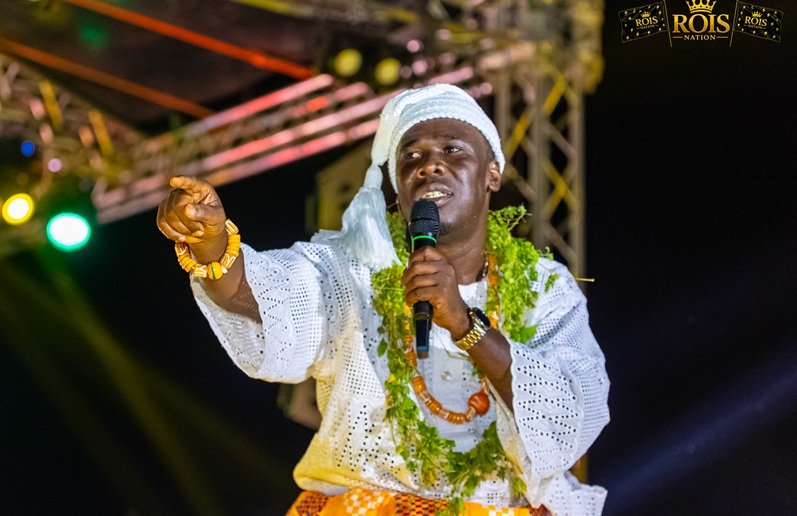
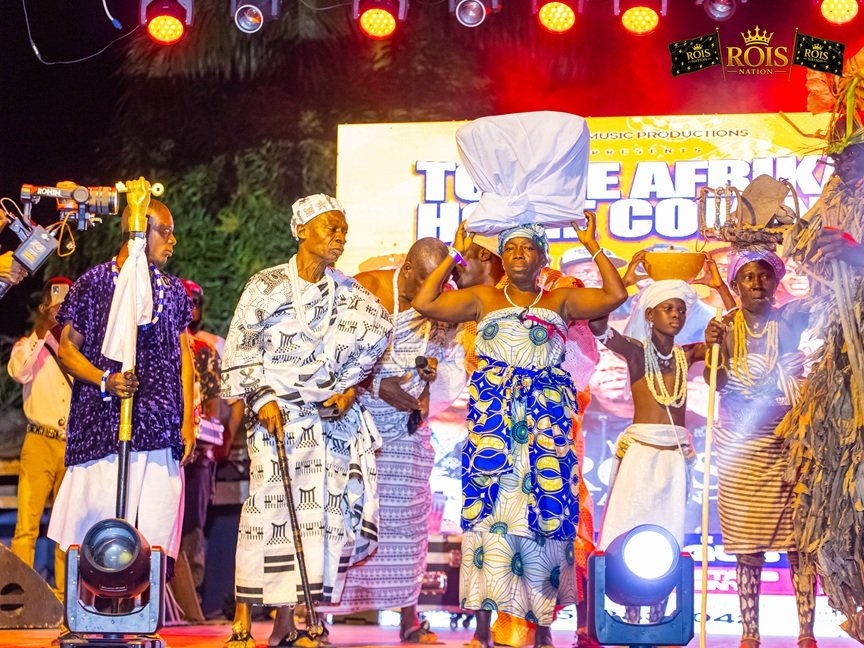
After more than two decades away from the active music scene, Togbe Afrika has made a remarkable return to music, culminating in a historic moment at the Togbe Afrika Homecoming in Penyi Hata, where Togbe Ekle II, Chief of Penyi Hata, enstooled and honoured him as the King of Music.
The symbolic enstoolment, which took place before Togbe Afrika’s headline performance, represented more than a ceremonial honour.
It marked what many described as the return of an original occupant of the music throne after more than 20 years away from the active music scene.
For years, Togbe Afrika had been away from active music, leaving what supporters described as a musical throne occupied by other artistes and performers acting as regents in his absence.
But on Saturday, August 29, 2026, the story changed.
The King came home.
With the traditional authority of Togbe Ekle II, Chief of Penyi Hata, the homecoming reached a defining moment when Togbe Afrika was formally enstooled and honoured as King of Music.
The ceremony became a powerful symbol of his return to the music industry and his re-emergence to reclaim his place at the centre of the musical legacy he had built decades earlier.
A homecoming that became a musical statement
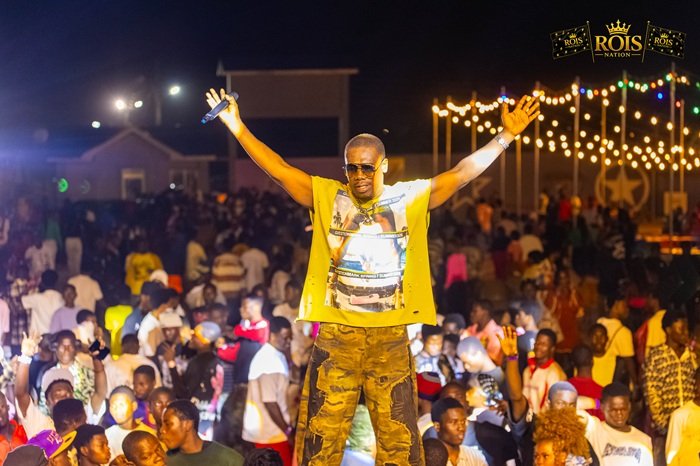
The Togbe Afrika Homecoming was not merely a concert. It became a celebration of heritage, music, community and the enduring power of songs that have survived generations.
People travelled from near and far to Penyi Hata to witness the historic occasion.
From the beginning of the programme, Togbe Afrika demonstrated a deliberate commitment to the next generation by giving emerging artistes the opportunity to perform before a large audience.
That gesture earned considerable praise from attendees, with many describing the programme structure as one of the key reasons the event stood out.
The Homecoming effectively created a platform where established musicians could share the stage with emerging talents.
For many observers, it represented a new model for event organisation one where entertainment, cultural identity, mentorship and talent development could exist on the same stage.
When 30-year-old songs came alive
Perhaps the most remarkable part of the night was the response to Togbe Afrika’s older music.
The artiste opened one of his performances with songs from his first album, “Menyabe,” a gospel project released decades ago.
Despite the age of the songs, the audience immediately connected with them.
People sang along, danced and responded to the music as though the songs had been released yesterday.
Songs including “Frank Nero Deye Ne Kua” and the much-loved “Danye Sidzima” remained firmly in the memories of many attendees.
The moment provided perhaps the strongest evidence that great music does not necessarily become old.
As the songs played, generations came together to sing the same lyrics.
It was a powerful reminder that music may age, but memories created through music can remain timeless.
Togbui Anyigbanya returns to the fire
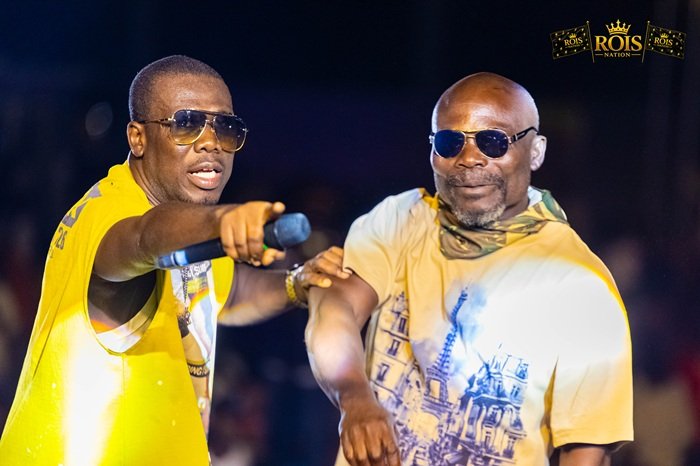
Following his first performance, Togbe Afrika invited another veteran of the Volta music scene, Togbui Anyigbanya, to the stage.
Togbui Anyigbanya, who also began his musical journey approximately three decades ago, delivered a performance that immediately transformed the atmosphere.
The audience sang along to his songs and responded enthusiastically throughout his performance.
For many, it was another emotional reunion with the music of an earlier generation.
The performance also demonstrated that the Homecoming was not only about Togbe Afrika’s comeback but about reconnecting Volta’s musical past with its present.
The Highlife and Hiplife revival
Togbe Afrika returned to the stage for another major performance, this time delivering songs from his Highlife and Hiplife catalogues.
What followed surprised even some of the organisers.
As DJ Dynamics began playing the familiar songs, the crowd immediately recognised them.
People screamed, sang along and danced to songs that had been released decades earlier.
The reaction captured the central message of the Homecoming:
“Music is never old. Once it starts playing, it becomes new again.”
Jah Phinga: A new chapter begins
Togbe Afrika then introduced his son, Jah Phinga, to the stage.
Jah Phinga, a guest artiste from a nearby community, came prepared to prove himself.
And he did not disappoint.
He delivered a high-energy performance back-to-back, commanding the stage and keeping the audience engaged.
The crowd responded enthusiastically, and many described his performance as one of the major highlights of the evening.
For Jah Phinga, however, the significance of the night went beyond performance.
In an interview after the event, he acknowledged that the Togbe Afrika Homecoming had become an important platform not only for his father’s return to music but also for his own musical revival and for other young artistes.
The event, therefore, became a bridge between generations connecting the pioneers of Volta music with the musicians emerging today.
The king returns with a new sound
Just when the audience thought the night could not get any better, Togbe Afrika returned to the stage for the third time.
This time, he presented his new-school Afropop sound.
The response was remarkable.
Young people and older audiences danced together as Togbe Afrika performed songs including “Fire On The Floor,” “What’s My Name,” “Happy Wedding Day” and “Move Your Body.”
When “Move Your Body” began playing, particularly among the young women in the audience, the response was immediate, with many singing along.
It was a striking demonstration that Togbe Afrika was not returning to music simply to reproduce the past.
He was returning with a sound designed to connect the past, present and future.
Enam takes the stage
Togbe Afrika subsequently introduced ENAM, who also delivered a memorable performance.
ENAM’s songs were already familiar to many in the audience, with fans singing along word-for-word.
Some enthusiastic supporters even joined her on stage during her performance.
ENAM also used the opportunity to reveal that August 29 was Togbe Afrika’s birthday, adding another emotional dimension to the celebration.
She noted that without Togbe Afrika, she would not have had the opportunity to be in Penyi Hata that day.
Her words reinforced the wider significance of the Homecoming as a platform for artistes and emerging talent.
A show that people are already calling a new standard
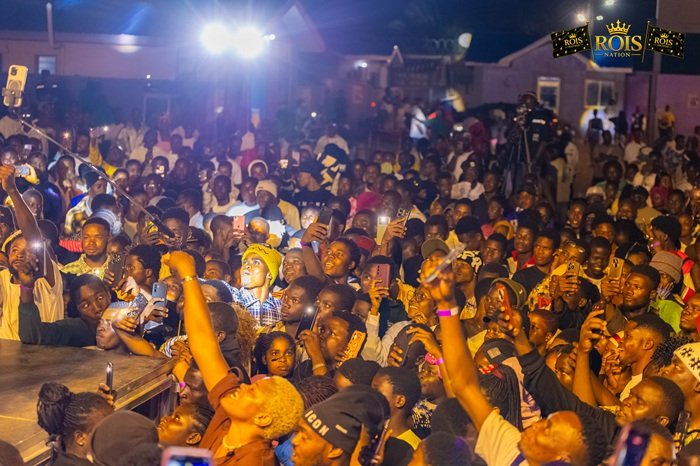
Throughout the event, audience members expressed their satisfaction with the programme and performances.
Some fans interviewed after the show described the Togbe Afrika Homecoming as one of the best paid musical events they had experienced in the region.
Unlike free community events, attendees had purchased tickets to be part of the experience, yet the audience remained fully engaged throughout the night.
The carefully structured programme from emerging artistes to established veterans, from gospel to Highlife and Hiplife, and finally to contemporary Afropop created a musical journey across generations.
Many attendees were heard asking:
“When is the next show?”
That question may be the clearest indication of the success of the Homecoming.
A peaceful and incident-free celebration
The event was successfully concluded without any reported major incident.
Togbe Afrika acknowledged the support received from the Volta Regional Minister, James Gunu, and the Volta Regional Police Command in helping to create a safe and peaceful environment for the programme.
The Dzodze Police Unit, under its commander, also played an important role in maintaining security and ensuring that the celebration remained peaceful.
For an event that attracted a large gathering from different communities, the incident-free nature of the programme was another major achievement.
More than a comeback a new musical chapter
The significance of the Togbe Afrika Homecoming may ultimately extend beyond one night of entertainment.
It has demonstrated that an artiste can step away from the music scene for more than two decades and still return to an audience that remembers the songs.
It has shown that old music can still move young people.
It has given emerging artistes an opportunity to perform before a major audience.
It has reignited the musical careers of artistes such as Jah Phinga and Togbui Anyigbanya.
And it has created a platform where established musicians can inspire the next generation.
Most importantly, the Homecoming has transformed Togbe Afrika’s return into a story of restoration.
The King travelled.
The throne remained.
The music continued.
But after more than 20 years, the King has returned.
And with Togbe Ekle II, Chief of Penyi Hata, presiding over the traditional enstoolment and honouring Togbe Afrika as the King of Music, the symbolism could not have been stronger.
THE KING HAS COME HOME.
AND THE MUSIC THRONE IS ALIVE AGAIN.
Next Stop: Adutor
The Togbe Afrika Homecoming may have ended in Penyi Hata, but the musical journey is continuing.
According to Togbe Afrika, the next show will take the experience to Adutor, bringing the celebration closer to music lovers from Keta, Anloga, Dabala, Sogakofe, Adidome and surrounding communities.
The next show is scheduled for 26th September 2026 at Nitrogen Beach Resort, Adutor
If Penyi Hata was the place where the King returned, Adutor will be the next chapter in what is shaping up to be a new era for Togbe Afrika and the wider Volta music scene.
The King has returned.
And the music throne is alive again.