
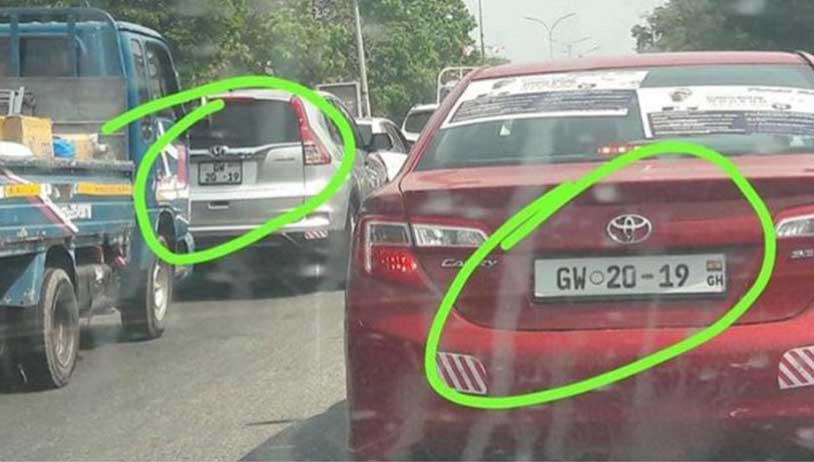
About 5% of vehicles plying Ghana’s roads are using fake number plates, the Chief Executive Officer of the Driver and Vehicle Licensing Authority (DVLA), Julius Neequaye Kotey, has revealed, warning that the practice poses serious security and revenue risks.
Speaking on the current affairs programme Hot Issues, Kotey said the prevalence of counterfeit plates has informed a sweeping set of reforms at the DVLA, including plans to centralise number plate embossment and deploy advanced tracking technology.
“A number plate is a security document. You don’t allow just anyone, anywhere, to emboss it,” he said, arguing that decentralised embossment had created loopholes exploited for crime, tax evasion and vehicle cloning.
Kotey said investigations show some vehicles with fake plates had not paid customs duties, while others were cloned using numbers from wrecked vehicles or farm equipment that never return to public roads. In some cases, he said, forged customs documents were used to register illegally imported vehicles.
He recounted assisting police during an armed robbery investigation, where he was able to immediately identify a suspect vehicle’s registration number as fake based on inconsistencies in regional prefixes and numbering patterns. A subsequent DVLA search confirmed the plate was counterfeit.
Under the new reforms, the DVLA plans to introduce a centralised embossment system, similar to models used in other countries, alongside RFID-enabled number plates designed to curb cloning. Kotey said the system would include detectors and RFID billboards mounted on major highways to flag vehicles whose plates do not exist in the DVLA database.
“If you pass with a number that is not in our system, it sends a signal straight to our command centre,” he explained.
The reforms will also align with upcoming tolling systems being developed with the Ghana Highway Authority, which require RFID-enabled plates to function effectively.
Kotey acknowledged resistance from some stakeholders, including claims of unpreparedness, but insisted development could not be delayed. “Not because one or two people are not ready means Ghana should not move,” he said.
The DVLA believes the reforms will significantly enhance road safety, strengthen national security and protect state revenue, while restoring public confidence in the vehicle registration system.