
The Institute for Economic Research and Public Policy (IERPP) has called on Parliament not to pass the National Petroleum Authority (NPA) Bill, 2026 in its current form, warning that it could cripple BOST Energies despite its reported impressive financial turnaround.
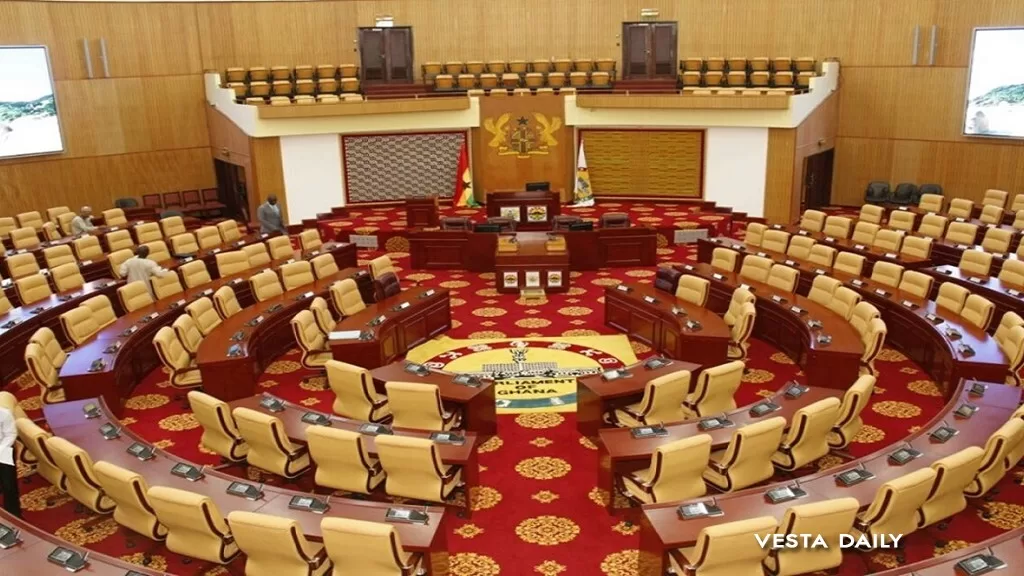
Parliament is considering the new Bill to tighten regulation in Ghana’s downstream petroleum sector – the storage, transport and distribution of fuel.
In a statement read at a press conference in Accra by its Executive Director, Prof. Isaac Boadi, IERPP said some provisions would hand the NPA and the sector minister greater control over decisions BOST needs to manage itself.
“BOST Energies is not an ordinary company. It is a state-owned entity responsible for holding Ghana’s strategic fuel reserves and maintaining the national network of depots and pipelines,” IERPP said.
According to the Institute, if BOST is weakened financially, close to 50% of its 658 staff could be laid off, worsening unemployment and contradicting government’s 24-hour economy promise.
“You cannot promise an economy where one job creates opportunities for three people across three shifts while allowing hundreds of existing jobs at BOST to be put at risk,” the statement said.
BOST’s reported record 2025 performance
IERPP cited the 2025 State Ownership Report to show BOST’s strong year, questioning why it should be weakened if they indeed recorded such profit.
According to the SIGA report, total revenue was GH¢1.33bn (2024) to GH¢3.841bn (2025) – up 189%, while operating revenue rose from GH¢1.293bn to GH¢3.809bn – up 195, with a reported net profit moving from GH¢398.40m to GH¢683.96m – up 72%. The think tank however noted that operating margin fell from 31% to 19% due to higher direct trading costs.
3 Key Questions
IERPP posed three questions: How can BOST be responsible for strategic reserves if decisions on funding, stock levels and release remain with other authorities? How can BOST maintain depots and pipelines if its charges require regulatory approval without a clear cost-reflective method? And bow can BOST stay sustainable if competing depots are licensed and profitable business is drawn away?
“Ghana must not end up where private operators enjoy the most profitable parts of petroleum logistics while BOST is left holding expensive national obligations,” it warned.
IERPP’s 7 Demands
The Institute made the following demands:
Withdraw and fundamentally review the NPA Bill, 2026; Clearly define and protect BOST’s mandate, including power to sell directly to OMCs;
Keep strategic fuel reserves under national control with BOST as principal manager: Provide dedicated funding for reserves and infrastructure – repurpose BOST margin for new depots;
Establish a fair, transparent and cost-reflective tariff mechanism;
Prevent unfair competition – BDCs should not be allowed to build inland depots that undermine BOST and keep NPA as an effective regulator, not a market participant.
“Responsibility without authority is unfair. Responsibility without funding is unsustainable. National infrastructure without sustainable revenue is a liability waiting to happen,” Prof. Boadi concluded.