
Seven million voters are expected to head to the ballot box[/caption]
Tunisia is holding its second free presidential poll since the 2011 uprising that toppled ex-president Ben Ali and sparked the Arab Spring.
It was brought forward from November after the death in July of Beji Caid Essebsi, the first democratically elected president, who took office in 2014. Twenty-six candidates, including two women, are running in the election. It is widely viewed as a test of one of the world’s youngest democracies. Mr Essebsi won Tunisia’s first free presidential elections in 2014 and was credited with largely maintaining stability in the country during his almost five-year rule. At 92, he was the oldest sitting president in the world at the time of his death. Mr Essebsi had previously confirmed that he was not planning to run for re-election. His wife, Chadlia Saida Farhat, died on Sunday morning, aged 83, their son announced on Facebook as voting was getting under way. Parliament speaker Mohamed Ennaceur is currently acting as interim president.How does the vote work?
A candidate needs a majority of votes to win the election. If no-one gets a majority in the first round, the two candidates with most votes will face a second, decisive round.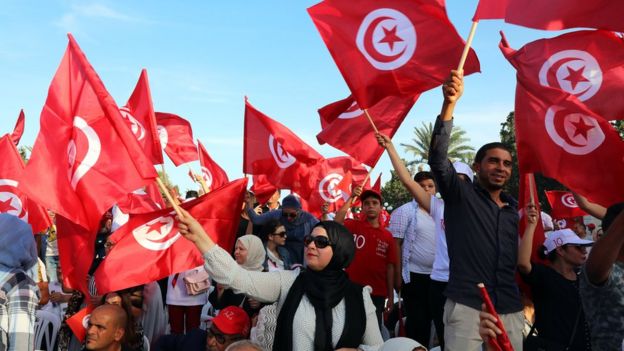 Presidential candidates have held campaign events across the country photo: EPA[/caption]
Why is this election significant?
The country has won praise as the only democracy to emerge from the Arab Spring uprisings that began in Tunisia, before spreading across the Middle East and North Africa. In what was hailed as a sign of its successful democratic transition, Tunisia this month held its first-ever televised debate of presidential candidates. The campaign period featured the first ever televised debate of presidential candidates photo: AFP[/caption]