

Introduction
Carbs (Carbohydrates) commonly called “Carbo” in Ghana, are by far the most vilified macronutrient in the modern diet. Whenever dietary advice is dispensed, carbohydrate intake is almost always the first thing mentioned. In the Ghanaian context, you will often hear people readily declare, “Oh, it’s the fufu or banku that has made you fat”, as if a single staple food bears sole responsibility for a pot belly and/or weight gain.
And yet, science tells a different story. Research by Matthewman and Nadkarni (2026) confirms that macronutrients (proteins, carbohydrates, and fats) collectively supply energy and serve as the building blocks of the human body. For further information on this research, follow the link below.
https://doi.org/10.1016/j.mpaic.2025.12.010.
Furthermore, carbohydrates are the body’s primary energy source and play a key role in supporting daily physical activity and metabolic processes (Ludwig et al., 2018). For further information see:
https://doi.org/10.1136/bmj.k2340.
This article sets out to explore whether the health impact of starchy carbohydrate foods (in Ghanaian context) is influenced not simply by the food itself, but by what accompanies it, when it is eaten, how it is consumed, and crucially, who is eating it.
The Timing Factor: Chrono-Nutrition
Chrono-nutrition is simply the science of meal timing. For decades, nutritional research focused primarily on how much and what we eat. However, a growing body of chrono-nutrition studies has introduced a compelling third variable: when we eat. Meta-analyses have shown that skipping breakfast and eating larger dinners are associated with weight gain, suggesting that late-calorie intake increases the risk of obesity (Tahara et al., 2023). To read further, follow the link below. https://doi.org/10.3389/fnut.2023.1183320
Supporting this, another study highlights that aligning meal timing with the body’s internal clock can improve metabolism and reduce the risk of chronic diseases (Charlot., et al 2021). See: https://doi.org/10.1016/j.physbeh.2020.112984.
Personally, after experimenting with carbohydrate-dense meals, I have found that my body tolerates starch far better earlier in the day than in the evening. For this reason, starchy foods are off my table after 4 p.m. This personal observation opened a broader set of questions that I believe are relevant to most Ghanaians:
1. Who should be consuming carbohydrate-dense staples such as fufu, banku, Tuo Zaafi (TZ), or etew?
2. How are these foods being consumed?
3. When are they consumed?
4. What physical activity follows the meal?
Question 1: Who Should be Consuming Carbohydrate-Dense Staples?
I will start this section with a scenario. I live in Gomoa-Ewamkrom in the Central Region of Ghana, approximately three kilometres (by foot) from a small town called Gomoa-Manso, which I visit on daily walks. Along the main road through the town, local food vendors operate from simple bamboo structures, mostly selling “etew” (a balled, fermented maize staple), like banku but without the cassava dough component.
Over six years of morning walks past these vendors, I have consistently observed some community residents sitting on benches in these stalls enjoying their “etew” as early as 6 a.m. But they still appear slimmer than most urbanites. To most health-conscious individuals, this harmless practice will be considered a taboo or simply labelled “unhealthy”. Yet the evidence before my eyes tells a different story.
It is worth noting, however, that physical appearance is not a definitive measure of health. A proper medical evaluation would be needed to confirm whether the community’s lean physiques are genuinely linked to their eating patterns or are attributable to other lifestyle and genetic factors.
What does seem clear is that a generally healthy individual with no underlying conditions is better positioned to tolerate carbohydrate-dense foods than someone managing diabetes, hypertension, or obesity. For those individuals, carbohydrate-rich staples like banku or white rice consumed late in the day can worsen their condition. A concern well-supported by dietary guidance.
Question 2: How Are These Foods Being Consumed?
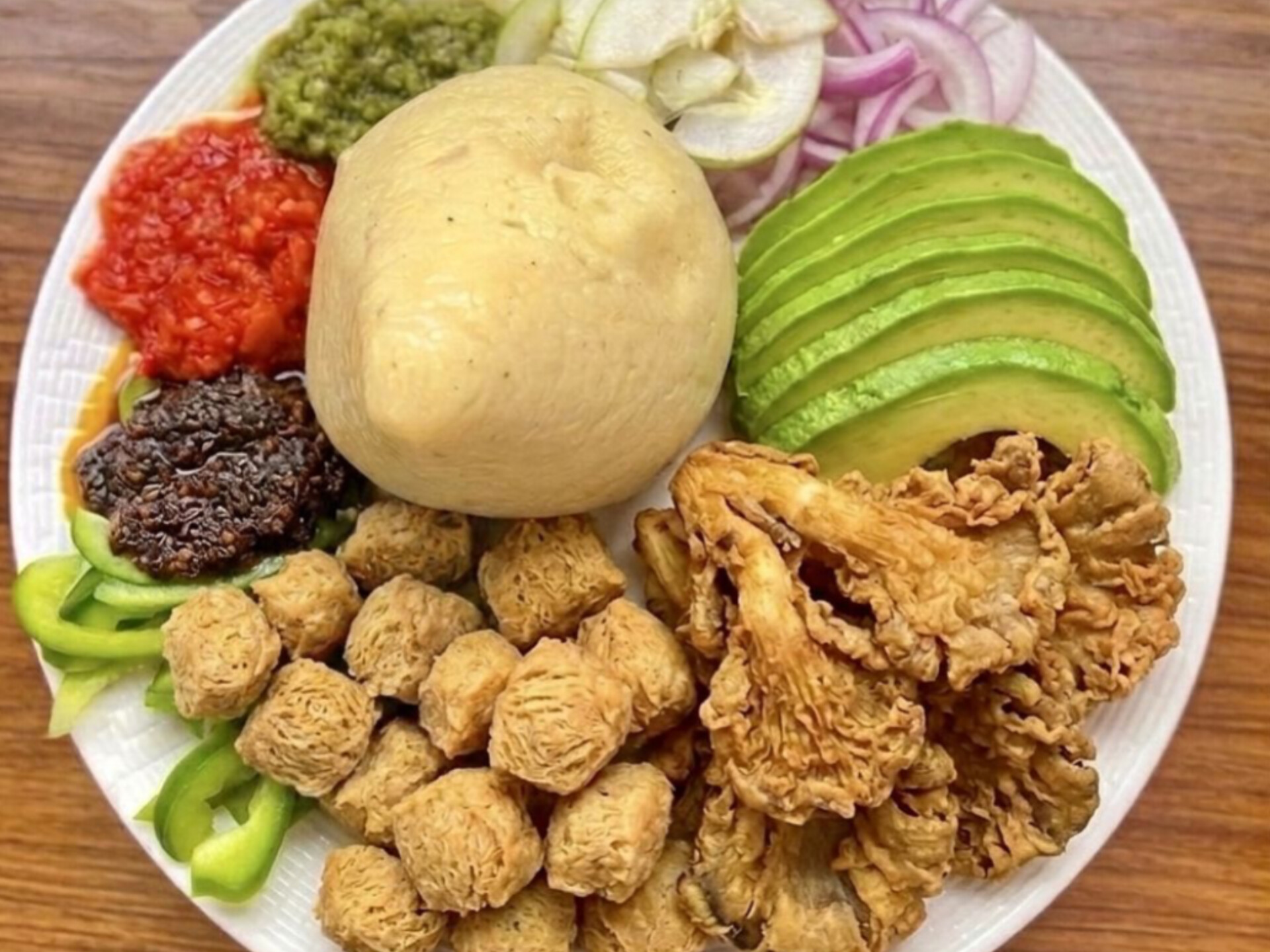
For most Ghanaians, a typical plate of etew, kenkey, or banku is generously paired with animal protein such as fried fish, can sardines, chicken, shrimps, and/or eggs. Alongside some fresh raw tomato and/or green pepper sauce. Not forgetting the oil-rich beloved Ghanaian spicy condiment, “shito”.
From my observation, the dominant item on the plates of these customers eating in the stalls is the starch(etew), a serving the size of a baseball, accompanied by four to six index sizes of fried/ smoked fish and two to three tablespoons of fresh raw tomato or green sauce.
Both mainstream and alternative dietary perspectives consider large portions of starch, protein, and oil-rich foods unhealthy.
Questiom 3: When Is The Food Consumed?
Research makes a strong case for the importance of meal timing. Delayed or nighttime eating disrupts the body’s internal circadian clock and is associated with increased risk of obesity, type 2 diabetes, and cardiovascular disease. Conversely, aligning meal timing with the body’s natural cellular rhythms can optimise the function of organs and metabolic processes (Peters et al., 2024).
See: https://doi.org/10.3389/fendo.2024.1359772.
The early morning etew consumers in my nearby community challenge the conventional wisdom that starchy foods at breakfast is harmful. Most of these individuals are not overweight, the number one reason many like me avoid carb-dense meals. Although a small number of overweight individuals exist within the community, it suggests other factors could also be at play.
Question 4: What Happens After Eating?
The answer to this final question may be the most telling of all. Farming is the dominant occupation in the Gomoa-Manso community, which demands sustained physical effort. After an early breakfast, residents walk to their farms, often a considerable distance to engage in manual labour throughout the day and then walk home again in the evening. The energy from that morning plate of etew is, quite literally, put to work.
Now contrast this with a typical desk-bound office worker (that could be you reading this). Their day might look like this: a starchy carbohydrate breakfast eaten hurriedly at home, they drive to work or use public transport with minimal movement, spend hours sitting at a desk, have a carbohydrate-dense lunch such as white rice, and supper before bed. This cycle, repeated day after day, is perhaps the pattern that contributes to the growing prevalence of lifestyle diseases like hypertension, type 2 diabetes, and obesity in Ghana.
Call to Action
Every Ghanaian takes pride in their native food, whether it is TZ, akpele, rice balls, fufu, or banku. These foods are not merely meals; they are expressions of heritage and community. The goal should never be to abandon them, but to consume them more wisely.
Here are three practical steps to start with:
Be your own dietician and chef. Experiment with healthier ingredient combinations that preserve authentic flavours. Explore alternative starch foods such vegetable banku or fufu, eat smaller portions of starch, include more vegetables in your meals, explore plant-based protein sources, and reduce excessive oil in cooking.
Keep a dietary diary. Whether written, digital, or simply committed to memory, track how your body responds to specific foods, portion sizes, and the time you the meal was consumed. This self-awareness is the foundation of personalised nutrition (consuming foods that agree with your body).
Question food trends critically. Do not adopt any diet simply because it is trending on social media or endorsed by influencers. Read labels, research the evidence, and consider whether the advice applies to your specific body, lifestyle, and cultural context.
Conclusion
The health impact of carbohydrates cannot be assessed in isolation. What we eat matters, so does when we eat it, how it is prepared and portioned, what we pair it with, and the lifestyle of the person eating it. Fufu, banku, and kenkey are not inherently the enemy. Eating them at the right time, in balanced portions, by an active individual, can make a great difference. Lastly, we must choose sustainable staples such as millet and vegetables for preparing our meals. This helps to reduce every individual’s carbon footprint, positively impacting our health and protecting the environment as well.
By Hawa Mutawakilu
The author is a freelance food journalist, writer and advocate of sustainability.
Email: greencornish13@gmail.com
Website: www.hawassustainablejournal.com
DISCLAIMER
This article is for informational purposes only and does not constitute medical or professional advice. It is not a substitute for consultation with a qualified healthcare provider. The author is not liable for any outcomes resulting from the use of this information.