
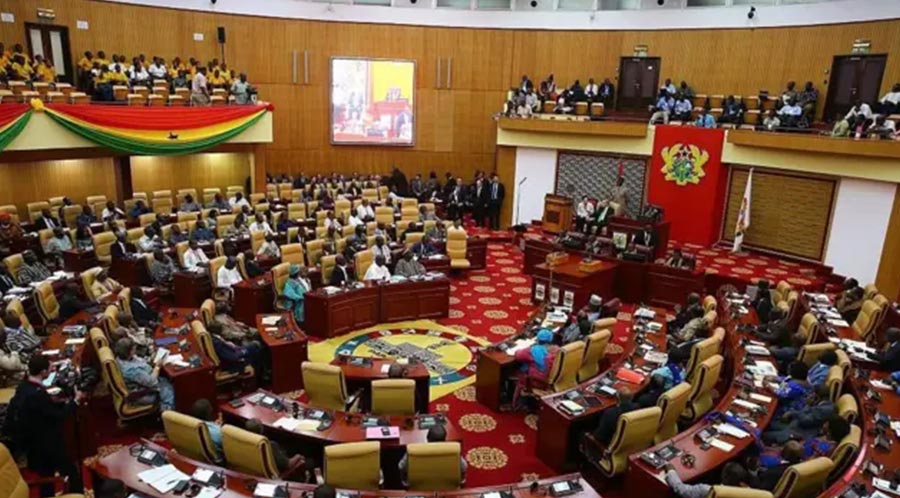
Parliament has expressed grave concern over the continued detention of the Member of Parliament for Manhyia South, Nana Agyei Baffour Awuah, by the Economic and Organized Crime Office (EOCO).
In a statement issued on Saturday, October 3, Parliament said the MP voluntarily presented himself to EOCO following reports that the High Court had issued a warrant for his arrest.
The Speaker of Parliament, Rt. Hon. Alban Sumana Kingsford Bagbin, considers the circumstances of the MP’s detention a matter of serious concern.
According to the statement, the situation raises questions about the rights of the Member, the privileges and independence of Parliament, and the proper exercise of investigative powers.
Parliament affirmed that Members of Parliament are not above the law and that where a Member is reasonably suspected of having committed an offence, the law must take its course.
It added, however, that MPs do not act merely in their personal capacities, and that the law recognizes certain safeguards governing interactions between Members and other organs of State.
According to the statement, signed by David Sebastian Damoah, Director of Media Relations at Parliament, these safeguards are intended not to shield Members from accountability, but to protect the independence of Parliament and the mandate of the people they represent.
The Speaker has been informed that the High Court directed EOCO to enforce the warrant against the Member.
He has not yet seen the terms of that directive and therefore does not purport to interpret it.
However, Parliament said that once the Member voluntarily presented himself to EOCO and submitted to its processes, any decision to continue holding him in custody ought to have a clear and demonstrable basis in law and necessity.
Concern over overnight detention
Parliament said it is particularly concerned about the necessity and proportionality of detaining a Member who voluntarily reported to EOCO and, as Parliament understands it, cooperated with the process.
The statement described the power to arrest or detain as a serious coercive power of the State, which must always be exercised lawfully, reasonably and with due regard to the constitutional rights and dignity of every person.
“Where the purpose of securing a person’s attendance has already been achieved through voluntary appearance, continued detention should not become routine or punitive,” the statement said.
It added that if the warrant or a court order required the Member to be brought before the High Court, every reasonable effort should have been made to place him before the Court at the earliest lawful opportunity.
Parliament noted that this is not the first time questions have arisen concerning the arrest, detention or prosecution of sitting Members, recalling previous experiences since the advent of the second Parliament of the Fourth Republic.
According to the statement, these episodes demonstrate the need for greater clarity on the procedures applicable when investigative or prosecutorial authorities seek to arrest, detain or prosecute a sitting MP.
Parliament will therefore examine the existing constitutional and statutory framework and, where necessary, consider appropriate legislation to ensure accountability, due process and the rule of law coexist with the independence and effective functioning of Parliament.
Call for institutional restraint
Parliament called on all state institutions and public officials to exercise coercive powers with restraint, fairness and full respect for constitutional rights.
The Speaker reiterated that a political opponent is not a political enemy, stressing that past excesses cannot justify present excesses.
“Ghana cannot build a stronger democracy by perpetuating a cycle in which questionable conduct is defended merely because similar conduct occurred under a previous administration. This cycle must end,” the statement said.
Parliament urged that all matters concerning Nana Agyei Baffuor Awuah be handled strictly in accordance with the Constitution, the law and all applicable court orders, with full respect for his rights and without any unnecessary interference with the constitutional work of Parliament.