
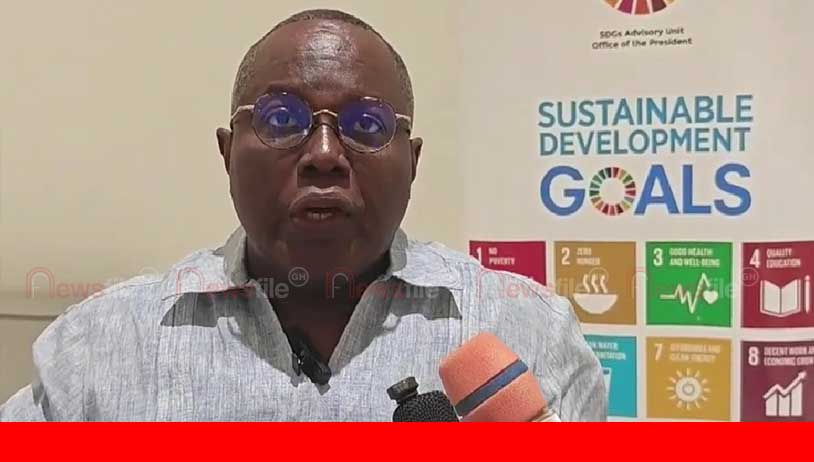
The National Development Planning Commission (NDPC) has cautioned that neglect and inadequate maintenance of public infrastructure are impeding Ghana’s progress toward achieving the Sustainable Development Goals (SDGs).
Speaking at a workshop on SDG localisation, NDPC Chairman Dr. Nii Moi Thompson stressed that without timely upkeep and effective implementation, critical development targets in health, education, infrastructure, and economic growth may not be realised. “All capital depreciates over time, but proper maintenance ensures we continue to derive value. Neglect has become pervasive across sectors, and this culture must change for sustainable development to be achieved,” he said.
The workshop, organised in partnership with the United Nations Department of Economic and Social Affairs, brought together public officials from several regions to discuss infrastructure and asset management as an interdepartmental approach to sustainable, inclusive development. Using solid and liquid waste management as pilot areas, participants were trained on UN tools for infrastructure asset management.
Dr. Thompson highlighted that foreign aid alone cannot replace domestic resources and called for disciplined management of public infrastructure. He noted that fostering a culture of maintenance should begin early, advocating education in schools on cleanliness, sanitation, and efficiency.
The UN’s senior programme management officer noted that the 2030 SDG agenda comprises 117 goals and 169 targets, with around 65% linked to local government responsibilities and over 90% dependent on functioning infrastructure. “Local authorities must be equipped to maintain and deliver essential services if Ghana is to meet its SDG targets,” he emphasised.
The NDPC concluded that the nation’s ambition to achieve sustainable development depends on effective and efficient management of public infrastructure. For Ghana to fully benefit from its SDG agenda, the commission urged government, stakeholders, and communities to prioritise maintenance, accountability, and long-term planning.