
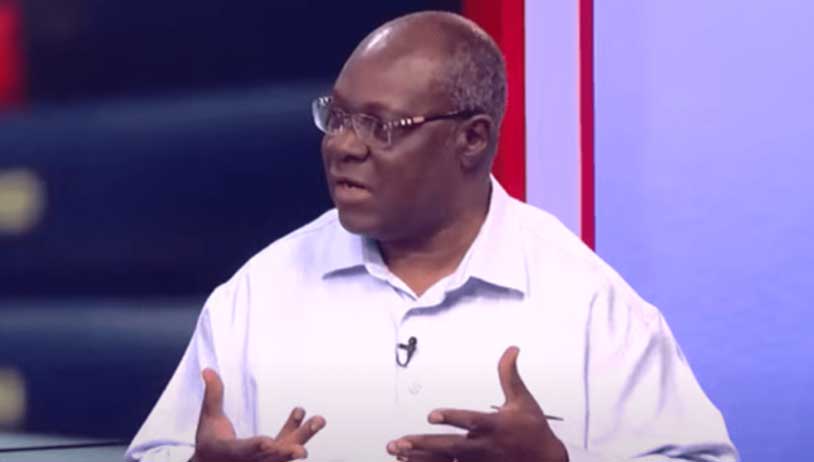
New Patriotic Party (NPP) stalwart Dr. Arthur Kennedy has launched a pointed critique of the party’s delegate-based primary system, describing it as a “problem for democracy” and warning that it risks deepening divisions within the party ahead of Saturday’s presidential primary. In an interview with TV3, Kennedy drew on his own experiences and long-standing observations to underscore structural flaws he says undermine fairness and inclusivity.
“Some of us warned that this top-down approach was like building the roof of a house before starting the foundation,” Kennedy said, adding that the system has created divisions instead of unity. “Contrary to the expectations of those who designed this process, the supposed unity is unlikely to emerge.”
Dr. Kennedy cited ongoing legal challenges, including lawsuits filed by Professor Frimpong-Boateng and Dr. Nyarho Nyarho Tamakloe, as highlighting systemic issues within party operations. He pointed to a “schizophrenic experience” in which delegates benefit financially from participation, while rank-and-file members feel disenfranchised.
The veteran politician criticised the party for unequal delegate representation across constituencies, irregularities in voter registers, and unaccounted campaign funds. Kennedy noted that recently, Hon. Cynthia Maamle Morrison and 200 supporters were removed from the voters register, a move he described as “unconstitutional and illegal.”
Reflecting on his own experience in the 2008 NPP primary, Kennedy said he received just one vote despite widespread media praise for his policy ideas, illustrating that ideas alone are often insufficient in Ghanaian politics. “Ghanaian politics is about who ghost we invoke and which ethnicities we mobilise,” he remarked.
Looking ahead to the upcoming primary, Dr. Kennedy expressed concern that early endorsements and internal manoeuvring could exacerbate tensions. While acknowledging former Vice President Dr. Mahamudu Bawumia’s credentials, Dr. Kennedy argued that procedural flaws could replicate the disenfranchisement seen in the 2024 elections.
“People felt the process was unfair, and many stayed home in 2024. This primary is being rushed, and it seems designed to force an outcome before the party is ready,” he said. Dr. Kennedy warned that unless fundamental reforms are enacted, the results of the NPP primary may not resolve internal challenges and could affect the party’s democratic credibility.
He also criticised the early scheduling of primaries, likening it to selecting a World Cup team six months before the tournament, arguing that it leaves insufficient time for party members to evaluate candidates and for healthy competition to emerge.
Dr. Kennedy’s critique comes amid growing debate about the fairness and transparency of delegate-based selection processes in Ghana’s political parties. His concerns focus on the risk that top-down systems prioritising delegate influence over grassroots participation could entrench inequities, reduce member engagement, and undermine the party’s broader appeal.
“Unless we address these structural and procedural flaws, the internal democracy of the NPP will continue to be questioned,” Dr. Kennedy said. He called for reforms to ensure that elections within the party are consistent with constitutional principles, fair representation, and transparent conduct, warning that failure to act could deepen divisions and reduce voter confidence ahead of national elections.
The comments from Dr. Kennedy highlight persistent tensions within the NPP as the party prepares to select its next presidential candidate. Analysts note that his intervention underscores the need for internal dialogue and reform if the party is to maintain cohesion and legitimacy among its membership ahead of the 2028 elections.
Saturday’s primary, Jan 31, 2016 is now widely anticipated not just as a contest between candidates, but as a critical test of the party’s internal democratic processes and its ability to reconcile differences between delegates and the wider party membership. Kennedy’s warning suggests that unless the system is perceived as transparent and equitable, the NPP may face ongoing challenges in fostering unity and broad-based support.